C-130 Hercules vs C-295 Persuader
C-130 Hercules vs C-295 Persuader at a glance — top speed 593 vs 576 km/h, range 3,800 vs 5,750 km, max takeoff weight 70,307 vs 23,200 kg, built 2,500 vs 209 units.
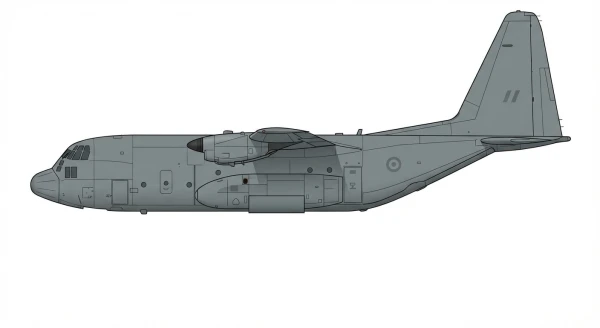
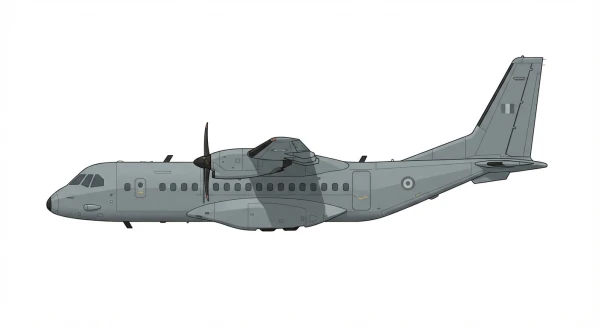
| C-130 Hercules | C-295 Persuader | |
|---|---|---|
| Origin country | 🇺🇸 United States | 🇪🇸 Spain🇮🇩 Indonesia |
| Category | Military Transport Aircraft | Military Transport Aircraft |
| Manufacturer | Lockheed | Airbus |
| First flight | 23 August 1954 | 28 November 1997 |
| Year introduced | 1956 | 2001 |
| Number produced | 2500 units | 209 units |
| Average unit price | $68 million | $78 million |
| Wing area | 162.0 m² | 59.0 m² |
| Wingspan | 40.4 m | 25.8 m |
| Height | 11.7 m | 8.6 m |
| Length | 29.8 m | 24.5 m |
| Maximum speed | 593 km/h | 576 km/h |
| Operational range | 3,800 km | 5,750 km |
| Service ceiling | 10,058 m | 7,620 m |
| Max. takeoff weight | 70,307 kg | 23,200 kg |
| Empty weight | 35,800 kg | 9,250 kg |
| Total thrust | 4 x 3,661 kW | 2 x 1,972 kW |
Detailed Comparison
Lockheed's C-130 Hercules defines the medium tactical airlift category, operating as a four-engine, 70-ton platform capable of global deployment. Airbus's C-295 Persuader occupies the tier immediately below it, functioning as a 23-ton, twin-engine tactical transport optimized for regional logistics and lower operating costs. While competing for finite defense procurement budgets, they address fundamentally different airlift doctrines.
Development and Design
Lockheed engineered the C-130 in the 1950s around a four-engine, high-wing configuration specifically to meet US Air Force demands for a transport capable of lifting heavy, outsized equipment into dirt strips. Its aluminum-alloy airframe and rear-loading ramp set the baseline for modern tactical airlift. Airbus developed the C-295 forty years later as a stretched derivative of the CASA/IPTN CN-235, substituting four engines for two Pratt & Whitney Canada PW127G turboprops. This design targets the light-to-medium airlift tier, appealing to air forces seeking lower lifecycle costs than a four-engine platform demands. The C-295 compensates for its smaller volume by integrating multi-mission architecture, allowing rapid reconfiguration for maritime patrol or intelligence, surveillance, and reconnaissance (ISR) profiles.
Specifications and Performances
The performance gap between the two airframes dictates their employment. The C-130 operates with a maximum takeoff weight of 70,307 kg, yielding a payload capacity more than triple that of the C-295's 23,200 kg limit. This allows the Hercules to transport armored vehicles and heavy artillery that physically cannot fit inside the Airbus fuselage. Speed differences are negligible, with both aircraft cruising just below 600 km/h. However, the C-295 requires less runway; its 671-meter takeoff distance beats the C-130's 1,093-meter requirement. Based on the provided metrics, the C-295’s twin-engine layout burns less fuel, extending its unrefueled range to 5,750 km compared to the C-130's 3,800 km, though the Hercules counters this with aerial refueling integration across multiple variants.
Deployment and usage
The C-130 has accumulated millions of flight hours across Vietnam, the Gulf War, and Afghanistan. The airframe’s excess power margins facilitated heavy modifications, spawning AC-130 gunships and MC-130 special operations variants. The C-295, with over 200 units built, secures export contracts for twin-engine utility requirements. Its deployment footprint centers on:
- Egypt, which operates a fleet of 21 aircraft for tactical transport
- Poland, utilizing the platform to replace legacy Soviet-era An-26 airframes
- India, procuring 56 units with localized manufacturing to modernize its transport fleet
During the US Joint Cargo Aircraft competition, the C-295 lost to the C-27J Spartan because evaluators concluded its cabin floor and payload limits could not support specific mechanized infantry loadouts. Canada selected the CC-295 for search and rescue, though software and equipment integration issues have delayed its operational capability.
Conclusion
The C-130 Hercules has the edge in high-intensity combat operations and outsized cargo transport. Its four-engine redundancy, payload mass, and ability to absorb battle damage make it the required choice for mechanized airborne insertions. The C-295 Persuader wins in regional utility and peacetime maritime patrol. For air forces operating on constrained defense budgets, the C-295 provides adequate troop transport and broad sensor-platform modularity at a fraction of the flight-hour cost of a C-130. Buyers requiring heavy lift must procure the Hercules; those needing coastal surveillance and light palletized logistics should acquire the C-295.