Boeing 737 vs C-130 Hercules
Boeing 737 vs C-130 Hercules at a glance — top speed 904 vs 593 km/h, range 4,800 vs 3,800 km, max takeoff weight 52,163 vs 70,307 kg, built 11,535 vs 2,500 units.
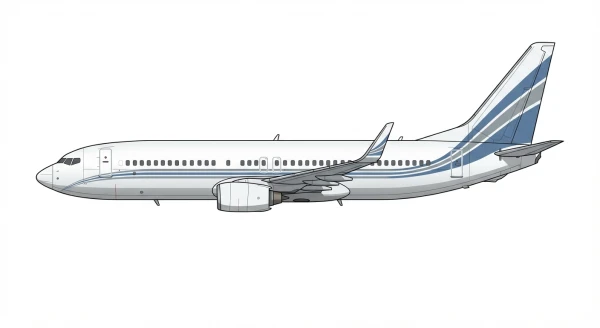
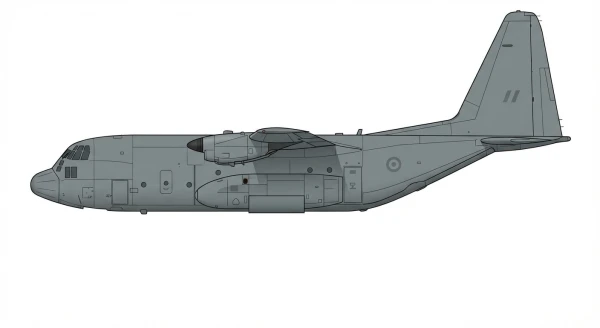
| Boeing 737 | C-130 Hercules | |
|---|---|---|
| Origin country | 🇺🇸 United States | 🇺🇸 United States |
| Category | Military Transport Aircraft | Military Transport Aircraft |
| Manufacturer | Boeing | Lockheed |
| First flight | 9 April 1967 | 23 August 1954 |
| Year introduced | 1968 | 1956 |
| Number produced | 11535 units | 2500 units |
| Average unit price | $115 million | $68 million |
| Wing area | 91.0 m² | 162.0 m² |
| Wingspan | 28.0 m | 40.4 m |
| Height | 11.0 m | 11.7 m |
| Length | 30.0 m | 29.8 m |
| Maximum speed | 904 km/h | 593 km/h |
| Operational range | 4,800 km | 3,800 km |
| Service ceiling | 11,278 m | 10,058 m |
| Max. takeoff weight | 52,163 kg | 70,307 kg |
| Empty weight | 29,071 kg | 35,800 kg |
| Total thrust | 2 x 6,577 kgf | 4 x 3,661 kW |
Detailed Comparison
The Boeing 737 and Lockheed C-130 Hercules address fundamentally opposite logistical requirements. The C-130 was engineered as a tactical airlifter for unprepared airstrips, while the 737 originated as a short-haul civilian airliner that militaries adapted for paved-runway transport and specialized electronic roles. Comparing a turboprop tactical freighter to a jet-powered airliner requires evaluating theater-level mobility against specialized, high-altitude persistence.
Development and Design
Lockheed designed the C-130 in the 1950s around a rear-loading ramp and a high-wing configuration. This layout provides ground clearance for the four Allison T56 turboprops and allows straight-in loading of vehicles. Boeing’s 737, initiated in 1964, reused 60% of the 727's structure to accelerate development. Its low-slung airframe facilitated baggage loading at civilian terminals but forced Boeing to flatten engine nacelles when transitioning to high-bypass turbofans. Miltaries exploit the 737 airframe for its pressurized volume and baseline power generation, converting it into platforms like the C-40 transport or the E-7 Wedgetail, rather than utilizing it for bulk cargo.
Specifications and Performances
The performance data quantifies their divergent operational mandates. The 737 operates at higher speeds (904 km/h) and altitudes (11,278 m) using twin turbojets, allowing it to traverse theaters rapidly. Its 4,800 km range outpaces the C-130's 3,800 km. The C-130 generates its advantage at lower speeds and higher weights. Despite a maximum speed of 593 km/h, the Hercules dictates tactical airlift with a 70,307 kg maximum takeoff weight—over 18,000 kg more than the baseline 737-200. The C-130 lifts this tonnage while retaining the ability to take off in 1,093 meters.
Deployment and usage
Militaries employ the C-130 at the forward edge of the battlespace. In Vietnam and the 1991 Gulf War, C-130s delivered armor and troops directly to contested dirt strips. The airframe's architecture birthed specialized variants:
- AC-130: Armed with 105mm howitzers and 40mm cannons for close air support.
- MC-130: Configured for special operations infiltration and rotary-wing refueling.
- LC-130: Ski-equipped for Antarctic and Greenland ice operations.
The 737 operates entirely outside the tactical combat zone. Air forces use it for executive transport, troop rotation between established bases, and navigator training (T-43). More recently, the 737-800ERX airframe functions as the P-8 Poseidon, replacing the P-3 Orion to deploy Harpoon missiles and sonobuoys for anti-submarine warfare.
Conclusion
The C-130 Hercules dictates tactical, austere-environment airlift. If an operation requires inserting vehicles, pallets, or troops into unpaved, 1,200-meter strips under hostile conditions, the C-130 is the mandatory choice. The 737 cannot execute tactical airlift or survive rough-field landings. However, for theater-to-theater troop rotation, VIP transport, or as a host platform for heavy ISR architectures, the 737 holds the absolute edge. Its 311 km/h speed advantage and higher service ceiling enable it to transit faster and loiter higher, making it the superior airframe for missions strictly utilizing 2,500-meter paved runways.