F-15EX Eagle II vs Rafale
F-15EX Eagle II vs Rafale at a glance — top speed 2,655 vs 1,912 km/h, range 3,889 vs 3,700 km, max takeoff weight 36,741 vs 24,500 kg, built 154 vs 316 units.
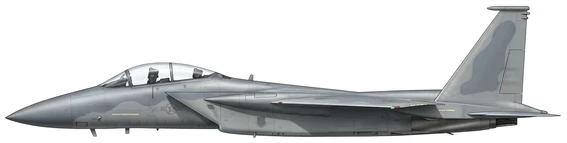
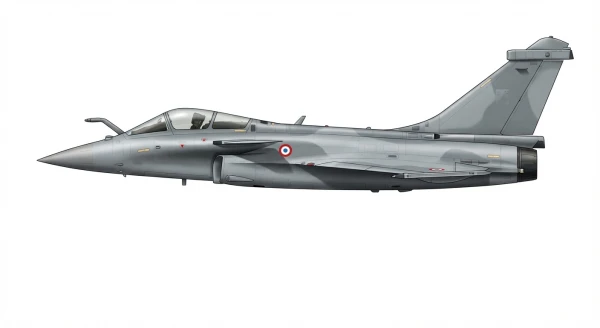
| F-15EX Eagle II | Rafale | |
|---|---|---|
| Origin country | 🇺🇸 United States | 🇫🇷 France |
| Category | Combat Aircraft | Combat Aircraft |
| Manufacturer | Boeing | Dassault |
| First flight | 2 February 2021 | 4 July 1986 |
| Year introduced | 2024 | 2001 |
| Number produced | 154 units | 316 units |
| Average unit price | $90 million | $95 million |
| Wing area | 56.5 m² | 45.7 m² |
| Wingspan | 13.1 m | 10.9 m |
| Height | 5.7 m | 5.3 m |
| Length | 19.4 m | 15.3 m |
| Maximum speed | 2655 km/h | 1912 km/h |
| Operational range | 3,889 km | 3,700 km |
| Service ceiling | 18,000 m | 15,835 m |
| Max. takeoff weight | 36,741 kg | 24,500 kg |
| Empty weight | 16,103 kg | 9,850 kg |
| Total thrust | 2 x 129 kN | 2 x 7,648 kgf |
Detailed Comparison
Boeing’s F-15EX Eagle II and Dassault’s Rafale answer divergent operational mandates. The F-15EX operates as a heavy, twin-engine missile truck designed to carry maximum payloads over extended ranges, complementing fifth-generation stealth fighters. The Rafale is a medium-weight, omnirole fighter prioritizing sovereign independence, austere basing, and electronic survivability within a compact footprint.
Development and Design
The F-15EX evolved from the export-driven Advanced Eagle lineage (Saudi F-15SA and Qatari F-15QA), bypassing decades of domestic U.S. procurement stagnation. Boeing retrofitted the legacy F-15 with a digital fly-by-wire system, unlocking outboard wing stations to increase the standard air-to-air loadout from eight to twelve missiles. Its open architecture, centered on the ADCP II mission computer, allows rapid software iterations, while electronic warfare is managed by the AN/ALQ-250 EPAWSS.
Dassault developed the Rafale after France withdrew from the European Fighter Aircraft program in 1985 to ensure nuclear strike and CATOBAR carrier capabilities. Built around an aerodynamically unstable delta-canard configuration, it relies on digital flight controls for artificial stability. Rather than podded electronic warfare systems, Dassault integrated the SPECTRA defensive suite directly into the airframe, reducing the aircraft's reliance on dedicated SEAD escorts.
Specifications and Performances
The F-15EX dominates in raw kinematics and sheer mass. With a maximum takeoff weight of 36,741 kg compared to the Rafale’s 24,500 kg, the Eagle II hauls up to 29,500 lbs of ordnance versus the French fighter's 9 tons. The physical size of the F-15EX nose accommodates the AN/APG-82(V)1 AESA radar, which out-ranges the Rafale’s RBE2 AA AESA purely through higher power generation and antenna aperture.
However, the Rafale possesses greater agility and short-field performance. Its 305 m/s climb rate beats the F-15EX's 250 m/s, and its 400-meter takeoff distance enables operations from damaged runways or the Charles de Gaulle carrier. The Eagle II is a high-altitude interceptor capable of 3,062 km/h; the Rafale peaks at 1,912 km/h but sustains high-G maneuvers (up to 9G) at lower speeds more efficiently.
Deployment and usage
The Rafale has a deep combat record. It executed strikes globally, driving export contracts with Egypt, India, Qatar, and the UAE. Combat operations include:
- Afghanistan (2002-2011): Close air support and reconnaissance.
- Libya (2011): Independent SEAD and strike missions during Opération Harmattan, destroying surface-to-air missile sites without AWACS support.
- Mali, Iraq, and Syria: Precision ground attack against insurgent infrastructure.
The F-15EX reached initial operational capability in July 2024 with the USAF’s 142nd Wing. While the legacy F-15 holds an unmatched air-to-air kill ratio, the EX airframe lacks combat history. U.S. doctrine positions it as an arsenal bird—loitering behind F-35s to fire extreme-range munitions like the AIM-260 JATM or carrying outsized weapons like the AGM-158 JASSM.
Conclusion
The Rafale holds the edge for air forces requiring a self-contained, expeditionary fighter capable of penetrating contested airspace without electronic warfare escorts. Its integrated survivability and carrier compatibility make it the optimal standalone asset. Conversely, the F-15EX wins decisively in the high-end, networked fight. In theaters like the Indo-Pacific, its unmatched magazine depth, 20,000-hour airframe lifespan, and heavy payload capacity make it the preferred kinetic enforcer for sensor-forward fifth-generation fleets.