F/A-18 E/F Super Hornet vs Rafale
F/A-18 E/F Super Hornet vs Rafale at a glance — top speed 1,915 vs 1,912 km/h, range 2,346 vs 3,700 km, max takeoff weight 29,900 vs 24,500 kg, built 632 vs 316 units.
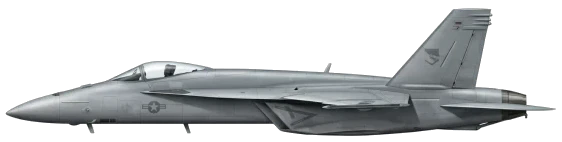
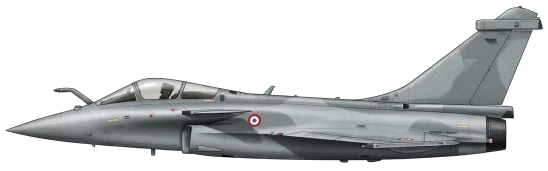
| F/A-18 E/F Super Hornet | Rafale | |
|---|---|---|
| Origin country | 🇺🇸 United States | 🇫🇷 France |
| Category | Combat Aircraft | Combat Aircraft |
| Manufacturer | Boeing | Dassault |
| First flight | 29 November 1995 | 4 July 1986 |
| Year introduced | 2001 | 2001 |
| Number produced | 632 units | 316 units |
| Average unit price | $70 million | $95 million |
| Wing area | 46.5 m² | 45.7 m² |
| Wingspan | 13.6 m | 10.9 m |
| Height | 4.9 m | 5.3 m |
| Length | 18.3 m | 15.3 m |
| Maximum speed | 1915 km/h | 1912 km/h |
| Operational range | 2,346 km | 3,700 km |
| Service ceiling | 15,940 m | 15,835 m |
| Max. takeoff weight | 29,900 kg | 24,500 kg |
| Empty weight | 14,550 kg | 9,850 kg |
| Total thrust | 2 x 9,979 kgf | 2 x 7,648 kgf |
Detailed Comparison
The U.S. Navy opted for a low-risk, scaled-up derivative of an existing airframe to fill its carrier decks, while France pursued an independent, clean-sheet delta-canard design to meet joint air force and naval requirements. The Boeing F/A-18E/F Super Hornet operates as a high-capacity weapons truck and sensor node, trading kinematic performance for payload. Dassault’s Rafale prioritizes aerodynamic efficiency, electronic warfare autonomy, and deep penetration capabilities.
Development and Design
The F/A-18E/F emerged from necessity after the A-12 Avenger II collapse. Boeing enlarged the legacy Hornet by 20% and added 33% more internal fuel to fix severe range deficits. The trade-off is a high-drag airframe with canted wing pylons that bleed energy. The Rafale resulted from France’s 1985 withdrawal from the Eurofighter program. Dassault designed an aerodynamically unstable delta-canard fighter capable of 9g. Instead of just scaling up, Dassault integrated the SPECTRA electronic warfare suite directly into the airframe, giving the Rafale a built-in survival mechanism that the Super Hornet delegates to the specialized EA-18G Growler or external pods.
Specifications and Performances
The Rafale holds a kinematic advantage. At a 4,354 kg lighter empty weight (10,196 kg vs. 14,550 kg), the Rafale's twin M88 engines generate 20,388 kgf of combined thrust, beating the Super Hornet's 19,958 kgf from its heavier F414s. This yields a higher thrust-to-weight ratio and a climb rate of 305 m/s, outpacing the Super Hornet's 228 m/s. The Super Hornet leverages an 8,050 kg payload capacity and superior low-speed, high angle-of-attack handling for carrier recovery. Boeing relies on the mature APG-79 AESA radar for targeting, but Dassault’s integration of the RBE2 AESA radar paired with the ramjet-powered MBDA Meteor missile gives the Rafale a longer reach in beyond-visual-range (BVR) engagements over the AIM-120-equipped Super Hornet.
Deployment and Usage
Both platforms logged extensive strike hours in Iraq, Afghanistan, and Syria. U.S. Navy Super Hornets operate within a tightly integrated carrier strike group, dependent on E-2D AWACS and EA-18G escorts for survival in contested zones. French Rafales demonstrated operational autonomy during the 2011 Opération Harmattan in Libya, destroying SAM sites without dedicated SEAD support by relying on SPECTRA. Export markets reflect this operational divergence. India, Egypt, Qatar, and Indonesia purchased the Rafale, rejecting the F/A-18E/F due to the French fighter's kinematics, ITAR-free export status, and standalone survivability.
Conclusion
The Rafale defeats the Super Hornet in contested airspace and air-to-air combat. Its thrust-to-weight ratio, integrated SPECTRA suite, and Meteor missile give it an independent capability against modern air defenses. The Super Hornet functions strictly as a networked bomb truck within a well-resourced U.S. naval force structure. Without the protective umbrella of Growlers and AWACS, Boeing's drag-heavy airframe and kinematic limitations leave it vulnerable, which explains its rejection in favor of the Rafale in recent international procurement competitions.


