F-35 Lightning II vs KF-21 Boramae
F-35 Lightning II vs KF-21 Boramae at a glance — top speed 1,960 vs 2,200 km/h, range 2,800 vs 2,900 km, max takeoff weight 27,216 vs 25,401 kg.
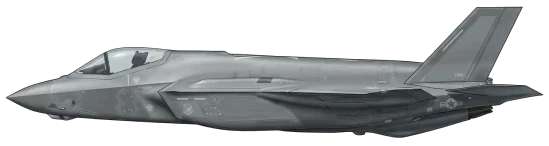
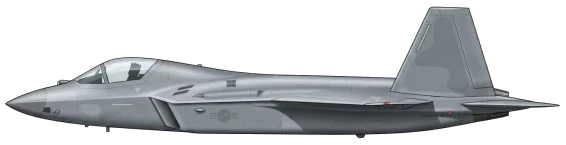
| F-35 Lightning II | KF-21 Boramae | |
|---|---|---|
| Origin country | 🇺🇸 United States | 🇰🇷 South Korea |
| Category | Combat Aircraft | Combat Aircraft |
| Manufacturer | Lockheed Martin | KAI |
| First flight | 15 December 2006 | 19 July 2022 |
| Year introduced | 2013 | 2026 |
| Number produced | 965 units | N/A |
| Average unit price | $103 million | $87.5 million |
| Wing area | 43.0 m² | 46.0 m² |
| Wingspan | 11.0 m | 11.2 m |
| Height | 4.4 m | 4.8 m |
| Length | 15.6 m | 16.8 m |
| Maximum speed | 1960 km/h | 2200 km/h |
| Operational range | 2,800 km | 2,900 km |
| Service ceiling | 15,000 m | 16,764 m |
| Max. takeoff weight | 27,216 kg | 25,401 kg |
| Empty weight | 14,651 kg | 11,793 kg |
| Total thrust | 1 x 19,500 kgf | 2 x 9,983 kgf |
Detailed Comparison
Lockheed Martin’s F-35 Lightning II is a mature, globally proliferated fifth-generation strike fighter built around very low observable (VLO) stealth and sensor fusion. KAI’s KF-21 Boramae is a twin-engine, 4.5-generation fighter currently in flight testing, designed as an evolutionary platform that trades immediate VLO characteristics for a rapid development cycle, localized supply chains, and future upgradeability. While the F-35 dictates Western air combat doctrine, the KF-21 emerges as a sovereign alternative for nations restricted by U.S. export controls.
Development and Design
The F-35 originated from the Joint Strike Fighter program, demanding high commonality across conventional, STOVL, and carrier variants. This requirement forced structural compromises, resulting in a single-engine, deep-fuselage airframe optimized for internal weapon carriage and broad-spectrum stealth. Conversely, KAI structured the KF-21 around a lower-risk iterative model. Powered by two GE F414 engines, the KF-21 adopts a stealth-optimized planform but carries weapons semi-recessed in its Block I configuration. South Korea prioritized domestic integration of the AESA radar and electronic warfare suites over immediate VLO capability, actively bypassing the software integration bottlenecks that currently plague the F-35’s Block 4/TR-3 upgrades.
Specifications and Performances
Aerodynamically, the twin-engine KF-21 enjoys a kinematic advantage, achieving a maximum speed of 2,200 km/h against the F-35’s 1,960 km/h.
- The Boramae’s twin F414 turbojets generate a combined 24,492 kgf of thrust, granting it a higher thrust-to-weight ratio than the F-35’s single 19,500 kgf F135 engine.
- The F-35 dictates the engagement envelope through fuel capacity. Holding nearly 8,278 kg of internal fuel, the F-35A reaches a 2,800 km range, dwarfing the KF-21’s 1,000 km specification.
The F-35's combat radius remains unpenalized by external drag, while the KF-21’s reliance on external hardpoints directly degrades its aerodynamic performance and radar cross-section during combat loads.
Deployment and usage
With over 965 units built, the F-35 is heavily operational. Israel debuted the F-35I in combat in 2018 over Syria, validating the platform's ability to penetrate active S-300 and Pantsir-S1 missile networks. The aircraft operates daily in contested airspace across the Middle East and Eastern Europe, though sustained readiness rates remain suppressed by complex ALIS/ODIN maintenance software and F135 thermal management limits. The KF-21 remains in flight testing following its 2022 debut. ROKAF expects 40 airframes by 2028 to replace obsolete F-4D/E and F-5E/F fleets. Its deployment doctrine initially targets point defense and anti-ship missions over the Korean Peninsula before transitioning to strike roles in Block II.
Conclusion
The F-35 is the definitive victor for initial penetration operations. Its integrated sensor fusion (APG-81, DAS, EOTS) and broadband stealth allow it to dismantle integrated air defense systems—a mission the externally-armed KF-21 cannot survive. However, the KF-21 holds the edge as a rapid-alert interceptor. For nations locked out of the F-35 program, the Boramae offers superior kinematics, higher availability through twin-engine reliability, and freedom from Washington's ITAR restrictions. Ultimately, the F-35 remains the superior strike platform, while the KF-21 functions as a highly capable, lower-risk missile truck for territorial defense.