F-35 Lightning II vs Typhoon
F-35 Lightning II vs Typhoon at a glance — top speed 1,960 vs 2,495 km/h, range 2,800 vs 3,790 km, max takeoff weight 27,216 vs 23,500 kg, built 965 vs 589 units.
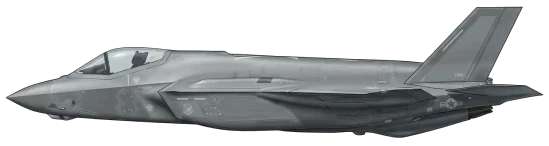
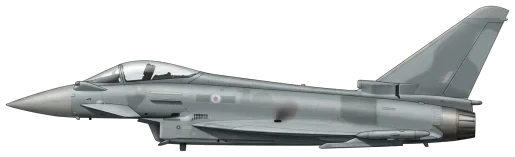
| F-35 Lightning II | Typhoon | |
|---|---|---|
| Origin country | 🇺🇸 United States | 🇩🇪 Germany🇪🇸 Spain🇬🇧 United Kingdom🇮🇹 Italy |
| Category | Combat Aircraft | Combat Aircraft |
| Manufacturer | Lockheed Martin | Eurofighter |
| First flight | 15 December 2006 | 27 March 1994 |
| Year introduced | 2013 | 2003 |
| Number produced | 965 units | 589 units |
| Average unit price | $103 million | $90 million |
| Wing area | 43.0 m² | 51.2 m² |
| Wingspan | 11.0 m | 11.0 m |
| Height | 4.4 m | 5.3 m |
| Length | 15.6 m | 16.0 m |
| Maximum speed | 1960 km/h | 2495 km/h |
| Operational range | 2,800 km | 3,790 km |
| Service ceiling | 15,000 m | 16,765 m |
| Max. takeoff weight | 27,216 kg | 23,500 kg |
| Empty weight | 14,651 kg | 11,000 kg |
| Total thrust | 1 x 19,500 kgf | 2 x 9,163 kgf |
Detailed Comparison
The Lockheed Martin F-35 Lightning II and the Eurofighter Typhoon are engineered for fundamentally opposed doctrines. The F-35 prioritizes Very Low Observable (VLO) stealth, internal weapons carriage, and sensor fusion to penetrate contested airspace. The Typhoon relies on raw aerodynamic performance, twin-engine thrust, and a high-altitude kinematic advantage to maintain air superiority and conduct rapid interceptions.
Development and Design
The Typhoon originated from the 1980s European Fighter Aircraft (EFA) consortium to counter late-Cold War Soviet fighters. Its canard-delta configuration trades inherent radar stealth for agility and a high thrust-to-weight ratio. Conversely, the F-35 emerged from the 1990s Joint Strike Fighter program, structured to replace legacy platforms with a baseline stealth architecture. The F-35 sacrifices aerodynamic agility for a radar cross-section (RCS) optimized to defeat modern integrated air defense systems (IADS). The Typhoon's hardware is modernized via staggered Tranche upgrades, whereas the F-35 relies heavily on continuous Block software updates to manage its APG-81 AESA radar and Distributed Aperture System (DAS).
Specifications and Performances
Aerodynamics and kinematics favor the Eurofighter. Driven by twin Eurojet EJ-200 engines pushing 12,232 kgf, the Typhoon reaches 2495 km/h and maintains a 315 m/s climb rate. The F-35, powered by a single 19,500 kgf Pratt & Whitney F-135 turbofan, tops out at 1960 km/h and carries a heavier empty weight (14,651 kg vs the Typhoon’s 11,000 kg).
However, metrics shift when the aircraft are fully armed:
- The F-35 houses its primary ordnance in internal bays, maintaining its 1960 km/h speed and stealth profile without drag penalties.
- The Typhoon relies on 13 external hardpoints. Fully loaded with external tanks and munitions, it loses its kinematic edge and supercruise capability, while drastically increasing its radar signature.
Deployment and usage
The Typhoon achieved Initial Operational Capability in 2003. During the 2011 Libyan intervention, UK and Italian Typhoons conducted air-to-ground strikes alongside enforcing no-fly zones. Air forces from the UK and Germany routinely deploy it for Baltic Air Policing, capitalizing on its raw scramble speed.
The F-35 entered service a decade later and immediately altered strike doctrine. Israeli F-35Is first utilized the airframe in combat over Syria in 2018, penetrating heavy Russian-built SAM umbrellas. In export markets, the F-35 systematically defeats the Typhoon in European procurement competitions (including Switzerland, Finland, and Germany) due to its survivability in anti-access/area denial (A2/AD) environments.
Conclusion
The operational edge depends entirely on the airspace environment:
- Eurofighter Typhoon: Wins in Quick Reaction Alert (QRA) interception and undisputed airspace patrols. Its superior climb rate and speed allow it to impart higher kinetic energy to beyond-visual-range missiles like the Meteor, increasing their no-escape zone.
- F-35 Lightning II: Wins in contested airspace, Suppression of Enemy Air Defenses (SEAD), and multi-domain operations.
Against modernized IADS or peer-level adversaries, the F-35 is the required asset. The Typhoon's non-stealth radar signature renders it vulnerable in modern A2/AD environments long before it can leverage its kinematic superiority.
-
 United States
724
United States
724
-
 Australia
72
Australia
72
-
 Italy
57
Italy
57
- All 20 operators →

