DHC-3 Otter
Summary
| Category | Military Training Aircraft |
| Origin country | 🇨🇦 Canada |
| Manufacturer | De Havilland Canada |
| First flight | 12 December 1951 |
| Year introduced | 1953 |
| Number produced | 466 units |
| Average unit price | $0.6 million |
Technical specifications
| Version: DHC-3 | |
|---|---|
| Crew | 1 pilot |
| Operational range | 1,540 km (957 mi) |
| Maximum speed | 257 km/h (160 mph) |
| Wing area | 35 m² (376.7 sqft) |
| Wingspan | 18 m (59.1 ft) |
| Height | 3.8 m (12.6 ft) |
| Length | 12.8 m (42.0 ft) |
| Service ceiling | 5,730 m (18,799 ft) |
| Empty weight | 2,010 kg (4,431 lbs) |
| Max. takeoff weight | 3,629 kg (8,001 lbs) |
| Climb rate | 4.3 m/s (14.1 ft/s) |
| Powerplant | 1 x radial engine Pratt & Whitney R-1340-S1H1-G Wasp delivering 447 kW each |
Current operating countries
| Country | Units | ||
|---|---|---|---|

|
United States | 1 | |
All operators
Description
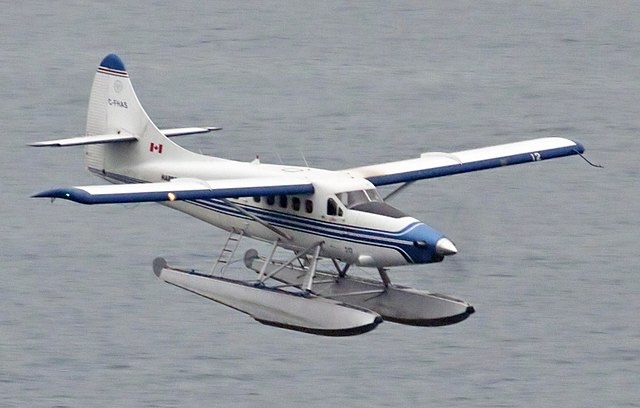
The rugged, single-engined, high-wing, propeller-driven DHC-3 Otter was conceived in January 1951 by de Havilland Canada as a larger, more powerful version of its DHC-2 Beaver STOL utility transport, designed to serve as a "one-ton truck" compared to the Beaver's "half-ton" role. Dubbed the "King Beaver" during design, it utilized the same overall configuration as the Beaver but incorporated a longer fuselage, a greater-span wing, and a cruciform tail. Seating in the main cabin expanded from six to 10 or 11.
The Otter received Canadian certification in November 1952 and entered production shortly thereafter. Power was supplied by a 450-kW (600 hp) Pratt & Whitney R-1340 geared radial engine. The aircraft's operational versatility was enhanced by its ability to be equipped with skis or floats. The electrical system operates at 28 volts D.C. A total of 466 Otters were manufactured.
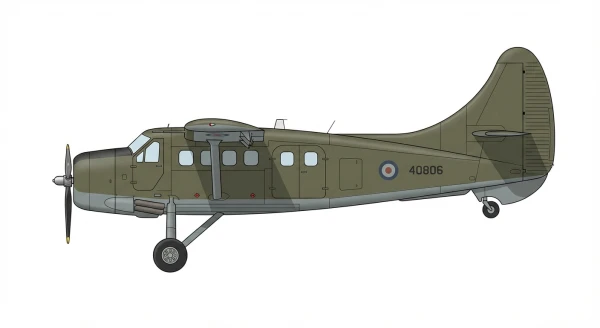
While primarily a utility transport aircraft, the DHC-3 Otter saw military applications including supply drops to support army maneuvers, capable of performing both parachute and non-parachute low-speed, low-altitude air drops. The Royal Canadian Air Force utilized it in search and rescue roles, designated as the CSR-123, and as a light utility transport under the CC-123 designation, serving until 1980. During the Suez Crisis, four Otters were deployed on the HMCS Magnificent, marking an instance of RCAF fixed-wing aircraft operating from a Canadian warship. It also saw service on floats and skis, supporting the Canadian Army. The United States Army became a prominent operator, with 184 aircraft delivered as the U-1A Otter. Other military users included Australia, Canada, and India. An Otter was used during the Commonwealth Trans-Antarctic Expedition, crossing the South Pole in 1957. From 1958 to 1960, Qantas operated Otters in Papua New Guinea before transferring them to Trans Australian Airlines (TAA), which continued their use until 1966.
Main Variants:
-
DHC-3 Otter: This is the basic single-engined STOL utility transport aircraft from which all other variants are derived.
-
CSR-123 Otter: This variant was specifically designed as a STOL utility transport aircraft for the Royal Canadian Air Force.
-
U-1A Otter: This was a STOL utility transport aircraft built for the U.S. Army.
-
DHC-3-T Turbo-Otter: These are Otters that have been retrofitted with either a Pratt & Whitney Canada PT6A-27 or PT6A-34 turboprop engine for increased performance.
-
Airtech Canada DHC-3/1000 Otter: This variant involves conversions powered by PZL Kalisz ASz-62IR engines, offering an alternative powerplant.