OH-58 Kiowa
American single-engine single-rotor military helicopter, introduced in the late 1960s, used for observation, utility, and direct fire support. Key figures: top speed 240 km/h, range 260 km, service ceiling 4,575 m, max takeoff weight 2,495 kg, built 2,325. In service with 9 air forces as of 2026 — Greece (57), Taiwan (37), Dominican Republic (18) and 6 others.
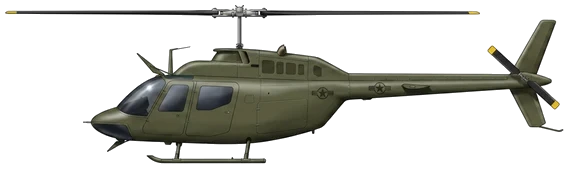
| Crew | 2 |
| Length | 12.9 m (42.2 ft) |
| Wingspan | 10.7 m (35.0 ft) |
| Height | 3.9 m (12.9 ft) |
| Wing area | 89.4 m² (962.5 sqft) |
| Empty weight | 1,737 kg (3,829 lbs) |
| Max. takeoff weight | 2,495 kg (5,501 lbs) |
| Powerplant | 1 × Rolls-Royce T703-AD-700A 485 kW each |
| Maximum speed | 240 km/h (149 mph) |
| Operational range | 260 km (162 mi) |
| Endurance | 2 hours |
| Service ceiling | 4,575 m (15,010 ft) |
-
 Greece
57
Greece
57
-
 Taiwan
37
Taiwan
37
-
 Dominican Republic
18
Dominican Republic
18
-
 Tunisia
18
Tunisia
18
-
 Croatia
15
Croatia
15
-
 Saudi Arabia
15
Saudi Arabia
15
-
 Austria
10
Austria
10
-
 Iraq
9
Iraq
9
-
 United States
3
United States
3
- Air-to-Air Short-Range AIM-92 Stinger
- Air-to-Ground AGM-114 Hellfire
- Rocket Pod Hydra 70
- Rocket Pod APKWS
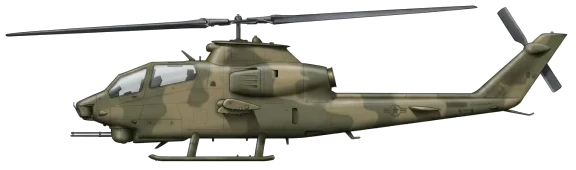
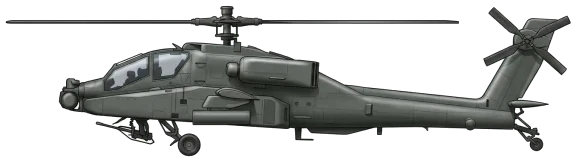
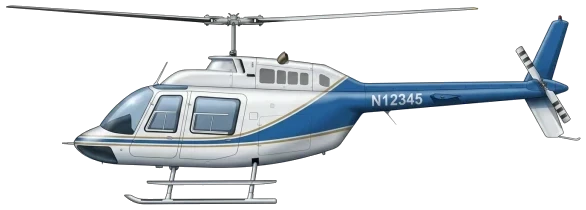
Description
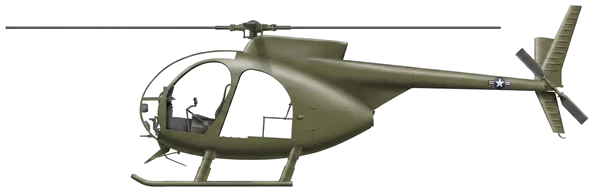
The Bell OH-58 Kiowa is a single-engine, single-rotor light observation and armed reconnaissance helicopter built by Bell Helicopter for the United States Army. Derived from the Model 206A JetRanger, it entered service in May 1969 and reached South Vietnam three months later. It is known for the mast-mounted sight fitted to the OH-58D Kiowa Warrior and for the knife-like wire strike protection extensions above and below the cockpit. The US Army withdrew its last examples in 2017.
Development
The design originated as the Bell D-250, submitted to the US Army Light Observation Helicopter competition initiated by the US Navy in October 1960. Designated YOH-4A, the first of five prototypes flew on 8 December 1962, but the Hughes OH-6 Cayuse was selected in May 1965. Bell reworked the fuselage, adding 16 cubic feet of cargo space, and marketed the result as the Model 206A JetRanger. When the Army reopened the competition in 1967 after Hughes failed to meet production commitments, Bell underbid Hughes and the 206A was designated OH-58A. Advanced Scout Helicopter work begun in 1974 lapsed when Congress declined FY1977 funding; the requirement resurfaced in 1979 as a near-term scout modification effort and became the Army Helicopter Improvement Program. Bell's Model 406 won the development contract in September 1981, first flew on 6 October 1983, and entered service in 1985 as the OH-58D. From the 202nd aircraft in May 1991 all were built in Kiowa Warrior configuration. Production totalled 2,325 airframes plus 56 Bell 206B-1; A and B production ended in 1977, D production in 2000.
Design
Early Kiowas used a two-bladed main rotor; the OH-58D introduced a four-bladed composite rotor and the first all-composite rotor hub on a US Army helicopter. The OH-58A was unarmed and weighed 1,451 kg fully loaded; the OH-58D has a 2,495 kg gross weight and a Rolls-Royce T703-AD-700A of 650 shp. The Ball Aerospace mast-mounted sight houses a television system, thermal imager and laser rangefinder/designator on a gyro-stabilised platform, with target data passed via a MIL-STD-1553 bus. Other features include NVG-compatible lighting, ballistic floor armour, crashworthy seats, infrared exhaust suppression and a missile warning system. The OH-58F replaced the MMS with the chin-mounted AAS-53 Common Sensor Payload.
Armament
The Kiowa Warrior carries universal weapons pylons on both fuselage sides. Loads include AGM-114 Hellfire missiles, AIM-92 Stinger air-to-air missiles, LAU-68 seven-round pods with Hydra 70 or APKWS rockets, and the M296 or M3P .50-calibre machine gun. Vietnam-era OH-58As were fitted with the M134 7.62 mm minigun.
Operational History
Around 45 OH-58As were lost in Vietnam to combat and accidents. Armed OH-58Ds of the 118th Aviation Task Force flew tanker escort from mobile sea bases during Operation Prime Chance from February 1988. During Desert Shield and Desert Storm, 130 OH-58Ds flew nearly 9,000 hours at a 92 percent mission-capable rate. Over 35 airframes and 35 pilots were lost in Iraq and Afghanistan, where the type accumulated 820,000 combat hours by April 2013. National Guard RAID units operated 116 modified OH-58As on counter-drug work. Exports went to Austria, Canada, Croatia, the Dominican Republic, Taiwan, Saudi Arabia, Tunisia and Greece, with 74 built as CH-136 for Canada and 56 as CAC CA-32 in Australia.
Variants
- OH-58A: Initial four-place observation model with two-bladed rotor, unarmed in standard configuration.
- OH-58B: Export version for the Austrian Air Force.
- OH-58C: Re-engined variant with flat-panel windscreens, AN/APR-39 radar warning receiver and NVG-compatible instrument panel.
- OH-58D: AHIP rebuild with four-bladed rotor, mast-mounted sight and glass cockpit, armed as the Kiowa Warrior.
- OH-58F: CASUP upgrade with AAS-53 chin sensor, Control and Display Subsystem 5 and Level 2 manned-unmanned teaming; first flight 26 April 2013.
Frequently Asked Questions
What type of aircraft is the OH-58 Kiowa?
What is the maximum speed of the OH-58 Kiowa?
What is the range of the OH-58 Kiowa?
When did the OH-58 Kiowa first fly?
How many OH-58 Kiowa have been built?
Which countries operate the OH-58 Kiowa?
What is the service ceiling of the OH-58 Kiowa?
- AUG 302026 Updated Description updated
- JUL 232026 Updated Sources and cross-references refreshed
- JUN 302026 Created Page created: OH-58 Kiowa; then manufacturer updated