W-3 Sokol
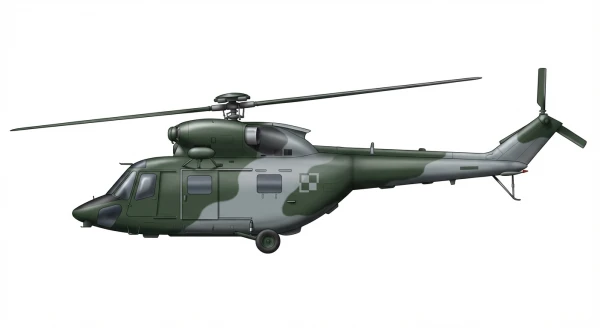
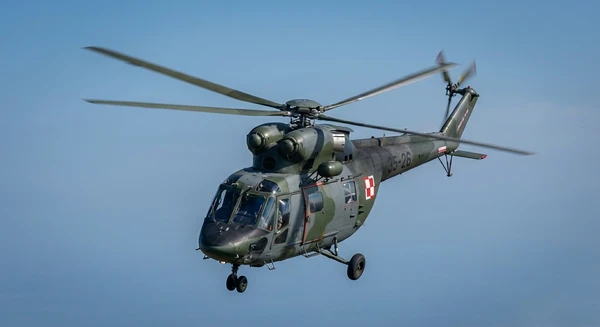
Polish utility helicopter, renowned for search and rescue missions, particularly during UN peacekeeping operations in Bosnia-Herzegovina in the 1990s. Key figures: top speed 260 km/h, range 745 km, service ceiling 4,910 m, max takeoff weight 6,400 kg, built 149. In service with 5 air forces as of 2026 — Poland (51), Myanmar (12), Czechia (10) and 2 others.
| Crew | 2 |
| Length | 14.2 m (46.6 ft) |
| Wingspan | 15.7 m (51.5 ft) |
| Height | 5.1 m (16.9 ft) |
| Empty weight | 3,850 kg (8,488 lbs) |
| Max. takeoff weight | 6,400 kg (14,110 lbs) |
| Powerplant | 2 × turboshafts PZL-Rzeszów PZL-10W 662 kW each |
| Maximum speed | 260 km/h (162 mph) |
| Operational range | 745 km (463 mi) |
| Service ceiling | 4,910 m (16,109 ft) |
| Climb rate | 9.3 m/s (30.5 ft/s) |



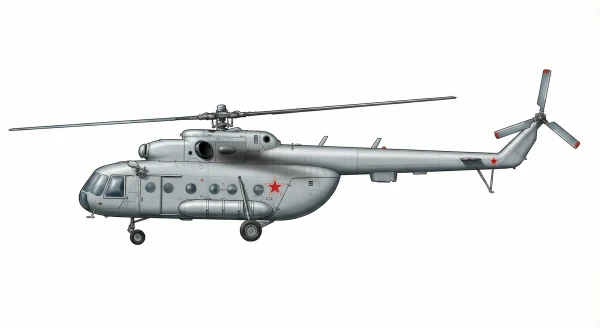
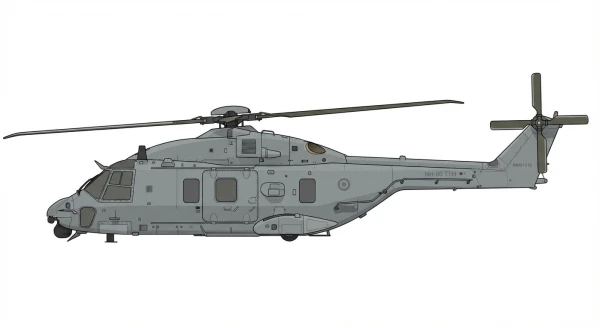
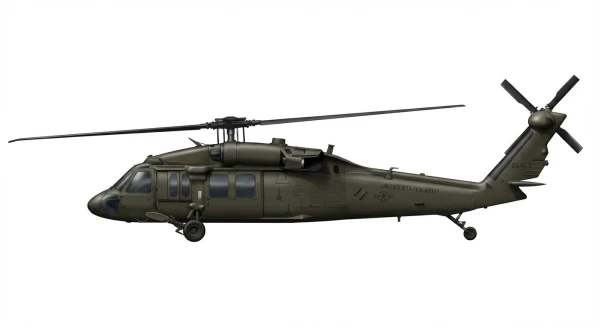
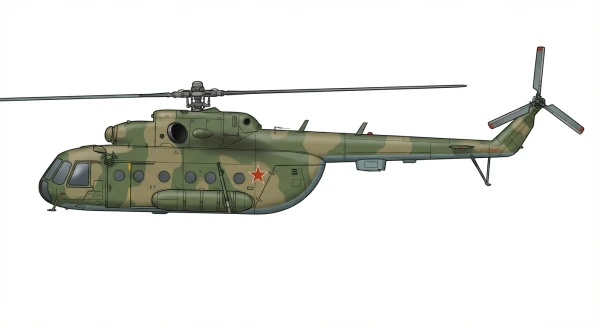
Description
The PZL W-3 Sokół is a medium-size, twin-engine multipurpose helicopter manufactured by Polish company PZL-Świdnik (now Leonardo). Designed as the first helicopter developed and produced entirely in Poland, the type was built to fulfill military and civil requirements across Poland and the Warsaw Pact. The prototype conducted its maiden flight on 16 November 1979, and serial production began in 1985.
Development
In 1973, design work commenced at PZL Świdnik under an in-house team led by Stanisław Kamiński to address military and civil requirements for Soviet and Warsaw Pact operators. Production began in 1985, and the Soviet Chief Inspectorate of Civil Aviation issued provisional airworthiness certification on 26 September 1988. The W-3A variant achieved US FAA FAR Part 29 certification in May 1993, and the 100th aircraft was completed in June 1996. Development of an attack derivative designated the Huzar was initiated in the 1990s but was cancelled in 1999 due to delays and integration disputes. Later development focused on modernization, leading to the W-3PL Głuszec combat search and rescue variant equipped with FADEC software, upgraded flight controls, and glass cockpit avionics.
Design
The W-3 is powered by two Pratt & Whitney Rzeszów PZL-10B turboshaft engines rated at 671 kW (900 hp) each. Composite materials are incorporated into the four-bladed main rotor and three-bladed tail rotor, which feature electrical ice protection allowing operations between -40 and +43°C. Naval and search-and-rescue configurations carry floats, a transponder, GPS navigation, night-vision equipment, and a Lucas winch. Modernized military variants feature glass cockpits with multi-function displays, HUD, TACAN, INS/GPS navigation, and radar warning receivers.
Armament
The armed W-3W and W-3WA variants feature four weapon pylons and an integrated twin 23 mm GSz-23L cannon. The W-3PSOT and W-3PL Głuszec variants retain weapon pylons but substitute the cannon for a single pilot-controlled 12.7 mm WKM-Bz machine gun with 350 rounds. Prototype configurations were tested with Mars-2, B8-10, and ZR-8 pods, 9M114 missiles, ZT3 Ingwe ATGMs, and HOT-3 missiles.
Operational History
The Polish Armed Forces operate the type across land, air, naval, and government VIP transport roles. In 1996, Poland transferred 11 W-3 helicopters to the Czech Republic in exchange for 10 Mikoyan MiG-29 fighters. Eight Polish W-3WA helicopters deployed to Iraq between 2003 and 2008 for coalition operations, including leaflet distribution; two aircraft were lost in crashes in 2004 and 2006. Export customers include the German Saxony State Police, the Philippine Air Force, the Myanmar Air Force, and South Korean commercial operators Citiair and Helikorea.
Variants
- W-3A Sokół: Civil and military transport variant certified to US FAA FAR Part 29 standards.
- W-3W / W-3WA Sokół: Armed military version equipped with a twin 23 mm GSz-23L cannon and four weapon pylons.
- W-3RM Anakonda: Navalized search and rescue variant equipped with floats and maritime equipment.
- W-3PL Głuszec: Modernized combat search and rescue upgrade featuring glass cockpit avionics, FADEC engine controls, and a 12.7 mm machine gun.
- W-3P/S/A VIP Sokół: Dedicated transport configuration operated for government and official airlift duties.
Frequently Asked Questions
What type of aircraft is the W-3 Sokol?
What is the maximum speed of the W-3 Sokol?
What is the range of the W-3 Sokol?
When did the W-3 Sokol first fly?
How many W-3 Sokol have been built?
Which countries operate the W-3 Sokol?
What is the service ceiling of the W-3 Sokol?
- AUG 62026 Updated Description updated
- AUG 52026 Updated Powerplant updated in a site-wide editorial pass
- AUG 12026 Updated Manufacturer updated
- JUL 232026 Updated Sources and cross-references refreshed
- APR 72026 Updated Sources and cross-references refreshed
- FEB 72026 Updated Wingspan added
- JAN 122026 Updated Range updated in a site-wide editorial pass