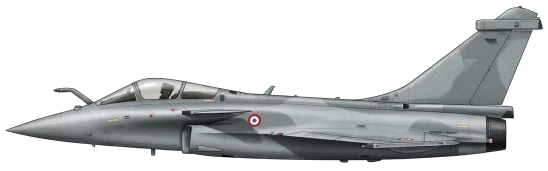
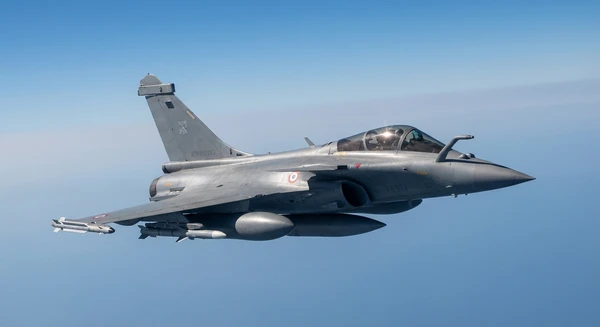
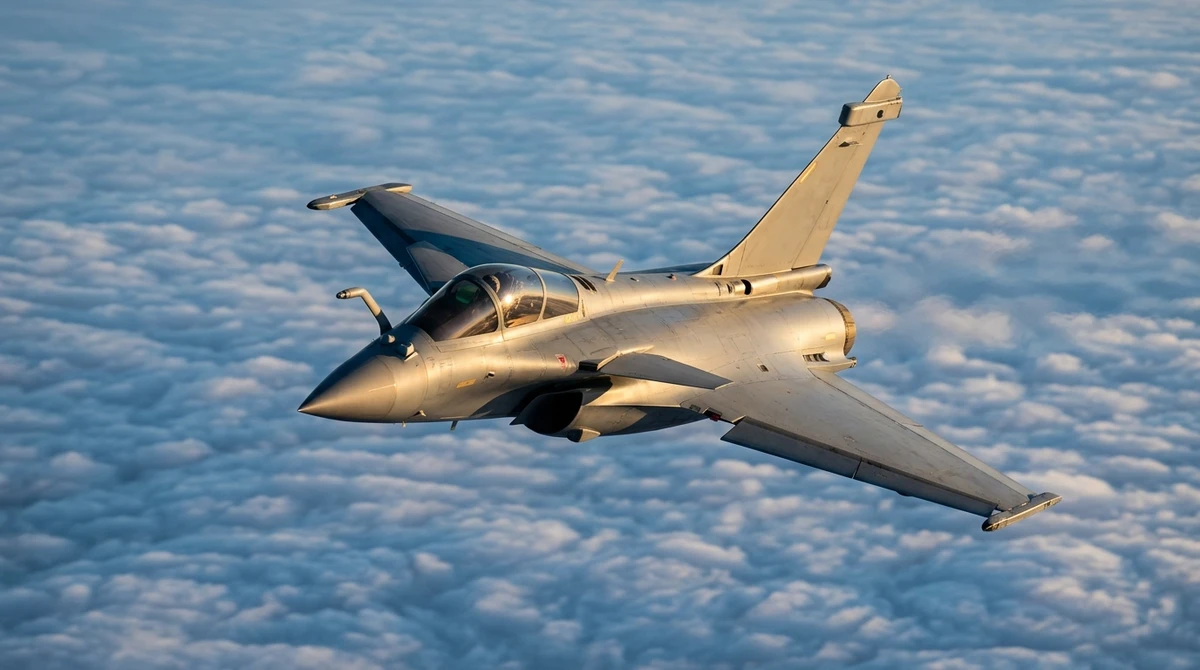
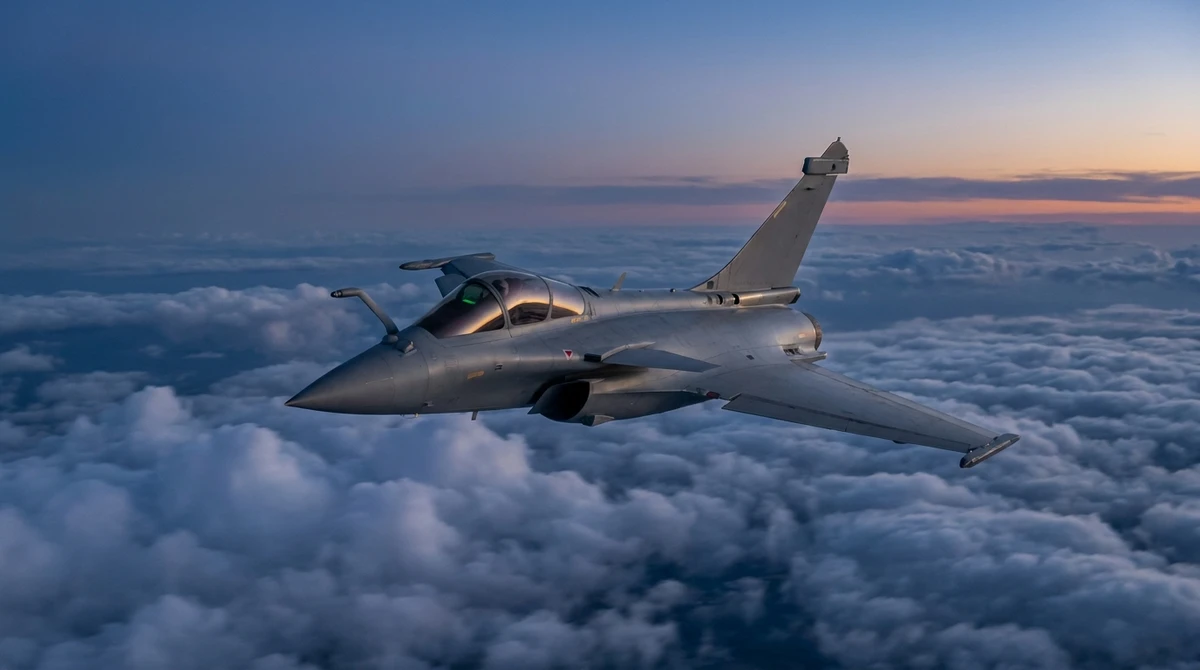
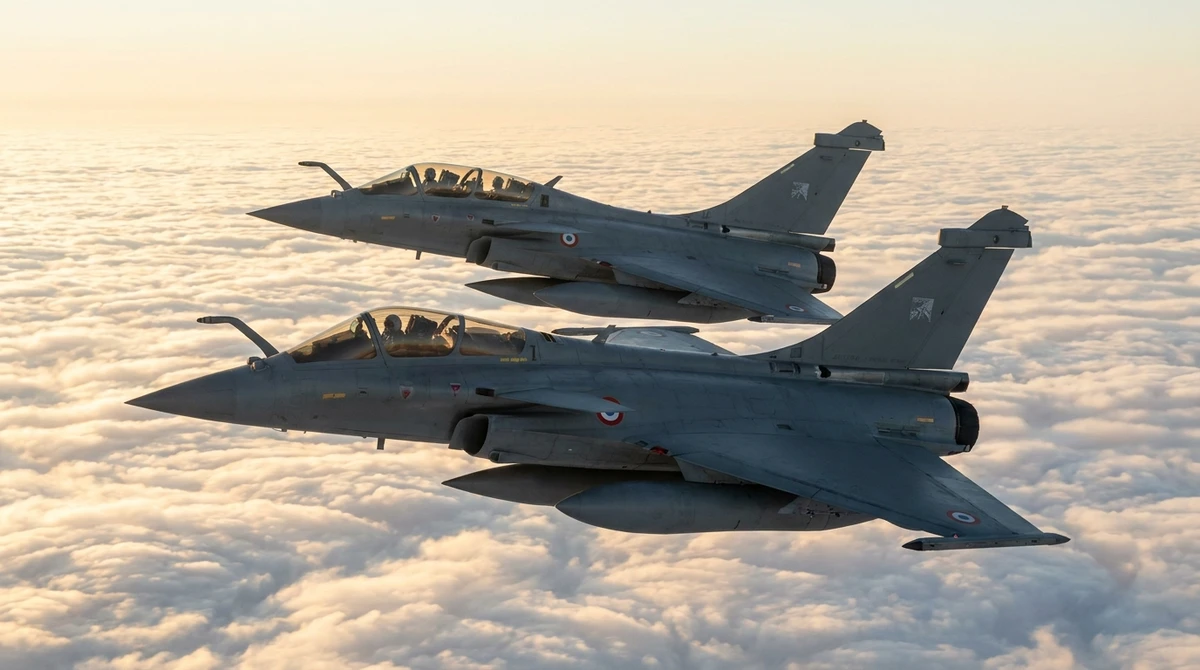
The Dassault Rafale is a French twin-engine, canard-delta wing, multirole fighter aircraft designed and built by Dassault Aviation. Described by its manufacturer as an "omnirole" aircraft, the Rafale is capable of performing air supremacy, interdiction, aerial reconnaissance, ground support, deep strike, anti-ship strike, and nuclear deterrence missions. It is one of the most successful European fighters on the export market, with orders from ten countries totaling over 600 aircraft.
Development
In the mid-1970s, the French Air Force and Navy sought a common next-generation fighter to replace a wide array of aging platforms, including the Jaguar, Mirage F1, Mirage 2000, F-8 Crusader, and Super Étendard. France initially joined the multinational "Future European Fighter Aircraft" programme in 1983, but withdrew in 1985 over disagreements on workshare and operational requirements — favoring a lighter, multirole design over the heavier interceptor sought by the UK and Germany. The other partners proceeded with what became the Eurofighter Typhoon.
Dassault had been developing its Avion de Combat Expérimental (ACX) in parallel, and the French government awarded a demonstrator contract in 1983. The programme was renamed Rafale in April 1985. The Rafale A demonstrator, initially powered by two General Electric F404 engines, first flew on 4 July 1986 and was used until 1994 over 867 sorties. In 1990, one F404 was replaced by the new Snecma M88, and the aircraft demonstrated supercruise at Mach 1.4 without afterburner. Production Rafales are significantly different from the demonstrator — smaller, lighter, and incorporating stealth features such as radar-absorbent materials and a gold-coated canopy.
A contract for four pre-production aircraft was awarded in 1988. The Rafale C first flew on 19 May 1991, the Rafale M on 12 December 1991, and the Rafale B on 30 April 1993. Production formally started in 1992 but was suspended from 1995 to 1997 due to post-Cold War budget pressures. The first production Rafale B flew on 24 November 1998. The Rafale is manufactured almost entirely in France, with Dassault performing 60% of the work, Thales 25%, and Safran 15%, supported by a network of 500 subcontractors. In March 2025, Dassault announced plans to increase production to three aircraft per month, rising to four per month from 2028.
Design
The Rafale combines a delta wing with active close-coupled canards for high agility, capable of sustaining loads from −3.6 g to +9 g (+11 g in emergencies). The aircraft is aerodynamically unstable by design and relies on digital fly-by-wire flight controls. The canards reduce the minimum landing speed to 115 knots. Although not a full-stealth aircraft, the Rafale was designed for reduced radar cross-section and infrared signature through fuselage reshaping, engine inlet repositioning, and extensive use of composite materials covering 70% of the aircraft's surface.
The cockpit follows a data-fusion philosophy, with a wide-angle holographic head-up display, two multifunction displays, a central collimated display, and direct voice input (DVI) for hands-free control of certain functions. The pilot sits in a Martin-Baker Mk 16F zero-zero ejection seat inclined at 29° for improved g-tolerance. An on-board oxygen generation system eliminates the need for oxygen canisters.
Central to the Rafale's sensor suite is the Thales RBE2 AA active electronically scanned array (AESA) radar, with a reported detection range of 200 km. The aircraft also carries the Optronique Secteur Frontal (OSF) infrared search and track system for passive detection and identification of airborne, ground, and maritime targets. The integrated SPECTRA electronic warfare system, developed jointly by Thales and MBDA, provides comprehensive self-protection against airborne and ground threats through detection, jamming, and decoying — enabling the Rafale to operate without dedicated SEAD escort, as demonstrated over Libya in 2011. Targeting and reconnaissance capabilities are provided by the Thales Damoclès and TALIOS pods, as well as the Areos reconnaissance pod.
Armament
The Rafale carries a 30 mm GIAT 30 revolver cannon with 125 rounds and features 14 hardpoints (13 on the Rafale M) with a maximum external load of 9,500 kg. For air-to-air combat, it employs MICA IR and EM short-to-medium-range missiles and the MBDA Meteor long-range beyond-visual-range missile. Air-to-ground weapons include the SCALP-EG/Storm Shadow cruise missile, AASM Hammer precision-guided munitions, various Paveway laser-guided bombs, and the AS-30L. Anti-ship strikes use the AM39 Exocet missile, with the new MBDA Stratus cruise/anti-ship missile under development. Nuclear deterrence is provided by the ASMP-A missile, to be succeeded by the ASN4G hypersonic missile. The aircraft can carry up to five drop tanks and a buddy-buddy refueling pod for extended-range operations.
Standards
The Rafale features an open software architecture enabling progressive capability upgrades through numbered standards:
- F1 (operational 2004): Limited to air-to-air intercept duties.
- F2: Added air-to-ground capabilities with SCALP cruise missiles and AASM Hammer precision-guided munitions.
- F3 (from 2008): Introduced nuclear strike capability with ASMP-A missiles, the Areos reconnaissance pod, anti-ship capability with AM39 Exocet missiles, and full multirole operations. All earlier F1/F2 aircraft have been upgraded to F3.
- F3-R (validated 2018): Integrated the MBDA Meteor beyond-visual-range missile, the TALIOS targeting pod, and various software updates.
- F4 (first deliveries 2023): Improved radar and sensor capabilities for detecting stealth targets at long range, helmet-mounted display, enhanced network-centric warfare communications, and improved connectivity.
- F5 (future): More powerful engines, ASN4G hypersonic nuclear missile, RBE2 XG radar, and integration with an unmanned combat air vehicle (UCAV) wingman.
Operational History
The Rafale has been extensively used in combat since 2007. Its first operational deployment was Afghanistan (2002), where Rafale Ms flew from the carrier Charles de Gaulle, though the F1 standard limited them to air-to-air patrols. Air Force Rafales returned to Afghanistan in 2007 and were based at Kandahar from 2009 to 2011, dropping their first GBU-12 in March 2007.
Over Libya in 2011 (Opération Harmattan), Rafales conducted strike and reconnaissance missions, destroying ground targets, SAM systems, and a Libyan G-2 Galeb on the ground. The SPECTRA system enabled independent operations without SEAD escort — a notable capability advantage over other coalition aircraft. Typical sorties lasted six hours, carrying MICA missiles, AASM Hammer bombs, and Damoclès targeting pods.
In Mali (2013, Opération Serval), four Rafales flew directly from France to strike rebel camps in Gao, demonstrating exceptional long-range strike capability with aerial refueling. The aircraft played a key role in the withdrawal of Islamist forces from Timbuktu and Douentza.
From 2014 onward, Rafales flew over Iraq and Syria (Opération Chammal) against IS militants, conducting reconnaissance and strikes from Al Dhafra Air Base in the UAE. In April 2018, Rafale Bs launched SCALP-EG cruise missiles against Syrian targets. In April 2024, French Rafales based in Jordan intercepted Iranian drones during an attack on Israel.
During the 2026 Iran conflict, after a French base in the UAE was struck by an Iranian drone, France deployed Rafales to the Middle East. French aircraft intercepted Iranian drones over the UAE, reportedly bringing down at least 60 using MICA missiles by 20 March 2026.
In May 2025, Indian Air Force Rafales were deployed during Operation Sindoor against targets in Pakistan, armed with SCALP missiles and AASM Hammer munitions. The operation generated significant controversy over reported losses, with conflicting claims from India, Pakistan, and various international sources. India deployed Rafales in subsequent strikes on 7, 8, and 10 May. The incident became the subject of an alleged Chinese disinformation campaign targeting Rafale export prospects, which was confirmed by the US–China Economic and Security Review Commission.
Export
The Rafale struggled on the export market for over a decade before achieving a breakthrough in 2015. As of 2026, total orders from France and export customers exceed 640 aircraft.
- Egypt: First international customer (February 2015). Ordered 24 Rafales as part of a €5.2 billion package, followed by 30 more in 2021, for a total of 54 aircraft.
- Qatar: Signed for 24 aircraft in May 2015 (€6.3 billion) and exercised an option for 12 more in 2017. All 36 delivered by 2023.
- India (Air Force): Ordered 36 Rafale F3-Rs in September 2016 (€7.8 billion), all delivered by July 2022. An additional order of 114 F4 variants is under consideration.
- India (Navy): Signed a deal worth ₹63,887 crore (€6.7 billion) in April 2025 for 26 Rafale M F4 carrier-based fighters for INS Vikrant.
- Greece: Ordered 24 Rafales (12 new-build, 12 used from French stocks) starting in 2021.
- Croatia: Acquired 12 used Rafale F3-Rs, delivered between 2023 and 2025.
- United Arab Emirates: Signed for 80 Rafale F4 in December 2021, making them the largest regional operator.
- Indonesia: Ordered 42 Rafale F4s, with first deliveries in January 2026.
- Serbia: Signed for 12 aircraft in 2024.
- Ukraine: Signed a letter of intent for up to 100 Rafales in November 2025.
Variants
Three variants reached production, and they differ far less than the seat count suggests: the naval Rafale M keeps about 95% commonality with the land-based aircraft, sharing the same airframe dimensions, M88 engines, RBE2 radar, SPECTRA suite and weapons. Dassault deliberately avoided splitting the programme into separate air force and navy designs, which is why every standard from F1 to F4 has been fielded across all three.
French variants
- Rafale A — the sole technology demonstrator. It first flew on 4 July 1986 on two General Electric F404 engines, one of which was replaced by the new Snecma M88 in 1990, and completed 867 sorties before retirement in 1994. It was noticeably larger and heavier than the production aircraft, which were shrunk and reshaped for a lower radar cross-section.
- Rafale C (chasseur, "fighter") — single-seat land-based fighter for the French Air and Space Force, first flown on 19 May 1991. Fourteen hardpoints and roughly 4,700 kg of internal fuel. The 1990s plan called for 95 of them; the second single-seat prototype was cancelled outright to save money.
- Rafale B (biplace, "two-seater") — two-seat land-based version, first flown on 30 April 1993. It was conceived as a conversion trainer, but the Gulf War convinced the Air Force that a second crew member paid for itself on strike and reconnaissance missions, and the service went on to plan for two-seaters as 60% of its fleet — 139 B against 95 C in the original schedule. The second seat costs about 300 kg of internal fuel (roughly 4,400 kg against 4,700 kg), but neither hardpoints nor the 30 mm cannon. It is the aircraft of the French airborne nuclear deterrent: the ASMP-A mission is flown by Rafale Bs of Escadron de Chasse 1/4 Gascogne and 2/4 La Fayette at Saint-Dizier.
- Rafale M (marine) — single-seat carrier fighter for the Aéronavale, first flown on 12 December 1991. It adds a reinforced airframe and undercarriage, an arrestor hook between the engines, a "jump strut" nose leg that extends at the catapult shot to rotate the aircraft, a built-in boarding ladder, a carrier microwave landing system and the fin-tip Telemir unit that realigns the inertial navigation system from the ship. The result weighs some 500 kg more than a Rafale C, carries 13 hardpoints instead of 14 and — unusually for a carrier fighter — has no wing folding. France had no land-based catapult, so launch trials were flown at NAS Lakehurst in 1992-93, followed by shipboard trials aboard the carrier Foch in April 1993; Flottille 12F took the type to sea in 2001 in place of the F-8 Crusader. It remains the only non-US fighter cleared to launch and recover from American carrier decks, demonstrated aboard USS Theodore Roosevelt in 2008.
- Rafale N (initially Rafale BM) — a two-seat naval version, 35 of which were planned alongside 25 Rafale Ms. It was cancelled in 2004 on cost grounds, leaving French naval aviation an all-single-seat fighter force.
- Rafale D — never an airframe. Dassault used the label (D for discret) in the early 1990s to market the design's low-observable features.
- Rafale R — a proposed dedicated reconnaissance variant, not pursued; the mission is instead flown by standard aircraft carrying the Areos pod.
Export variants
Export aircraft are standard B/C airframes with customer-specific equipment, identified by a two-letter suffix in which the first letter gives the configuration — E for single-seat, D for two-seat, M for naval — and the second the customer.
- Egypt (EM/DM): 54 aircraft, 24 F3 ordered in 2015 and 30 F3-R in 2021, from the type's first export customer.
- India (EH/DH, MH): 36 F3-Rs for the Air Force, delivered by July 2022, plus 26 Rafale M F4s ordered for the Navy in April 2025 — a carrier variant adapted to the ski-jump STOBAR operations of INS Vikrant and to Indian weapons.
- Qatar (EQ/DQ): 36 aircraft, all delivered by 2023.
- Greece (EG/DG): 24 aircraft — 12 new-build and 12 ex-French airframes brought to F3-R.
- Indonesia (EI/DI): 42 F4s, the first delivered in January 2026.
- Croatia: 12 ex-French F3-Rs, ten single-seaters and two two-seaters, delivered between 2024 and 2025, with a December 2025 letter of intent to upgrade them to F4.
- United Arab Emirates: 80 F4s ordered in December 2021, the largest single Rafale contract, to a UAE-specific configuration. The first aircraft was handed over ceremonially in January 2025 and fleet deliveries are due from 2027; Abu Dhabi withdrew from the €3.5 billion co-financing of the F5 standard in April 2026 while keeping its order.
- Serbia: 12 new-build F4s contracted in 2024.