C-130 Hercules vs C-390 Millennium
C-130 Hercules vs C-390 Millennium at a glance — top speed 593 vs 980 km/h, range 3,800 vs 6,240 km, max takeoff weight 70,307 vs 72,000 kg, built 2,500 vs 15 units.
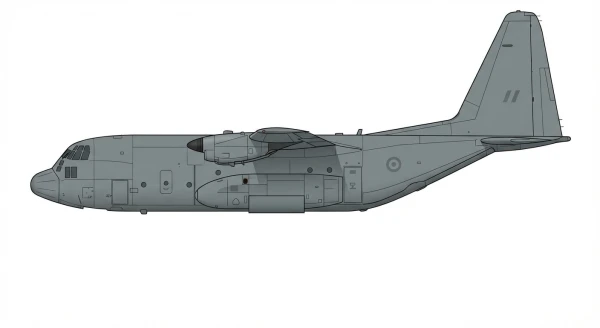
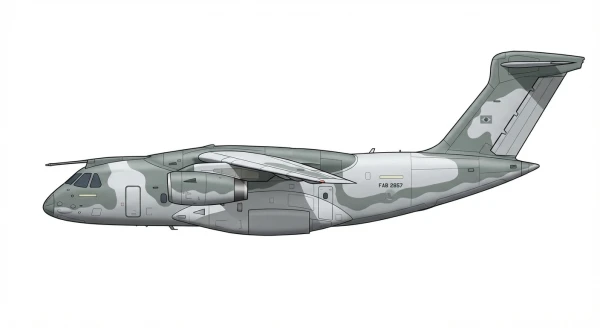
| C-130 Hercules | C-390 Millennium | |
|---|---|---|
| Origin country | 🇺🇸 United States | 🇧🇷 Brazil |
| Category | Military Transport Aircraft | Military Transport Aircraft |
| Manufacturer | Lockheed | Embraer |
| First flight | 23 August 1954 | 30 August 2025 |
| Year introduced | 1956 | 2019 |
| Number produced | 2500 units | 15 units |
| Average unit price | $68 million | $140 million |
| Wing area | 162.0 m² | -- m² |
| Wingspan | 40.4 m | 35.1 m |
| Height | 11.7 m | 10.3 m |
| Length | 29.8 m | 33.9 m |
| Maximum speed | 593 km/h | 980 km/h |
| Operational range | 3,800 km | 6,240 km |
| Service ceiling | 10,058 m | 11,000 m |
| Max. takeoff weight | 70,307 kg | 72,000 kg |
| Empty weight | 35,800 kg | 35,000 kg |
| Total thrust | 4 x 3,661 kW | 2 x 13,154 kgf |
Detailed Comparison
The Embraer C-390 Millennium is a modern, twin-turbofan military transport designed to compete directly in the medium airlift market dominated for decades by the Lockheed C-130 Hercules. While both are high-wing tactical airlifters with rear cargo ramps, their core designs diverge significantly. The C-390 prioritizes speed and modern systems integration, leveraging jet propulsion for rapid deployment, whereas the C-130, a four-engine turboprop, is a testament to rugged, field-proven versatility with an unparalleled operational record. The C-390 offers a higher payload capacity (26 t) and a substantially greater maximum speed (980 km/h) compared to the C-130H (593 km/h), reflecting a design choice favoring strategic mobility.
Development and Design
The C-130 Hercules was born from a 1950s US Air Force requirement for a versatile transport capable of operating from unprepared airstrips. Its design—four Allison T56 turboprops, a high-aspect-ratio wing, and robust landing gear—has remained fundamentally unchanged, a testament to its effectiveness. Its evolution has been incremental, with variants like the C-130J Super Hercules introducing new engines and a modern glass cockpit.
In contrast, the C-390 is a clean-sheet 21st-century design. Developed in the 2000s, it incorporates technologies not available during the C-130's inception. Key innovations include:
- Fly-by-wire flight controls with active sidesticks, reducing crew workload and improving handling.
- Modern commercial avionics (Rockwell Collins Pro Line Fusion) and an integrated health monitoring system for improved reliability and maintenance.
- Two IAE V2500-E5 turbofan engines, common to commercial airliners, offering higher speed, altitude performance, and potentially simplified logistics for some operators.
Specifications and Performances
The performance differences are a direct result of their propulsion systems. The C-390's turbofans enable it to fly almost 65% faster and at a higher service ceiling (11,000 m) than the C-130H model. This speed allows it to serve a dual tactical/strategic role, reducing transit times significantly. Its maximum takeoff weight (72,000 kg) is slightly higher than the C-130H's (70,307 kg), and its cargo hold is designed to accommodate wider modern vehicles. The C-130, however, remains the benchmark for short and unprepared field operations. Its four turboprops provide superior thrust at low speeds, enabling shorter takeoff runs (1,093 m) from austere landing strips where the C-390's jet engines may be less suitable.
Deployment and usage
The C-130's operational history is vast, with over 2,500 units serving in more than 60 countries. It is a combat-proven asset, having participated in nearly every major Western military operation since the 1950s. Its adaptability is demonstrated by its numerous specialized variants, from the AC-130 gunship to the KC-130 tanker. The C-390 is a new entrant with a growing, but limited, service record. Operated primarily by Brazil and a growing number of European nations, it has demonstrated high mission completion (99.5%) and availability rates (~80%) in humanitarian and joint military exercises. Its first international missions, including aid to Beirut and exercises in the US, showcase its intended multi-role capability.
Conclusion
The choice between these two aircraft reflects a divergence in air mobility philosophy. The C-130, particularly in its latest J-model variant, represents an incrementally modernized, low-risk, and exceptionally versatile platform with unmatched experience in austere environments. Its global user base ensures widespread logistical support. The C-390 offers a generational leap in performance, providing jet-like speed for rapid response, a modern digital architecture, and lower projected maintenance due to its newer design and fewer engines. While the C-130's price of $30.0 million reflects older variants, the C-390's $120.0 million cost represents a significant investment in a next-generation platform that blends tactical utility with strategic speed.