JL-9 vs L-39 Albatros
JL-9 vs L-39 Albatros at a glance — top speed 1,100 vs 750 km/h, range 863 vs 1,100 km, max takeoff weight 9,800 vs 4,700 kg, built 13 vs 2,900 units.
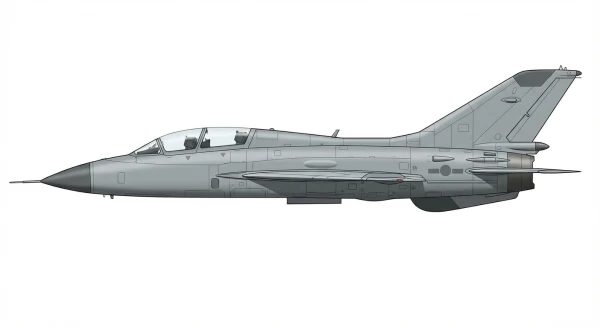
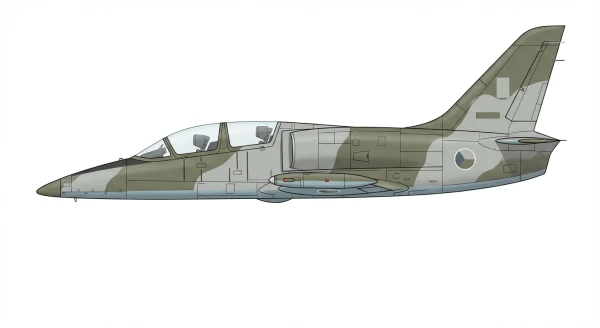
| JL-9 | L-39 Albatros | |
|---|---|---|
| Origin country | 🇨🇳 China | 🇨🇿 Czechia |
| Category | Military Training Aircraft | Military Training Aircraft |
| Manufacturer | Guizhou | Aero |
| First flight | 13 December 2003 | 4 November 1968 |
| Year introduced | 2013 | 1972 |
| Number produced | 13 units | 2900 units |
| Average unit price | -- | $1 million |
| Wing area | 24.9 m² | 18.8 m² |
| Wingspan | 8.3 m | 9.5 m |
| Height | 4.1 m | 4.8 m |
| Length | 14.6 m | 12.1 m |
| Maximum speed | 1100 km/h | 750 km/h |
| Operational range | 863 km | 1,100 km |
| Service ceiling | 16,000 m | 11,500 m |
| Max. takeoff weight | 9,800 kg | 4,700 kg |
| Empty weight | 7,800 kg | 3,459 kg |
| Total thrust | 1 x 4,497 kgf | 1 x 1,720 kgf |
Detailed Comparison
The Guizhou JL-9 is a modern lead-in fighter trainer (LIFT) derived from the supersonic J-7 fighter, designed to prepare pilots for fourth-generation aircraft. In contrast, the Aero L-39 Albatros is a purpose-built, subsonic basic and advanced jet trainer from the Cold War era, valued for its reliability and low operating costs. The JL-9 is a higher-performance, more complex platform, while the L-39 is a foundational training tool produced in far greater numbers.
Development and Design
The L-39's design philosophy prioritized robust simplicity for mass production and ease of operation. Its straight-wing, tandem-seat configuration and single turbofan engine were optimized for stable low-speed handling and maintenance, even from austere airfields. The JL-9 represents an evolutionary, cost-saving approach. By heavily modifying a proven airframe (the JJ-7, a J-7 trainer), Guizhou created a supersonic-capable trainer. Key innovations include a new forward fuselage with side intakes to accommodate radar, a redesigned wing, and a glass cockpit, while retaining the older airframe's engine and empennage. The later FTC-2000G variant features a modern diverterless supersonic inlet.
Specifications and Performances
The performance disparity reflects their distinct missions. The JL-9's afterburning WP-13F engine produces up to 6,645 kgf of thrust, enabling supersonic flight, a high climb rate of 260 m/s, and a service ceiling of 16,000 m. This performance is essential for training pilots for high-altitude, high-speed combat. The L-39's AI-25TL engine produces a modest 1,720 kgf of thrust, resulting in a subsonic top speed, a much lower climb rate of 22 m/s, and a ceiling of 11,500 m. The JL-9's significantly higher maximum takeoff weight (9,800 kg vs. 4,700 kg) also allows it to carry a heavier and more diverse ordnance load, with the FTC-2000G variant handling up to 3 tons.
Deployment and usage
With nearly 2,900 units built, the L-39 became the standard jet trainer for over 30 nations. Its secondary light attack capability has been employed in numerous low-intensity conflicts, though its lack of advanced systems makes it vulnerable. The JL-9 has seen much more limited production, primarily serving China's PLAAF and PLANAF for advanced training, including a carrier-trainer variant (JL-9G). Its export version, the FTC-2000G, is marketed as a cost-effective light combat aircraft with beyond-visual-range missile capability. Recent combat losses of FTC-2000s in Sudan and Myanmar highlight the risks of deploying such aircraft in contested environments.
Conclusion
The L-39 Albatros remains a successful and economical aircraft for the initial stages of jet pilot training, and its upgraded L-39NG variant seeks to maintain its relevance. The Guizhou JL-9, however, operates in a different category as a dedicated LIFT. It is designed to bridge the significant performance gap between basic trainers and modern combat aircraft. While based on an older airframe, its modifications provide essential training for supersonic flight and advanced weapons employment—capabilities the L-39 platform does not possess. They are not direct competitors, but rather platforms addressing different, often sequential, stages of pilot training.