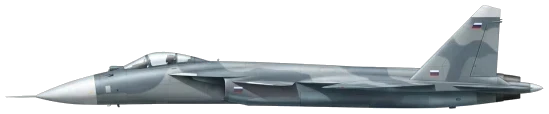
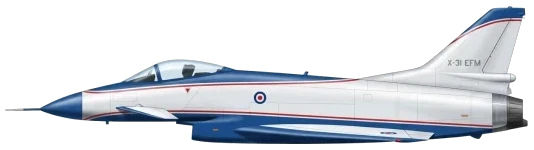
Su-47 "Berkut" Firkin vs X-31 EFM Vector
Su-47 "Berkut" Firkin vs X-31 EFM Vector at a glance — top speed 2,500 vs 1,448 km/h, max takeoff weight 35,000 vs 7,303 kg, built 1 vs 2 units.
Su-47 "Berkut" Firkin X-31 EFM Vector
Origin country
🇷🇺 Russia 🇩🇪 Germany 🇺🇸 United States
Category
Combat Aircraft Military Special Mission Aircraft
Manufacturer
Sukhoi
Rockwell-MBB
First flight
25 September 1997
11 October 1990
Year introduced
--
--
Number produced
1 units
2 units
Average unit price
$75 million
--
Wing area
61.9 m² 21.0 m²
Wingspan
15.2 m 7.3 m
Height
6.3 m 4.4 m
Length
22.6 m 13.2 m
Maximum speed
2500 km/h 1448 km/h
Operational range
3,300 km -- km
Service ceiling
18,000 m 12,192 m
Max. takeoff weight
35,000 kg 7,303 kg
Empty weight
16,375 kg 5,175 kg
Total thrust
2 x 15,602 kgf
1 x 7,257 kgf
Detailed Comparison The Sukhoi Su-47 Berkut and the Rockwell-MBB X-31 Vector served as the aerospace industry's primary testbeds for post-stall maneuverability in the 1990s. While Sukhoi pursued aerodynamic instability and a forward-swept wing (FSW) to achieve high angles of attack, the joint US-German X-31 program relied on mechanical thrust vectoring via exhaust deflectors. Both programs sought to answer whether close-in agility remained relevant in the emerging beyond-visual-range (BVR) era.
Development and Design
Sukhoi engineers based the Su-47 on the Su-27 airframe, utilizing an FSW to maintain airflow over the control surfaces at high angles of attack. To counteract aeroelastic divergence—the tendency of forward-swept wings to twist under aerodynamic load—Sukhoi manufactured the wings from 90% composite materials. The X-31 was built as a low-cost, single-purpose demonstrator. Rockwell and MBB integrated an off-the-shelf General Electric F404-GE-400 turbofan equipped with three carbon-epoxy thrust-vectoring paddles. The X-31 relied on this mechanical thrust redirection, combined with movable canards, to force the nose around when conventional aerodynamic surfaces lost authority.
Specifications and Performances
The aircraft operated in completely different weight and velocity classes:
The Su-47 weighed 35,000 kg at max takeoff, powered by twin AL-37FU engines generating 15,196 kgf of thrust to reach 2,500 km/h (Mach 2.3) and an 18,000-meter ceiling.
The X-31 weighed 7,303 kg at max takeoff, utilizing a single 4,808 kgf F404 engine restricted to 1,448 km/h and a 12,192-meter ceiling.
The X-31 achieved controlled flight at 70-degree angles of attack, prioritizing pitch and yaw authority at low speeds. The Su-47 maintained high maneuverability at supersonic speeds, a flight regime where the X-31 's external thrust vectoring paddles induced heavy drag penalties.
Deployment and usage
Neither aircraft entered operational service or combat. The X-31 completed 108 flights before the program concluded in 1995. During simulated dogfights, the X-31 defeated standard F/A-18s by executing the Herbst maneuver—a rapid post-stall deceleration and heading reversal. This validated thrust vectoring for close-in combat, directly influencing the integration of thrust vectoring on later aircraft. The lone Su-47 prototype flew from 1997 through the 2000s. Its FSW design proved too structurally demanding and maintenance-intensive for mass production. The Russian Defense Ministry instead used the Su-47 as the risk-reduction testbed for internal weapons bays and composite manufacturing processes applied to the Su-57 stealth fighter.
Conclusion
For combat aircraft development, the X-31 provides the more viable engineering template. The US-German demonstrator proved that thrust vectoring achieves high angle-of-attack maneuverability with less structural mass and engineering complexity than a forward-swept wing. The aerospace industry's subsequent adoption of thrust vectoring—seen in the F-22 , Su-35 , and Su-57 —and the total abandonment of FSW designs confirm the X-31 's approach won the post-stall maneuverability debate. The Su-47 holds the edge only as a high-speed aerodynamic platform; its Mach 2.3 capability outpaces the transonic-optimized X-31 . Ultimately, mechanical thrust vectoring proved scalable to operational fighters, relegating the Su-47 's forward-swept wings to an aerodynamic dead end.
Former operators · 1 built
Former operators · 2 built
Change comparison
-- Select an aircraft --
206 JetRanger
208 Caravan
210 Centurion
421 Golden Eagle
429 GlobalRanger
441 Conquest II
500 Citation I
505 Jet Ranger X
A-1 Skyraider
A-10 Thunderbolt II
A-3 Skywarrior
A-37 Dragonfly
A-4 Skyhawk
A-40 Mermaid
A-5 Vigilante
A-50 Mainstay
A-6 Intruder
A-7 Corsair II
A1-CM Furia
A129 Mangusta
A400M Atlas
A900
AC-130
AH-1 Cobra
AH-1W Super Cobra
AH-1Z Viper
AH-2 Rooivalk
AH-6 Little Bird
AH-64 Apache
AMCA
AMX
AN-BK-1 Horlytsia
AQ-400 Scythe
AQM-34 Lightning Bug
AS 202 Bravo
AS332 Super Puma
AS565 Panther
ASN-209 Silver Eagle
AT-3 Tsu Chiang
ATL-2 Atlantique
ATR-42
ATR-72
AV-8B Harrier II
AW.660 Argosy
AW101
AW109
AW119
AW139
AW149
AW159
AW169
AW249 Fenice
AW609
Aarok
Ababil-3
Aermacchi M-345
Aermacchi S-211
Aerosonde
Aerostar
Air Tractor AT-500
Airbus A310 MRTT
Airbus A319 CJ
Airbus A321
Airbus A330
Airbus A330 MRTT
Airbus A350
Ajeet
Alarus CH2000
Alizé
Alpha Jet
An-12 Cub
An-124 Condor
An-14 Clod
An-140
An-148
An-178
An-196 Liutyi
An-2 Colt
An-22 Cock
An-225 Cossack
An-24 Coke
An-26 Curl
An-28 Cash
An-30 Clank
An-32 Cline
An-71 Madcap
An-72/74 Coaler
Ansat
Arava
Archytas
Atlas Cheetah
Atlas Oryx
Azarakhsh
B-1A
B-1B Lancer
B-2 Spirit
B-21 Raider
B-29 Superfortress
B-36 Peacemaker
B-45 Tornado
B-47 Stratojet
B-52 Stratofortress
B-57 Canberra
B-58 Hustler
B-66 Destroyer
BAE Tempest
BAe 146
BD-700 Global Express
BN-2B Defender
BQM-167 Skeeter
BQM-74 Chukar
BZK-005 Giant Eagle
Bayraktar Akıncı
Bayraktar Kızılelma
Bayraktar TB2
Bayraktar TB3
Be-12 Tchaïka Mail
Be-200
Be-6 Madge
Beechcraft 1900 Beechliner
Beechcraft 390 Premier I
Beechcraft Baron
Beechcraft Bonanza
Bell 214
Bell 407
Bell 412
Bell 430
Bell 47
Bird-Eye
Black Hornet
Blackburn Beverley
Bober
Boeing 707
Boeing 727
Boeing 737
Boeing 747
Boeing 757
Boeing 767
Br.1150 Atlantic
Bristol Belvedere
Bristol Sycamore
Buccaneer
Burraq
C-101 Aviojet
C-123 Provider
C-130 Hercules
C-140 JetStar
C-141 Starlifter
C-160 Transall
C-17 Globemaster III
C-2 Greyhound
C-212 Aviocar
C-23 Sherpa
C-27J Spartan
C-295 Persuader
C-32
C-390 Millennium
C-5 Galaxy
CF-100 Canuck
CF-105 Arrow
CH-3 Rainbow
CH-4 Rainbow
CH-46 Sea Knight
CH-47 Chinook
CH-5 Rainbow
CH-53 Sea Stallion
CH-54 Tarhe
CH-7 Rainbow
CH-92 Rainbow
CH-95 Rainbow
CL-215 Scooper
CL-41 Tutor
CL-415 Super Scooper
CL-600 Challenger
CM 170 Magister
CN-235
CP-107 Argus
CT/4 Airtrainer
Calidus B250
Canadair CL-289
Canberra
Cessna 340
Cessna 402
Cessna 404 Titan
Cirrus SR-20
Cirrus SR22
Commander 500
Crécerelle
DA42 Twin Star
DH.100 Vampire
DH.106 Comet
DH.110 Sea Vixen
DH.112 Venom
DHC-1 Chipmunk
DHC-2 Beaver
DHC-3 Otter
DHC-4 Caribou
DHC-5 Buffalo
DHC-6 Twin Otter
DHC-7 Dash 7
DHC-8 Dash 8
Denel Seeker
Dhruv
Diamond DA62
Djinn
Do 128
Do 228
Do 27
Do 328
Douglas DC-3
E-1 Tracer
E-2 Hawkeye
E-3 Sentry AWACS
E-4 NOAC
E-6 Mercury TACAMO
E-7 Wedgetail
E-8 Joint STARS
EA-18G Growler
EA-37B Compass Call
EA-6B Prowler
EC-130 Commando Solo
EC-130H Compass Call
EC-135 / EC-18 ARIA
EC665 Tiger
EF-111 Raven
EMB 110
EMB 120 Brasilia
EMB 121 Xingu
EMB 312 Tucano
EMB-314 Super Tucano
EMT Luna
ERJ 135
Eitan (Heron TP)
Elbit Skylark
Eleron-3
English Electric Lightning
Enstrom 480
Enstrom F-28
Eurodrone
F-100 Super Sabre
F-101 Voodoo
F-102 Delta Dagger
F-104 Starfighter
F-105 Thunderchief
F-106 Delta Dart
F-111 Aardvark
F-117 Nighthawk
F-14 Tomcat
F-15 Eagle
F-15E Strike Eagle
F-15EX Eagle II
F-15I Ra'am
F-16 Fighting Falcon
F-16I Sufa
F-16V Viper
F-22 Raptor
F-35 Lightning II
F-4 Phantom II
F-47
F-5 Freedom Fighter
F-5E Tiger II
F-8 Crusader
F-80 Shooting Star
F-84 Thunderjet
F-84F Thunderstreak
F-86 Sabre
F-CK-1 Ching-Kuo
F/A-18 E/F Super Hornet
F/A-18 Hornet
F11F Tiger
F27 Friendship
F28 Fellowship
F406 Caravan II
F4D Skyray
F9F Panther
FA-50 Fighting Eagle
FJ-4 Fury
FP-1
FQ-42 Vengeance
FQ-44 Fury
FT5 Łoś
Fairchild Metroliner
Fairey Gannet
Falcon 10
Falcon 20
Falcon 2000
Falcon 50
Falcon 7X
Falcon 8X
Falcon 900
FlyEye
Fokker 50
Folland Gnat
Forpost
Fotros
Fuji T-1
Fuji T-3
Fuji T-5
Fuji T-7
G-2 Galeb
G.222
G.91 Gina
GAF Nomad
GEC-Marconi Phoenix
GJ-11 Sharp Sword
GNAT-750
Garpiya-A1
Geran-5
Gerbera
GippsAero GA8 Airvan
GlobalEye
Gloster Javelin
Gloster Meteor
Grob G-115
Grob G-120
Guimbal Cabri G2
Gulfstream G100
Gulfstream G550
Gulfstream G650
Gulfstream II
Gulfstream III
Gulfstream IV
Gulfstream V
H-19 Chickasaw
H-21 Shawnee
H-34 Choctaw
H-37 Mojave
H-5
H-6
H120 / EC120 Colibri
H125M / AS550 Fennec
H135M / EC365
H145M / EC645
H155 / EC155 Dauphin 2
H160M Guépard
H175
H215M / AS532 Cougar
H225M / EC725 Caracal
HF-24 Marut
HH-3 Jolly Green Giant
HH-52 Seaguard
HH-60 Pave Hawk
HJT-16 Kiran
HPT-32 Deepak
HS 748
HTT-40
Harfang
Harrier
Hawk
Hawker 400
Hawker 800
Hawker Hunter
Hermes 450
Hermes 900
Hürjet
Hürkus
I-22 Iryda
IA 58 Pucará
IA-63 Pampa
IAI Harop
IAI Harpy
IAI Heron
IAI Scout
IAI Searcher
IAR-823
IAR-93 / J-22 Orao
IAR-99 Șoim
Il-10 Beast
Il-112
Il-114
Il-14 Crate
Il-18 Coot
Il-2 Sturmovik
Il-20 Coot-A
Il-276 SVTS
Il-28 Beagle
Il-38 May
Il-62 Classic
Il-76 Candid
Il-78 Midas
Il-80
Il-86 Camber
Il-96
Iomax Archangel
Italmas
J-10 Vigorous Dragon
J-11 Responsive Dragon
J-12
J-15 Flying Shark
J-16 Qianlong
J-20 Kraguj
J-20 Mighty Dragon
J-21 Jastreb
J-29 Tunnan
J-32 Lansen
J-35 Draken
J-36
J-5 Fresco
J-50
J-6 Farmer
J-7 Fishcan
J-8 Finback
JA 37 Viggen
JAS 39 Gripen
JF-17 Thunder
JH-7 Flounder
JL-10
JL-8
JL-9
Jaguar
Jasoos II
Jet Provost
Jetstream 31
Jetstream 41
KAAN
KC-10 Extender
KC-130 Hercules
KC-135 Stratotanker
KC-46 Pegasus
KC-767
KF-21 Boramae
KJ-200 Moth
KJ-2000 Mainring
KJ-500
KQ-200
KT-1 Woongbi
KT-100
KUB-BLA
KUH-1 Surion
KUS-FS
KZO
Ka-22 Hoop
Ka-226 Hoodlum-C
Ka-25 Hormone
Ka-26
Ka-27 Helix
Ka-29 Helix-B
Ka-31
Ka-50 Hokum "Black Shark"
Ka-52 Alligator Hokum-B
Ka-60 Kasatka
Kaman-22
Karayel
Kargu
Karrar
Kawasaki C-1
Kawasaki C-2
Kawasaki P-1
Kawasaki T-4
Kfir
King Air 350
King Air 90
Korsar
Kowsar
Kronshtadt Orion
L-159 ALCA
L-29 Delfin
L-39 Albatros
L-70 Vinka
L-90 Redigo
La-7 Fin
Lakshya
Lasta-95
Learjet 35
Learjet 45
Leleka-100
Leonardo Falco
Let L-410
M-18 Dromader
M-346 Master
M-4 Bison
M-50 Bounder
M-55 Mystic
M28 Skytruck
MB-326K
MB-339
MBB Bo 105
MD-450 Ouragan
MD-500
MD-900
MFI-15 Safari
MH-53J Pave Low III
MQ-1 Predator
MQ-1C Gray Eagle
MQ-20 Avenger
MQ-25 Stingray
MQ-28 Ghost Bat
MQ-4 Triton
MQ-8 Fire Scout
MQ-9 Reaper
MQ-9B SkyGuardian
MQM-107 Streaker
MS 733 Alcyon
MV-75 Cheyenne II
McDonnell Douglas DC-10
Meraj-521
Mi-1 Hare
Mi-10
Mi-14 Haze
Mi-17 Hip-H
Mi-2 Hoplite
Mi-24 Hind
Mi-26 Halo
Mi-28 Havoc
Mi-34 Hermit
Mi-35M
Mi-38
Mi-4 Hound
Mi-6 Hook
Mi-8 Hip
MiG-15 Fagot
MiG-17 Fresco
MiG-19 Farmer
MiG-21 Fishbed
MiG-23 Flogger
MiG-25 Foxbat
MiG-27 Flogger
MiG-29 Fulcrum
MiG-29K Fulcrum-D
MiG-31 Foxhound
MiG-35
MiG-9 Fargo
Mirage 2000
Mirage 4000
Mirage F1
Mirage F2 / F3
Mirage G
Mirage I / MD-550 Mystère Delta
Mirage III / 5 / 50
Mirage IV
Mitsubishi F-1 / T-2
Mitsubishi F-2
Mohajer-10
Mohajer-4
Mohajer-6
Mudry CAP 10
Mudry CAP 232
Mystère IV
NAMC YS-11
NCSIST Albatross
NH90 / Caiman
Nagastra-1
Nanchang CJ-6
Nesher
Nimrod
Nishant
Noratlas
Nord 3400
O-2 Skymaster
OA-1K Skyraider II / AT-802U
OH-1 Ninja
OH-58 Kiowa
OH-6 Cayuse
OV-1 Mohawk
OV-10 Bronco
Orbiter
Orlan-10
Orlan-30
P-2 Neptune
P-3 Orion
P-8 Poseidon
P.166
P180 Avanti
PA-31 Navajo
PA-32 Cherokee Six
PA-34 Seneca
PA-44 Seminole
PC-12 Eagle
PC-6 Porter
PC-7 Turbo Trainer
PD-2
PZL-130 Orlik
Pacific Aerospace P750
Palianytsia
Pe-2 Buck
Pegasus II
Phenom 100
Pilatus PC-21
Pilatus PC-24
Pilatus PC-9
Pipistrel Virus SW80
Po-2 Mule
Prachand
Q-5 / A-5 Fantan
QH-50 DASH
Quest Kodiak
R-4
R-99 Erieye
RC-135 Rivet Joint
RQ-101 Night Intruder
RQ-11 Raven
RQ-16 T-Hawk
RQ-170 Sentinel
RQ-180
RQ-2 Pioneer
RQ-20 Puma
RQ-21 Blackjack
RQ-4 Global Hawk
RQ-5 Hunter
RQ-7 Shadow
RUAG Ranger
Rafale
Robinson R22
Robinson R44 Raven
S-100 Camcopter
S-2 Tracker
S-3 Viking
S-70 Okhotnik
S-76 Spirit
S-92 Superhawk
S330 / S333
SA 315B Lama
SA315 Alouette II
SA316 Alouette III
SA321 Super Frelon
SA330 Puma
SA340 Gazelle
SAAB 105
SH-2 Seasprite
SH-3 Sea King
SH-5
SH-60 Seahawk
SIAI-Marchetti SF-260
SIAI-Marchetti SM.1019
SIRTAP
SO 4050 Vautour
SR-71 Blackbird
SW-4 Puszczyk
Saab 340 AEW&C
Saegheh
Saeqeh
Safran Patroller
Samad
Saro Skeeter
ScanEagle
Scottish Aviation Bulldog
Sea Harrier
Sea Hawk
Shackleton
Shahed 129
Shahed 131
Shahed 136
Shahed 238
Shahed-101
Shahed-107
Shahed-149 Gaza
Shahed-171 Simorgh
Shahpar
Shahpar-II
Shenyang J-35
ShinMaywa US-2
Short 330
Short 360
Short Skyvan
Skeldar V-200
Socata TBM
Sokil-300
Soko G-4 Super Galeb
Sokol Altius
Sperwer
Strikemaster
Su-11 Fishpot
Su-15 Flagon
Su-17 Fitter
Su-24 Fencer
Su-25 Frogfoot
Su-27 Flanker
Su-30 Flanker-C
Su-33 Flanker-D
Su-34 Fullback
Su-35 Flanker-E
Su-37 Super Flanker
Su-47 "Berkut" Firkin
Su-57 Felon
Su-7 Fitter
Su-75 Checkmate
Su-9 / Su-11 Fishpot
Super Etendard
Super Mystère B2
Supermarine Scimitar
Switchblade 300
Switchblade 600
T-2 Buckeye
T-23 Uirapuru
T-25 Universal
T-28 Trojan
T-33 Shooting Star
T-34 Mentor
T-35 Pillan
T-37 Tweet
T-38 Talon
T-39 Sabreliner
T-41 Mescalero
T-45 Goshawk
T-5 Brave Eagle
T-50 Golden Eagle
T-6 Texan II
T-67 Firefly
T-7 Red Hawk
T-CH-1 Chung Hsing
T129 ATAK
TAI Aksungur
TAI Anka
TAI Anka-3
TB-001 Twin-tailed Scorpion
TB-30 Epsilon
TH-55 Osage
TS-11 Iskra
TS-8 Bies
Tadiran Mastiff
Taranis
Tecnam P2002
Tecnam P2006T
Tejas
Tornado
Tsaigumi
Tu-104 Camel
Tu-123 Yastreb
Tu-126 Moss
Tu-128 Fiddler
Tu-134 Crusty
Tu-141 Strizh
Tu-142
Tu-143 Reys
Tu-144 Charger
Tu-154 Careless
Tu-16 Badger
Tu-160 Blackjack
Tu-2 Bat
Tu-214
Tu-22 Blinder
Tu-22M / Tu-26 Backfire
Tu-4 Bull
Tu-95 Bear
Twin Pioneer
Typhoon
U-2 Dragon Lady
UA Dynamics Punisher
UH-1 Iroquois "Huey"
UH-1N Twin Huey
UH-1Y Venom
UH-60 Black Hawk
UH-72 Lakota
UJ-22 Airborne
UJ-25 Skyline
UTVA-75
V-12 Homer
V-22 Osprey
V-BAT
VC-25 "Air Force One"
VH-60 White Hawk
Valiant
Victor
Vulcan
Vulcanair P68
W-3 Sokol
WJ-700
WZ-7 Soaring Dragon
WZ-8
Warmate
Wasp III
Watchkeeper WK450
Wessex
Westland Lynx
Westland Scout
Westland Wasp
Westland Whirlwind
Wing Loong I
Wing Loong II
Wing Loong-10
Wulung
X-31 EFM Vector
X-47B
XQ-58 Valkyrie
Y-12
Y-20
Y-7
Y-8
Y-9
YF-23 Black Widow II
YFQ-48 Talon Blue
Yabhon United 40
Yak-11 Moose
Yak-130 Mitten
Yak-141 Freestyle
Yak-15 Feather
Yak-152
Yak-18 Max
Yak-24 Horse
Yak-25 Flashlight
Yak-28 Brewer / Firebar
Yak-36 Freehand
Yak-38 Forger
Yak-40 Codling
Yak-42 Clobber
Yak-52
Yak-9 Frank
Z-10
Z-11
Z-18
Z-19
Z-20
Z-8
Z-9 Haitun
ZALA Lancet
ZDK-03 Karakoram Eagle
Zlin Z 42
Zlin Z 43
nEUROn
Étendard IVM
vs
-- Select an aircraft --
206 JetRanger
208 Caravan
210 Centurion
421 Golden Eagle
429 GlobalRanger
441 Conquest II
500 Citation I
505 Jet Ranger X
A-1 Skyraider
A-10 Thunderbolt II
A-3 Skywarrior
A-37 Dragonfly
A-4 Skyhawk
A-40 Mermaid
A-5 Vigilante
A-50 Mainstay
A-6 Intruder
A-7 Corsair II
A1-CM Furia
A129 Mangusta
A400M Atlas
A900
AC-130
AH-1 Cobra
AH-1W Super Cobra
AH-1Z Viper
AH-2 Rooivalk
AH-6 Little Bird
AH-64 Apache
AMCA
AMX
AN-BK-1 Horlytsia
AQ-400 Scythe
AQM-34 Lightning Bug
AS 202 Bravo
AS332 Super Puma
AS565 Panther
ASN-209 Silver Eagle
AT-3 Tsu Chiang
ATL-2 Atlantique
ATR-42
ATR-72
AV-8B Harrier II
AW.660 Argosy
AW101
AW109
AW119
AW139
AW149
AW159
AW169
AW249 Fenice
AW609
Aarok
Ababil-3
Aermacchi M-345
Aermacchi S-211
Aerosonde
Aerostar
Air Tractor AT-500
Airbus A310 MRTT
Airbus A319 CJ
Airbus A321
Airbus A330
Airbus A330 MRTT
Airbus A350
Ajeet
Alarus CH2000
Alizé
Alpha Jet
An-12 Cub
An-124 Condor
An-14 Clod
An-140
An-148
An-178
An-196 Liutyi
An-2 Colt
An-22 Cock
An-225 Cossack
An-24 Coke
An-26 Curl
An-28 Cash
An-30 Clank
An-32 Cline
An-71 Madcap
An-72/74 Coaler
Ansat
Arava
Archytas
Atlas Cheetah
Atlas Oryx
Azarakhsh
B-1A
B-1B Lancer
B-2 Spirit
B-21 Raider
B-29 Superfortress
B-36 Peacemaker
B-45 Tornado
B-47 Stratojet
B-52 Stratofortress
B-57 Canberra
B-58 Hustler
B-66 Destroyer
BAE Tempest
BAe 146
BD-700 Global Express
BN-2B Defender
BQM-167 Skeeter
BQM-74 Chukar
BZK-005 Giant Eagle
Bayraktar Akıncı
Bayraktar Kızılelma
Bayraktar TB2
Bayraktar TB3
Be-12 Tchaïka Mail
Be-200
Be-6 Madge
Beechcraft 1900 Beechliner
Beechcraft 390 Premier I
Beechcraft Baron
Beechcraft Bonanza
Bell 214
Bell 407
Bell 412
Bell 430
Bell 47
Bird-Eye
Black Hornet
Blackburn Beverley
Bober
Boeing 707
Boeing 727
Boeing 737
Boeing 747
Boeing 757
Boeing 767
Br.1150 Atlantic
Bristol Belvedere
Bristol Sycamore
Buccaneer
Burraq
C-101 Aviojet
C-123 Provider
C-130 Hercules
C-140 JetStar
C-141 Starlifter
C-160 Transall
C-17 Globemaster III
C-2 Greyhound
C-212 Aviocar
C-23 Sherpa
C-27J Spartan
C-295 Persuader
C-32
C-390 Millennium
C-5 Galaxy
CF-100 Canuck
CF-105 Arrow
CH-3 Rainbow
CH-4 Rainbow
CH-46 Sea Knight
CH-47 Chinook
CH-5 Rainbow
CH-53 Sea Stallion
CH-54 Tarhe
CH-7 Rainbow
CH-92 Rainbow
CH-95 Rainbow
CL-215 Scooper
CL-41 Tutor
CL-415 Super Scooper
CL-600 Challenger
CM 170 Magister
CN-235
CP-107 Argus
CT/4 Airtrainer
Calidus B250
Canadair CL-289
Canberra
Cessna 340
Cessna 402
Cessna 404 Titan
Cirrus SR-20
Cirrus SR22
Commander 500
Crécerelle
DA42 Twin Star
DH.100 Vampire
DH.106 Comet
DH.110 Sea Vixen
DH.112 Venom
DHC-1 Chipmunk
DHC-2 Beaver
DHC-3 Otter
DHC-4 Caribou
DHC-5 Buffalo
DHC-6 Twin Otter
DHC-7 Dash 7
DHC-8 Dash 8
Denel Seeker
Dhruv
Diamond DA62
Djinn
Do 128
Do 228
Do 27
Do 328
Douglas DC-3
E-1 Tracer
E-2 Hawkeye
E-3 Sentry AWACS
E-4 NOAC
E-6 Mercury TACAMO
E-7 Wedgetail
E-8 Joint STARS
EA-18G Growler
EA-37B Compass Call
EA-6B Prowler
EC-130 Commando Solo
EC-130H Compass Call
EC-135 / EC-18 ARIA
EC665 Tiger
EF-111 Raven
EMB 110
EMB 120 Brasilia
EMB 121 Xingu
EMB 312 Tucano
EMB-314 Super Tucano
EMT Luna
ERJ 135
Eitan (Heron TP)
Elbit Skylark
Eleron-3
English Electric Lightning
Enstrom 480
Enstrom F-28
Eurodrone
F-100 Super Sabre
F-101 Voodoo
F-102 Delta Dagger
F-104 Starfighter
F-105 Thunderchief
F-106 Delta Dart
F-111 Aardvark
F-117 Nighthawk
F-14 Tomcat
F-15 Eagle
F-15E Strike Eagle
F-15EX Eagle II
F-15I Ra'am
F-16 Fighting Falcon
F-16I Sufa
F-16V Viper
F-22 Raptor
F-35 Lightning II
F-4 Phantom II
F-47
F-5 Freedom Fighter
F-5E Tiger II
F-8 Crusader
F-80 Shooting Star
F-84 Thunderjet
F-84F Thunderstreak
F-86 Sabre
F-CK-1 Ching-Kuo
F/A-18 E/F Super Hornet
F/A-18 Hornet
F11F Tiger
F27 Friendship
F28 Fellowship
F406 Caravan II
F4D Skyray
F9F Panther
FA-50 Fighting Eagle
FJ-4 Fury
FP-1
FQ-42 Vengeance
FQ-44 Fury
FT5 Łoś
Fairchild Metroliner
Fairey Gannet
Falcon 10
Falcon 20
Falcon 2000
Falcon 50
Falcon 7X
Falcon 8X
Falcon 900
FlyEye
Fokker 50
Folland Gnat
Forpost
Fotros
Fuji T-1
Fuji T-3
Fuji T-5
Fuji T-7
G-2 Galeb
G.222
G.91 Gina
GAF Nomad
GEC-Marconi Phoenix
GJ-11 Sharp Sword
GNAT-750
Garpiya-A1
Geran-5
Gerbera
GippsAero GA8 Airvan
GlobalEye
Gloster Javelin
Gloster Meteor
Grob G-115
Grob G-120
Guimbal Cabri G2
Gulfstream G100
Gulfstream G550
Gulfstream G650
Gulfstream II
Gulfstream III
Gulfstream IV
Gulfstream V
H-19 Chickasaw
H-21 Shawnee
H-34 Choctaw
H-37 Mojave
H-5
H-6
H120 / EC120 Colibri
H125M / AS550 Fennec
H135M / EC365
H145M / EC645
H155 / EC155 Dauphin 2
H160M Guépard
H175
H215M / AS532 Cougar
H225M / EC725 Caracal
HF-24 Marut
HH-3 Jolly Green Giant
HH-52 Seaguard
HH-60 Pave Hawk
HJT-16 Kiran
HPT-32 Deepak
HS 748
HTT-40
Harfang
Harrier
Hawk
Hawker 400
Hawker 800
Hawker Hunter
Hermes 450
Hermes 900
Hürjet
Hürkus
I-22 Iryda
IA 58 Pucará
IA-63 Pampa
IAI Harop
IAI Harpy
IAI Heron
IAI Scout
IAI Searcher
IAR-823
IAR-93 / J-22 Orao
IAR-99 Șoim
Il-10 Beast
Il-112
Il-114
Il-14 Crate
Il-18 Coot
Il-2 Sturmovik
Il-20 Coot-A
Il-276 SVTS
Il-28 Beagle
Il-38 May
Il-62 Classic
Il-76 Candid
Il-78 Midas
Il-80
Il-86 Camber
Il-96
Iomax Archangel
Italmas
J-10 Vigorous Dragon
J-11 Responsive Dragon
J-12
J-15 Flying Shark
J-16 Qianlong
J-20 Kraguj
J-20 Mighty Dragon
J-21 Jastreb
J-29 Tunnan
J-32 Lansen
J-35 Draken
J-36
J-5 Fresco
J-50
J-6 Farmer
J-7 Fishcan
J-8 Finback
JA 37 Viggen
JAS 39 Gripen
JF-17 Thunder
JH-7 Flounder
JL-10
JL-8
JL-9
Jaguar
Jasoos II
Jet Provost
Jetstream 31
Jetstream 41
KAAN
KC-10 Extender
KC-130 Hercules
KC-135 Stratotanker
KC-46 Pegasus
KC-767
KF-21 Boramae
KJ-200 Moth
KJ-2000 Mainring
KJ-500
KQ-200
KT-1 Woongbi
KT-100
KUB-BLA
KUH-1 Surion
KUS-FS
KZO
Ka-22 Hoop
Ka-226 Hoodlum-C
Ka-25 Hormone
Ka-26
Ka-27 Helix
Ka-29 Helix-B
Ka-31
Ka-50 Hokum "Black Shark"
Ka-52 Alligator Hokum-B
Ka-60 Kasatka
Kaman-22
Karayel
Kargu
Karrar
Kawasaki C-1
Kawasaki C-2
Kawasaki P-1
Kawasaki T-4
Kfir
King Air 350
King Air 90
Korsar
Kowsar
Kronshtadt Orion
L-159 ALCA
L-29 Delfin
L-39 Albatros
L-70 Vinka
L-90 Redigo
La-7 Fin
Lakshya
Lasta-95
Learjet 35
Learjet 45
Leleka-100
Leonardo Falco
Let L-410
M-18 Dromader
M-346 Master
M-4 Bison
M-50 Bounder
M-55 Mystic
M28 Skytruck
MB-326K
MB-339
MBB Bo 105
MD-450 Ouragan
MD-500
MD-900
MFI-15 Safari
MH-53J Pave Low III
MQ-1 Predator
MQ-1C Gray Eagle
MQ-20 Avenger
MQ-25 Stingray
MQ-28 Ghost Bat
MQ-4 Triton
MQ-8 Fire Scout
MQ-9 Reaper
MQ-9B SkyGuardian
MQM-107 Streaker
MS 733 Alcyon
MV-75 Cheyenne II
McDonnell Douglas DC-10
Meraj-521
Mi-1 Hare
Mi-10
Mi-14 Haze
Mi-17 Hip-H
Mi-2 Hoplite
Mi-24 Hind
Mi-26 Halo
Mi-28 Havoc
Mi-34 Hermit
Mi-35M
Mi-38
Mi-4 Hound
Mi-6 Hook
Mi-8 Hip
MiG-15 Fagot
MiG-17 Fresco
MiG-19 Farmer
MiG-21 Fishbed
MiG-23 Flogger
MiG-25 Foxbat
MiG-27 Flogger
MiG-29 Fulcrum
MiG-29K Fulcrum-D
MiG-31 Foxhound
MiG-35
MiG-9 Fargo
Mirage 2000
Mirage 4000
Mirage F1
Mirage F2 / F3
Mirage G
Mirage I / MD-550 Mystère Delta
Mirage III / 5 / 50
Mirage IV
Mitsubishi F-1 / T-2
Mitsubishi F-2
Mohajer-10
Mohajer-4
Mohajer-6
Mudry CAP 10
Mudry CAP 232
Mystère IV
NAMC YS-11
NCSIST Albatross
NH90 / Caiman
Nagastra-1
Nanchang CJ-6
Nesher
Nimrod
Nishant
Noratlas
Nord 3400
O-2 Skymaster
OA-1K Skyraider II / AT-802U
OH-1 Ninja
OH-58 Kiowa
OH-6 Cayuse
OV-1 Mohawk
OV-10 Bronco
Orbiter
Orlan-10
Orlan-30
P-2 Neptune
P-3 Orion
P-8 Poseidon
P.166
P180 Avanti
PA-31 Navajo
PA-32 Cherokee Six
PA-34 Seneca
PA-44 Seminole
PC-12 Eagle
PC-6 Porter
PC-7 Turbo Trainer
PD-2
PZL-130 Orlik
Pacific Aerospace P750
Palianytsia
Pe-2 Buck
Pegasus II
Phenom 100
Pilatus PC-21
Pilatus PC-24
Pilatus PC-9
Pipistrel Virus SW80
Po-2 Mule
Prachand
Q-5 / A-5 Fantan
QH-50 DASH
Quest Kodiak
R-4
R-99 Erieye
RC-135 Rivet Joint
RQ-101 Night Intruder
RQ-11 Raven
RQ-16 T-Hawk
RQ-170 Sentinel
RQ-180
RQ-2 Pioneer
RQ-20 Puma
RQ-21 Blackjack
RQ-4 Global Hawk
RQ-5 Hunter
RQ-7 Shadow
RUAG Ranger
Rafale
Robinson R22
Robinson R44 Raven
S-100 Camcopter
S-2 Tracker
S-3 Viking
S-70 Okhotnik
S-76 Spirit
S-92 Superhawk
S330 / S333
SA 315B Lama
SA315 Alouette II
SA316 Alouette III
SA321 Super Frelon
SA330 Puma
SA340 Gazelle
SAAB 105
SH-2 Seasprite
SH-3 Sea King
SH-5
SH-60 Seahawk
SIAI-Marchetti SF-260
SIAI-Marchetti SM.1019
SIRTAP
SO 4050 Vautour
SR-71 Blackbird
SW-4 Puszczyk
Saab 340 AEW&C
Saegheh
Saeqeh
Safran Patroller
Samad
Saro Skeeter
ScanEagle
Scottish Aviation Bulldog
Sea Harrier
Sea Hawk
Shackleton
Shahed 129
Shahed 131
Shahed 136
Shahed 238
Shahed-101
Shahed-107
Shahed-149 Gaza
Shahed-171 Simorgh
Shahpar
Shahpar-II
Shenyang J-35
ShinMaywa US-2
Short 330
Short 360
Short Skyvan
Skeldar V-200
Socata TBM
Sokil-300
Soko G-4 Super Galeb
Sokol Altius
Sperwer
Strikemaster
Su-11 Fishpot
Su-15 Flagon
Su-17 Fitter
Su-24 Fencer
Su-25 Frogfoot
Su-27 Flanker
Su-30 Flanker-C
Su-33 Flanker-D
Su-34 Fullback
Su-35 Flanker-E
Su-37 Super Flanker
Su-47 "Berkut" Firkin
Su-57 Felon
Su-7 Fitter
Su-75 Checkmate
Su-9 / Su-11 Fishpot
Super Etendard
Super Mystère B2
Supermarine Scimitar
Switchblade 300
Switchblade 600
T-2 Buckeye
T-23 Uirapuru
T-25 Universal
T-28 Trojan
T-33 Shooting Star
T-34 Mentor
T-35 Pillan
T-37 Tweet
T-38 Talon
T-39 Sabreliner
T-41 Mescalero
T-45 Goshawk
T-5 Brave Eagle
T-50 Golden Eagle
T-6 Texan II
T-67 Firefly
T-7 Red Hawk
T-CH-1 Chung Hsing
T129 ATAK
TAI Aksungur
TAI Anka
TAI Anka-3
TB-001 Twin-tailed Scorpion
TB-30 Epsilon
TH-55 Osage
TS-11 Iskra
TS-8 Bies
Tadiran Mastiff
Taranis
Tecnam P2002
Tecnam P2006T
Tejas
Tornado
Tsaigumi
Tu-104 Camel
Tu-123 Yastreb
Tu-126 Moss
Tu-128 Fiddler
Tu-134 Crusty
Tu-141 Strizh
Tu-142
Tu-143 Reys
Tu-144 Charger
Tu-154 Careless
Tu-16 Badger
Tu-160 Blackjack
Tu-2 Bat
Tu-214
Tu-22 Blinder
Tu-22M / Tu-26 Backfire
Tu-4 Bull
Tu-95 Bear
Twin Pioneer
Typhoon
U-2 Dragon Lady
UA Dynamics Punisher
UH-1 Iroquois "Huey"
UH-1N Twin Huey
UH-1Y Venom
UH-60 Black Hawk
UH-72 Lakota
UJ-22 Airborne
UJ-25 Skyline
UTVA-75
V-12 Homer
V-22 Osprey
V-BAT
VC-25 "Air Force One"
VH-60 White Hawk
Valiant
Victor
Vulcan
Vulcanair P68
W-3 Sokol
WJ-700
WZ-7 Soaring Dragon
WZ-8
Warmate
Wasp III
Watchkeeper WK450
Wessex
Westland Lynx
Westland Scout
Westland Wasp
Westland Whirlwind
Wing Loong I
Wing Loong II
Wing Loong-10
Wulung
X-31 EFM Vector
X-47B
XQ-58 Valkyrie
Y-12
Y-20
Y-7
Y-8
Y-9
YF-23 Black Widow II
YFQ-48 Talon Blue
Yabhon United 40
Yak-11 Moose
Yak-130 Mitten
Yak-141 Freestyle
Yak-15 Feather
Yak-152
Yak-18 Max
Yak-24 Horse
Yak-25 Flashlight
Yak-28 Brewer / Firebar
Yak-36 Freehand
Yak-38 Forger
Yak-40 Codling
Yak-42 Clobber
Yak-52
Yak-9 Frank
Z-10
Z-11
Z-18
Z-19
Z-20
Z-8
Z-9 Haitun
ZALA Lancet
ZDK-03 Karakoram Eagle
Zlin Z 42
Zlin Z 43
nEUROn
Étendard IVM
Which is faster, the Su-47 "Berkut" Firkin or X-31 EFM Vector?
The Su-47 "Berkut" Firkin is faster with a maximum speed of 2,500 km/h compared to the X-31 EFM Vector's 1,448 km/h, a difference of 1,052 km/h.
Which can fly higher, the Su-47 "Berkut" Firkin or X-31 EFM Vector?
The Su-47 "Berkut" Firkin has a higher service ceiling at 18,000 meters (59,055 ft) compared to the X-31 EFM Vector's 12,192 meters (40,000 ft).
Which is heavier, the Su-47 "Berkut" Firkin or X-31 EFM Vector?
The Su-47 "Berkut" Firkin has a higher maximum takeoff weight at 35,000 kg compared to the X-31 EFM Vector's 7,303 kg.
Which is larger, the Su-47 "Berkut" Firkin or X-31 EFM Vector?
The Su-47 "Berkut" Firkin is longer at 22.6 meters compared to the X-31 EFM Vector's 13.2 meters.
Which has been built in greater numbers, the Su-47 "Berkut" Firkin or X-31 EFM Vector?
The X-31 EFM Vector has been produced in greater numbers with 2 units compared to 1 units of the Su-47 "Berkut" Firkin.