All 346 Israeli Air Force Combat Jets Are US-Built as Trump Says Aid Payments Will End This Year
President Trump said on November 3 that US payments to Israel of about $4 billion a year will end by year-end; GlobalMilitary.net data shows the Israeli Air Force, whose 346 combat aircraft are all US types, is the branch built on American equipment, while Israel's tanks are home-built.
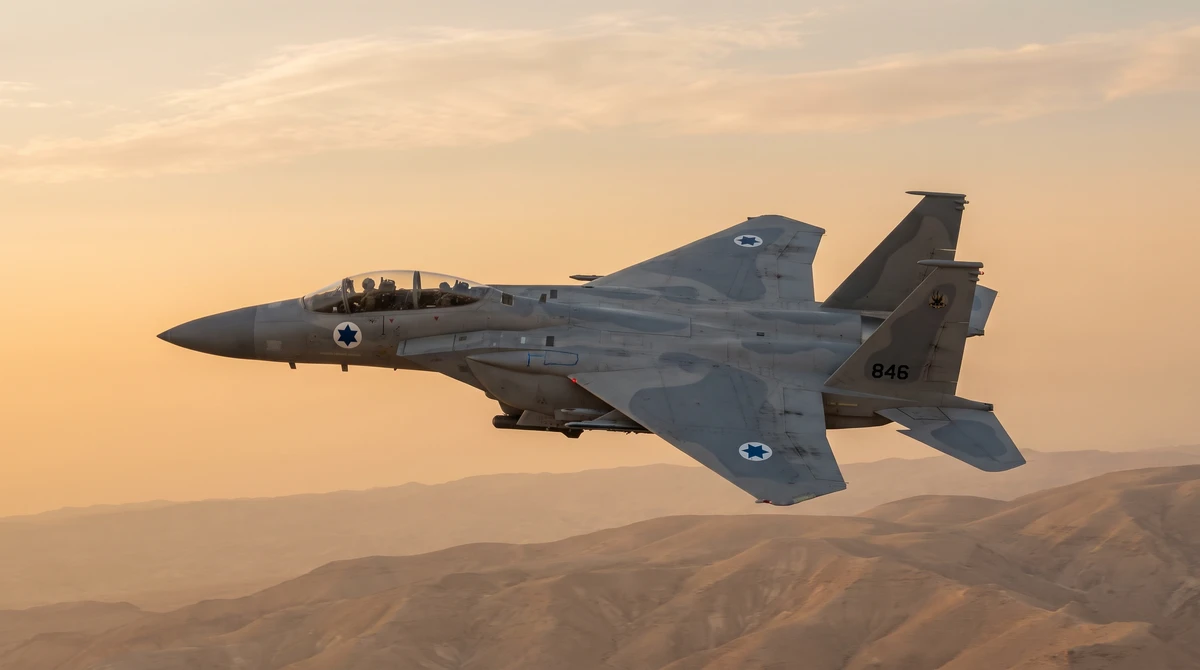
President Donald Trump said on November 3 that the United States will stop paying Israel roughly $4 billion a year by the end of 2026. "We give Israel $4 billion a year — and we made a deal months ago that we're stopping," Trump said on Fox & Friends that morning, according to The War Zone, adding that "by the end of this year we won't be paying Israel" and that "now we'll help Israel if they need it." Trump did not specify which spending he meant; The War Zone wrote that he was almost certainly referring to the 10-year Memorandum of Understanding that provides $3.8 billion a year and runs through 2028, and noted that the MOU is not legally binding and that Congress must appropriate any funding.
The statement follows a process already under way. On June 5, 2026, the Israel Ministry of Defense said it and the US administration had launched formal talks on a new security cooperation framework "to replace the existing MOU, which is set to expire in 2028," one intended to expand "joint investment in research, development, and co-production" and to "gradually transition from aid to a completely reciprocal partnership."
The scale of the money is set out by the Congressional Research Service. In its report on US foreign aid to Israel, updated May 28, 2025, CRS says the 2016 MOU covers fiscal years 2019 through 2028 and pledges, subject to congressional appropriation, $38 billion: $33 billion in Foreign Military Financing grants and $5 billion for missile defense. Annual FMF grants represent approximately 14 percent of Israel's overall defense budget, CRS says, and the United States has provided Israel $174 billion in current dollars in bilateral assistance and missile defense funding, making it the largest cumulative recipient of US foreign assistance since World War II.
What that financing has bought is visible in the Israeli Air Force inventory. According to GlobalMilitary.net data, Israel operates the most American-equipped large air arm outside the United States itself, while its ground forces and navy are mostly domestic or German-built. If US military financing ends, the air force is the branch that financing has shaped.
The combat fleet
In GMN's inventory, the Israeli Air Force fields 346 combat aircraft, every one of them a US type:
- 100 F-16I Sufa
- 73 F-16C and 49 F-16D Fighting Falcons
- 48 F-35I Lightning II
- 30 F-15A/C and 21 F-15B/D Eagles
- 25 F-15I Ra'am
Across the whole manned fleet, drones excluded, 534 of 591 aircraft are US types, or 90 percent. The exceptions are three trainer and light helicopter types: 30 M-346 jet trainers from Italy, 16 German-built Grob G-120 trainers and 11 AW119 helicopters. Its main helicopter fleets are American: GMN counts 48 AH-64 Apache attack helicopters, 49 UH-60 Black Hawks and 22 CH-53 heavy-lift helicopters.
Among air forces with at least 50 combat aircraft, the United States excluded, GMN data identifies 11 whose combat fleet is entirely US-built. Israel's 346 is the largest of them; the next largest is Turkey's at 283, followed by Singapore (103), Canada (97), Australia (96), Jordan (72), Finland (71), Belgium (67), Romania (64), Norway (52) and the Netherlands (52). Israel's 90 percent US share across its whole manned fleet is also the highest of the group. Canada is next at 79 percent, a figure Jordan matches; Singapore stands at 73 percent, Norway at 71 percent and Turkey at 70 percent. Other major US partners rely less on American types: South Korea's combat fleet is 84 percent US-built, Japan's 74 percent and Saudi Arabia's 60 percent. The gap between the two largest all-US fleets is laid out in GMN's Israel versus Turkey air force comparison.
The order book
The pipeline is as American as the fleet. GMN lists 50 F-15IA on order from the United States, Israel's variant of the F-15EX Eagle II. Twelve more AH-64E Apaches were ordered in October 2026, and 12 CH-53K heavy-lift helicopters are on order. The air force also took delivery of its first KC-46A Pegasus tanker this year, with five more to come; GMN logged the first KC-46A delivery on May 27, 2026.
The F-35 line runs further. CRS reports that Israel bought 50 F-35s in three contracts using FMF grants and has agreed a Letter of Offer and Acceptance for 25 more, with deliveries of that tranche not expected to be completed until 2035, seven years after the current MOU expires. GMN counts 48 F-35I in service today.
GMN's data does not track how those orders are financed. What it shows is that the Israeli Air Force's current fleet and its entire fast-jet, attack helicopter, heavy-lift and tanker order book are products of American industry, with three trainer and light helicopter types the only exceptions.
Ground forces and the navy
The picture is different on the ground and at sea. In the Israeli ground forces inventory, the main battle tank park is entirely Israeli-built. GMN lists 500 Merkava Mk III in active service with 200 more in storage. The Merkava Mk IV line counts 400 active and 200 stored. The American share of the ground forces, as GMN tracks it, sits in the artillery. GMN counts 250 M109 self-propelled howitzers in active service; the M270 multiple launch rocket system park numbers 30.
The Israeli Navy's submarines and its newest corvettes came from German yards. The Dolphin-class submarines were built in Germany. So were the Sa'ar 6 corvettes. The exception is the Sa'ar 5 corvette class, built in the United States by Ingalls.
Trump's statement leaves open which line of spending ends and when. The War Zone's reading points to the MOU; the Israel Ministry of Defense's June announcement points to a framework meant to replace grants with co-production. On GMN's figures, the force either arrangement would have to accommodate is one whose combat jets, helicopters and fast-jet order book are American, and whose tanks and submarines are not.
More News
All news →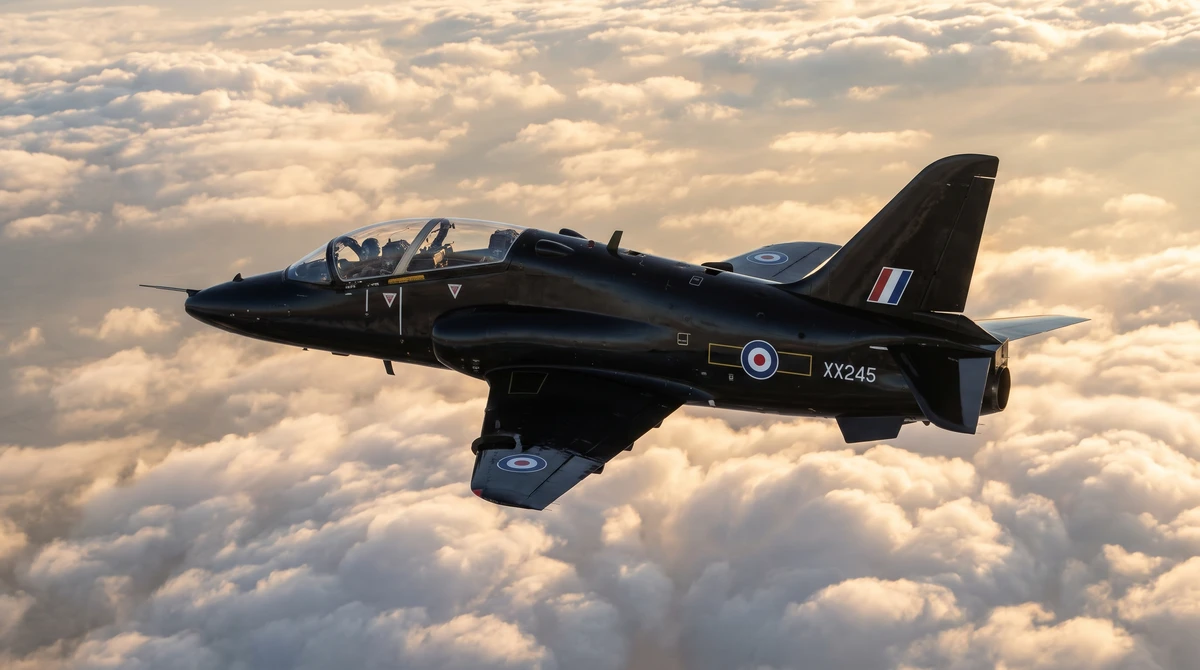
Hawk Jet Trainer at 50: RAF Launches Replacement Program as US Navy Moves to Replace T-45 Goshawk
Fifty years after the Hawk entered Royal Air Force service in late 1976, the UK Ministry of Defence has opened a Jet Training System program to replace it and the US Navy is in source selection for a successor to its Hawk-derived T-45 Goshawk, with an award intended for fiscal 2027.
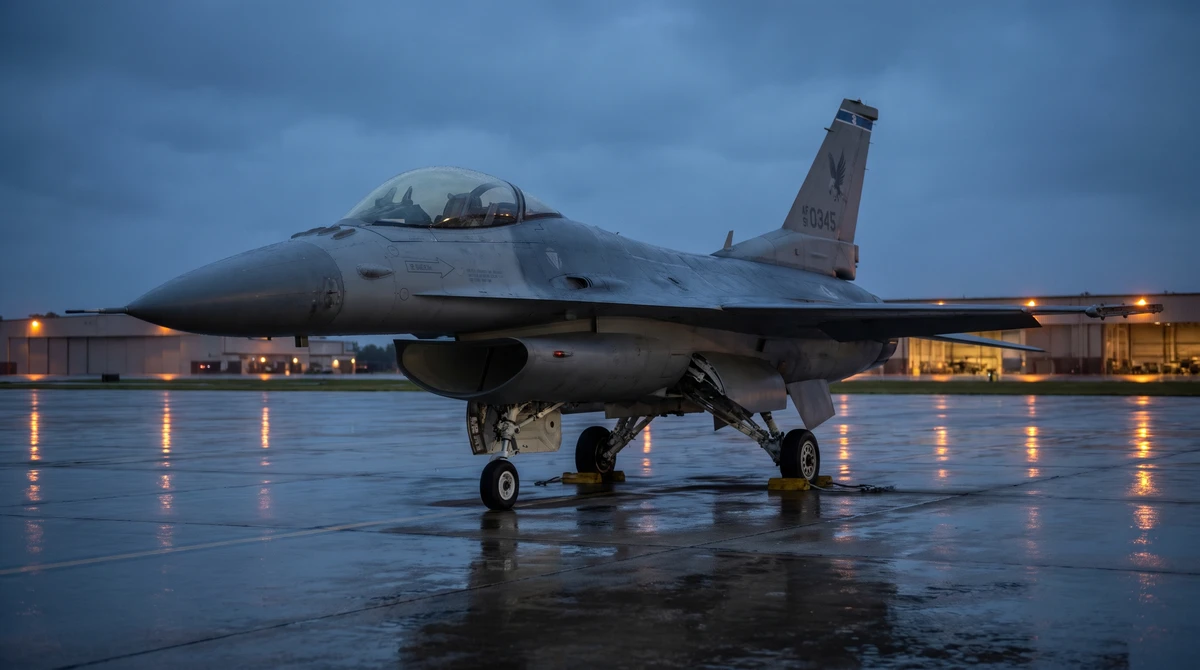
Military Aircraft Crashes in 2026 Reach 83 Logged Accidents Across 30 Countries
GlobalMilitary.net's log records 83 military aircraft crashes and 87 airframes lost in 30 countries between 1 January and 2 November 2026, after a run of fatal accidents in France, the Philippines and Bosnia in late October and a decade-high US Navy mishap count.
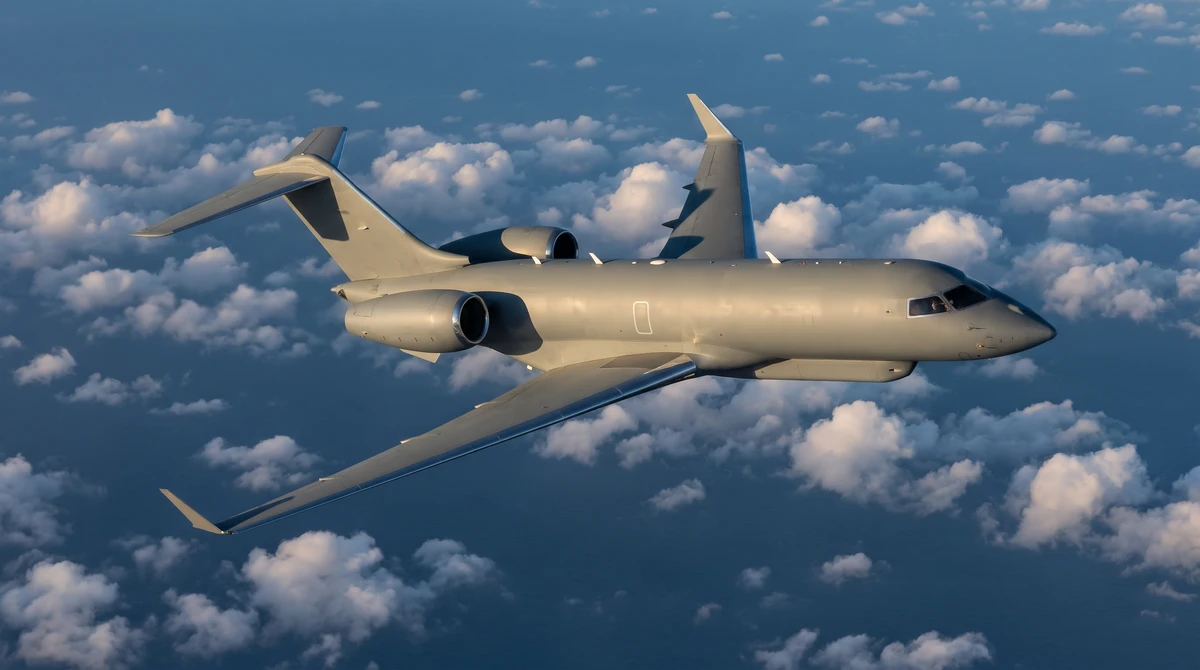
US Army's HADES Spy Jet Flies for the First Time, a Global 6500 Replacing Turboprop ISR
The US Army said on October 30 that HADES Prototype 1, an airborne intelligence aircraft built on a modified Bombardier Global 6500 business jet, made its first flight on September 11, moving the program into mission system integration and developmental flight testing.
Hanwha Philly Shipyard Selected to Build Its First US Navy Ship, a $269 Million Medium Landing Ship
Hanwha Defense USA said on Oct. 29 that TOTE Services had chosen its Philly Shipyard to build one Medium Landing Ship for the US Navy and Marine Corps under TOTE's $2.2 billion construction-management contract, with options for three more vessels.
Russia Says Pacific Fleet Submarine Generalissimus Suvorov Fired Bulava Missile From Sea of Okhotsk
The Borey-class submarine Generalissimus Suvorov launched a Bulava intercontinental ballistic missile from a submerged position in the Sea of Okhotsk on October 28, the Russian Ministry of Defence said, in what the Russian Strategic Nuclear Forces project calls a rare Pacific Fleet firing.
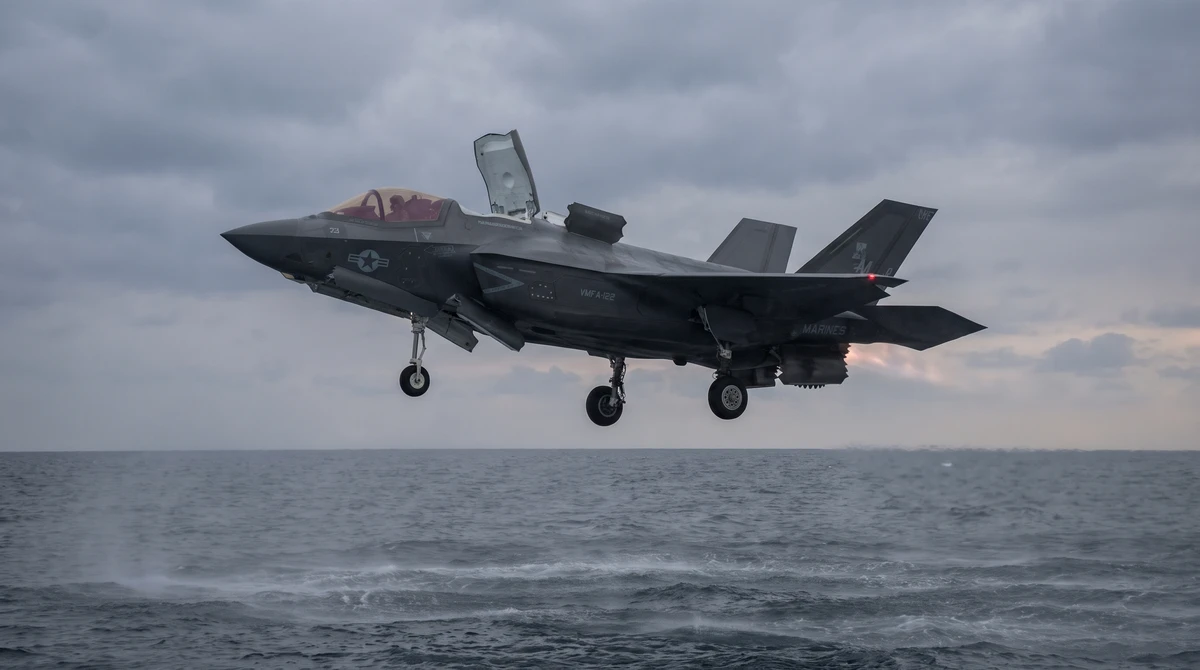
How the F-35B Lift Fan Hovers a Supersonic Jet Where the Harrier Needed Four Swiveling Nozzles
Twenty-five years after the Joint Strike Fighter award of 26 October 2001, how the F-35B's shaft-driven lift fan lets a supersonic fighter land vertically where the Harrier used four swiveling nozzles, and what the fan costs it in fuel, payload and price.