Navy Plans Sole-Source Lockheed Contract to Integrate LRASM Anti-Ship Missile on the B-52
Naval Air Systems Command said in an October 7 notice that it intends to negotiate a sole-source delivery order with Lockheed Martin to integrate the AGM-158C Long-Range Anti-Ship Missile on the US Air Force's B-52 bomber, The War Zone and Air & Space Forces Magazine reported.
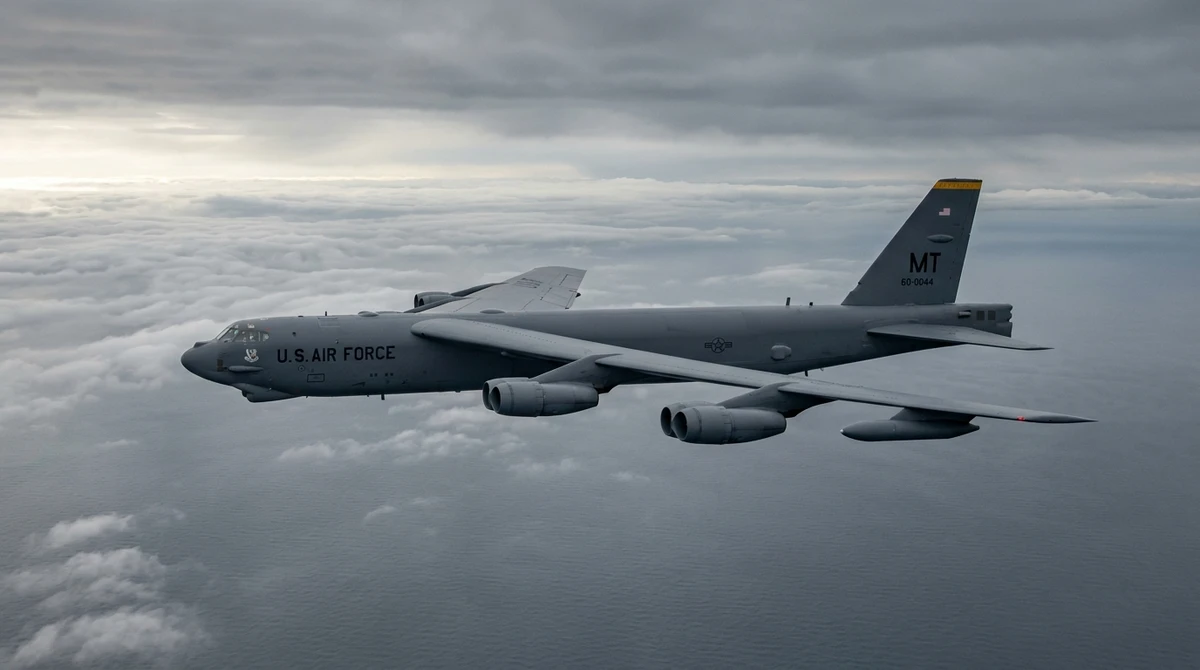
Naval Air Systems Command (NAVAIR) posted a notice on October 7 stating that it intends to conduct sole-source negotiations with Lockheed Martin and subsequently award a cost-plus-fixed-fee delivery order to integrate the AGM-158C Long-Range Anti-Ship Missile (LRASM) on the B-52 Stratofortress, The War Zone reported on October 9, following a report by Air & Space Forces Magazine on October 8.
The work covered by the notice comprises missile software updates, associated testing, test asset repair and failure review boards, according to Air & Space Forces Magazine. The notice gives no schedule, no contract value and no load-out for the bomber. A Lockheed Martin spokesperson declined to give further details and deferred to the Pentagon, while NAVAIR and Air Force Life Cycle Management Center spokespeople did not immediately respond to questions, Air & Space Forces Magazine reported.
LRASM is derived from the AGM-158 Joint Air-to-Surface Standoff Missile (JASSM), of which the B-52 can already carry up to 20, according to Air & Space Forces Magazine and The War Zone. The missile's precise range is not publicly disclosed; The War Zone reports that the baseline LRASM reaches targets at between 200 and 300 miles, and that the forthcoming C-3 version is expected to match the reach of the JASSM-ER, reported at around 600 miles.
The planned award follows a live demonstration from another bomber earlier this year. The Air Force revealed in June that a B-2A Spirit employed an LRASM against a decommissioned amphibious transport vessel during Valiant Shield 2026 over the Philippine Sea, Air & Space Forces Magazine reported; The War Zone dates the shot to June 27. The bomber force's experience with the weapon goes back further. Lockheed Martin completed the first air-launch flight test of LRASM from a B-1B Lancer in 2013, and the Air Force achieved Early Operational Capability with the AGM-158C on the B-1B in 2018, according to Air & Space Forces Magazine. On the naval side, the F/A-18E/F Super Hornet is an established LRASM launch platform, The War Zone noted.
Interest in arming the B-52 with the missile is not new. As reported by Naval News in 2019, according to The War Zone, $10 million in Fiscal Year 2019 funding had been allocated to study integrating the missile on the bomber.
The B-52 is the most numerous bomber type in the US Air Force inventory, which GlobalMilitary.net data puts at 75 B-52 Stratofortress, 45 B-1B Lancer and 20 B-2 Spirit, with three B-21 Raider in service and 97 on order. The United States and Australia are the two LRASM operators listed in the GlobalMilitary.net database; Australia's missile was the subject of a GlobalMilitary.net article on September 14.
On the industrial side, Lockheed Martin had delivered 5,348 JASSMs to the Air Force and Navy as of April 2026, according to Pentagon acquisition reports cited by Air & Space Forces Magazine, which put production capacity at 600 JASSMs a year with short-term plans to raise it to 860.
No schedule for the B-52 integration has been disclosed. The Air Force's Fiscal Year 2027 budget proposal outlines plans to integrate the latest variants of LRASM and JASSM onto the bomber, The War Zone reported, as the aircraft undergoes a modernization comprising a radar overhaul, new engines and enhanced communications, after which it will be redesignated from B-52H to B-52J.
More News
All news →
Bombardier Global Express Turns 30 With More Military Jets on Order Than in Service
Thirty years after its first flight from Toronto on October 13, 1996, the Bombardier Global Express has become a platform for military special-mission aircraft, and GlobalMilitary.net's inventory data now counts more Global-based military aircraft on order than in service.
Morocco's First F-16 Block 72 Makes Maiden Flight, the First Pratt & Whitney-Powered Viper to Fly
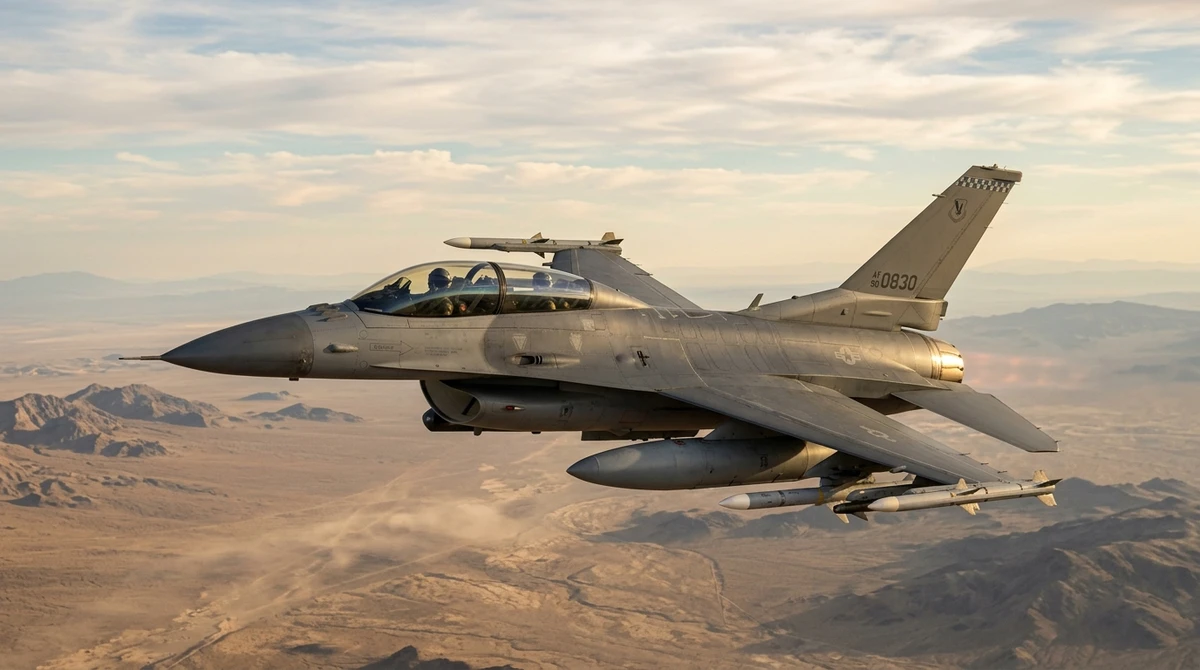
Lockheed Martin said on October 6 that the Royal Moroccan Air Force's first F-16 Block 72, a two-seat F-16D, had flown from its Greenville, South Carolina, plant, the first flight of the Pratt & Whitney-engined version of the latest-generation Fighting Falcon.

First HACM Hypersonic Cruise Missile Flight Test Unit Released Over Australia
The U.S. Air Force says a Hypersonic Attack Cruise Missile flight test unit was released by the Royal Australian Air Force over an Australian test range, without disclosing the date, the launch aircraft or whether the scramjet-powered weapon achieved powered flight.

Spain Selects Airbus A321 as Platform for Three SIGINT Aircraft in €436M Program
Spain has chosen the Airbus A321 as the platform for three signals-intelligence aircraft for the Spanish Air and Space Force, restoring a dedicated airborne SIGINT capability the country has lacked since its Boeing 707 was retired in 2014.
P-3 Orion Fleet Down to 101 Aircraft in 12 Countries, Roughly Half Its 2022 Size
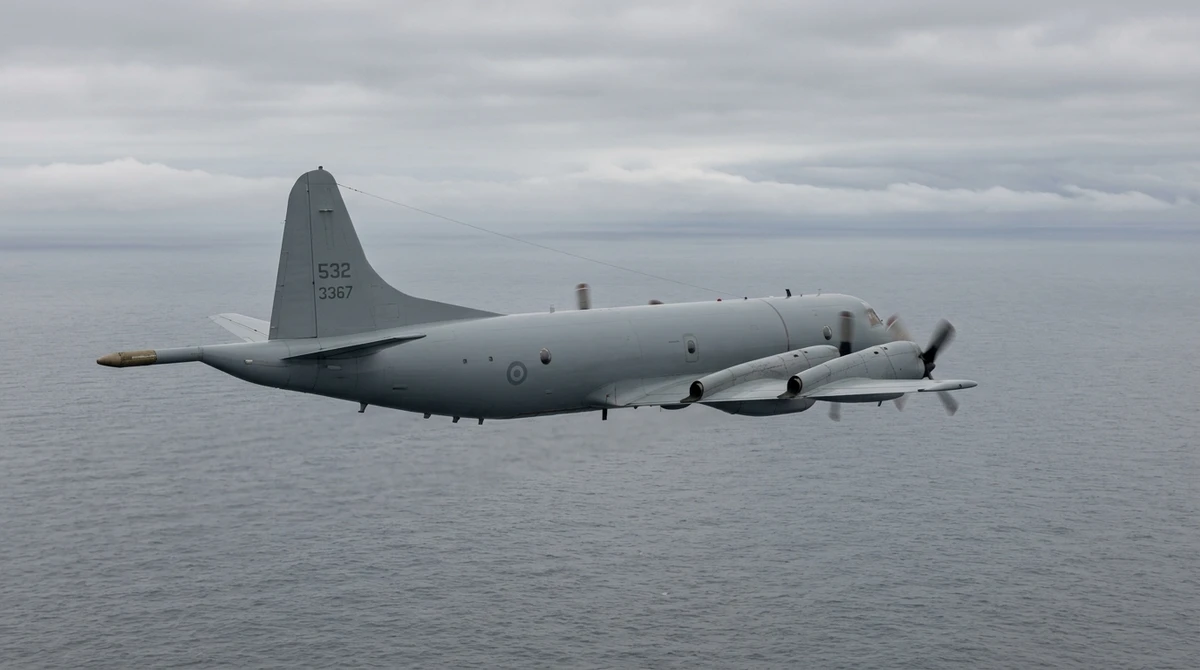
GlobalMilitary.net's inventory data counts 101 P-3 Orions in military service across 12 countries, down from 211 in 16 countries in its 2022 snapshot, as US agencies retire special-mission Orions and Japan draws down the largest remaining fleet.

Northrop Grumman's YFQ-48A Talon Blue Completes First Fully Autonomous Flight at Mojave
Northrop Grumman said on October 3, 2026 that its company-funded YFQ-48A Talon Blue had taxied, taken off, maneuvered and landed without pilot input at Mojave, California, as the US Air Force prepares to select designs for Increment 2 of its Collaborative Combat Aircraft program.