Turkey, Saudi Arabia and Pakistan Sign Mecca Joint Deterrence Agreement
Signed in Mecca on 7 August 2026 by Erdogan, Mohammed bin Salman and Shehbaz Sharif, the pact treats an armed attack on any one of the three states as an attack on all. Together they field 3,350 military aircraft and 1.27 million active troops.
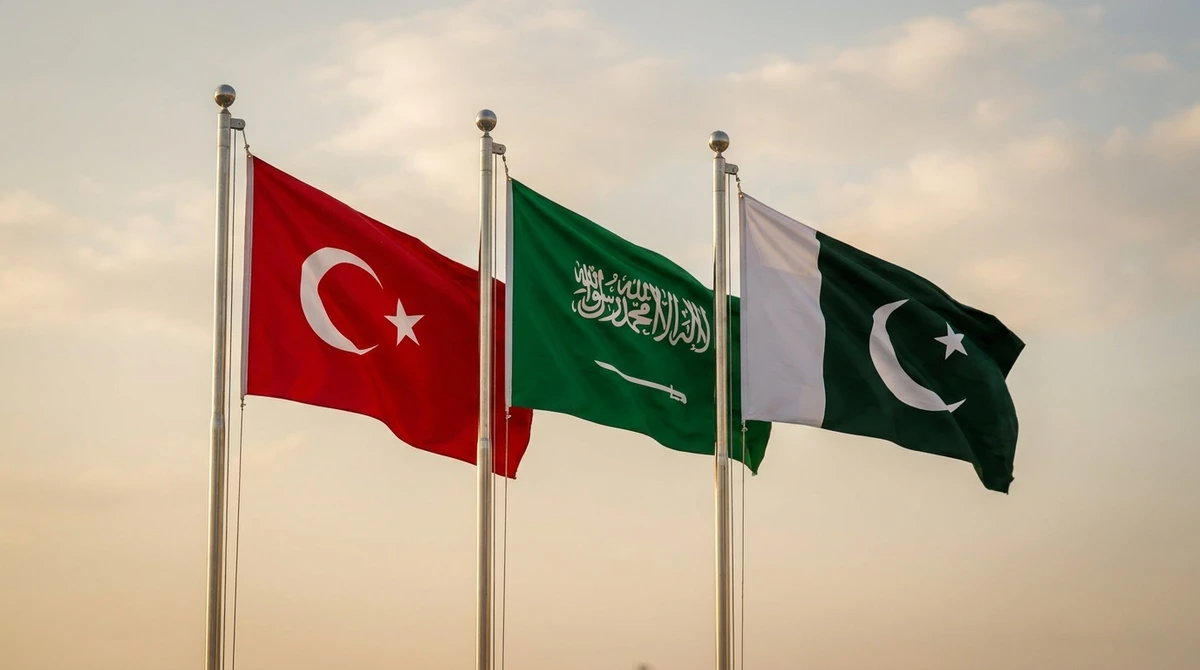
Turkey, Saudi Arabia and Pakistan signed a trilateral defense treaty in Mecca on 7 August 2026 that commits each state to treat an armed attack on any one of them as an attack on all three. The Mecca Joint Deterrence Agreement was signed by Turkish President Recep Tayyip Erdogan, Saudi Crown Prince and Prime Minister Mohammed bin Salman, and Pakistani Prime Minister Shehbaz Sharif.
A Turkish official told Reuters the agreement is defensive in nature, is not directed at any specific actor, and remains open to other countries in the region. The signing followed a warning by a senior Saudi official, hours earlier, that the kingdom was bracing for attacks by Iran-aligned forces in Yemen and Iraq on the basis of intelligence collected domestically and with regional partners and the United States.
Analysts cautioned against reading the text as a NATO equivalent. Ozgur Unluhisarcikli of the German Marshall Fund described it as "a framework for closer strategic, military, and defence-industrial coordination among three influential regional powers and not a mutual defence pact that can be compared to NATO." Murat Aslan of Hasan Kalyoncu University said the deal speaks directly to Saudi Arabia's dependence on imported weapons and equipment, an area where Turkish and Pakistani industry can supply alternatives.
The combined weight of the three is considerable. GlobalMilitary.net inventories for 2026 credit them with 3,350 active military aircraft — 1,369 for Pakistan, 1,067 for Turkey and 914 for Saudi Arabia — alongside 1,272,200 active personnel and 5,705 main battle tanks. Reported defense spending adds up to roughly $129 billion in the latest reported years, of which Saudi Arabia alone accounts for $88.0 billion against $31.3 billion for Turkey and $9.3 billion for Pakistan.
Their air arms are unusually complementary rather than duplicative. The Royal Saudi Air Force flies a Western high-end fleet built around the F-15 and 71 Typhoon multirole fighters. The Turkish Air Force fields 238 F-16 variants and is developing the indigenous KAAN fifth-generation fighter. The Pakistan Air Force inventory is anchored on 156 JF-17 Thunder jets co-produced with China, with 27 more on order.
Pakistan also brings the only nuclear arsenal in the group, estimated at 170 warheads. Turkey hosts an estimated 50 US B61 gravity bombs but has no weapons of its own, and Saudi Arabia is a non-nuclear-weapon state. Officials made no reference to nuclear guarantees in the announced text. Individually the three rank 9th, 14th and 16th in the global military power ranking; pooled, their raw capability points place the bloc well clear of Iran, as our Pakistan, Saudi Arabia and Turkey versus Iran comparison shows.
What the agreement translates into operationally remains open. No joint command, force contribution or basing arrangement has been announced, and the three states have divergent positions on the 2026 Iran conflict. The immediate test will be whether the pact produces concrete procurement — Turkish and Pakistani systems entering Saudi service — or remains a political signal to Tehran.
More News
All news →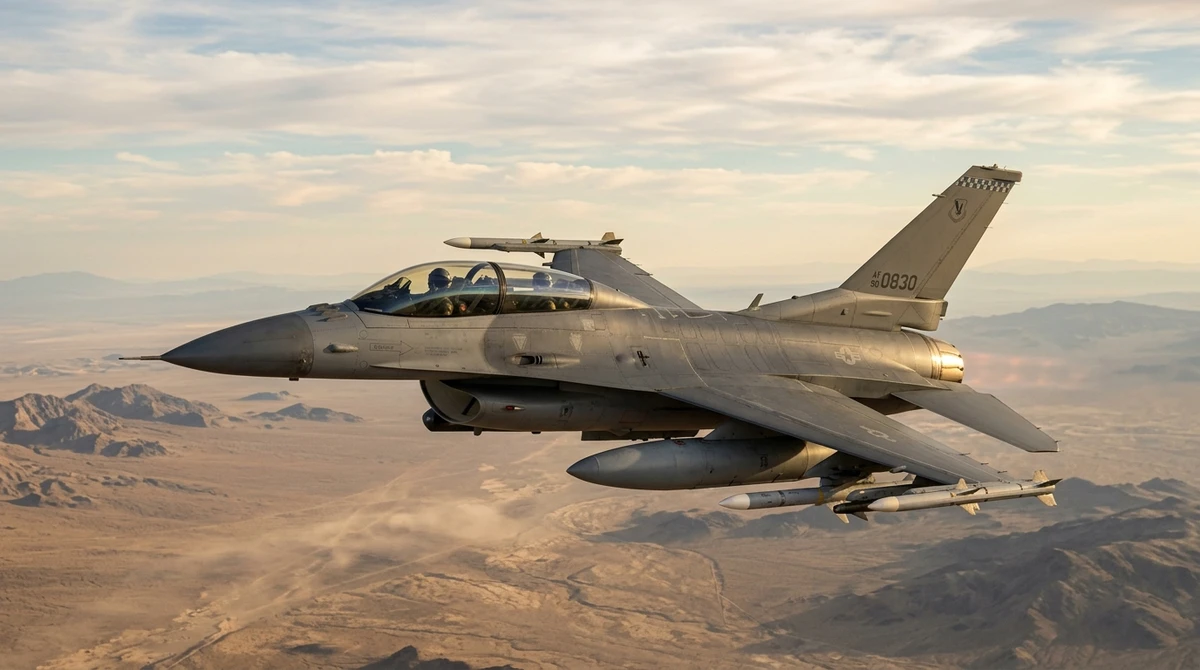
Morocco's First F-16 Block 72 Makes Maiden Flight, the First Pratt & Whitney-Powered Viper to Fly
Lockheed Martin said on October 6 that the Royal Moroccan Air Force's first F-16 Block 72, a two-seat F-16D, had flown from its Greenville, South Carolina, plant, the first flight of the Pratt & Whitney-engined version of the latest-generation Fighting Falcon.

Spain Selects Airbus A321 as Platform for Three SIGINT Aircraft in €436M Program
Spain has chosen the Airbus A321 as the platform for three signals-intelligence aircraft for the Spanish Air and Space Force, restoring a dedicated airborne SIGINT capability the country has lacked since its Boeing 707 was retired in 2014.
Northrop Grumman's YFQ-48A Talon Blue Completes First Fully Autonomous Flight at Mojave
Northrop Grumman said on October 3, 2026 that its company-funded YFQ-48A Talon Blue had taxied, taken off, maneuvered and landed without pilot input at Mojave, California, as the US Air Force prepares to select designs for Increment 2 of its Collaborative Combat Aircraft program.
Germany Contracts Diehl to Arm Its Four F125 Frigates With IRIS-T SLM Air Defense Missiles
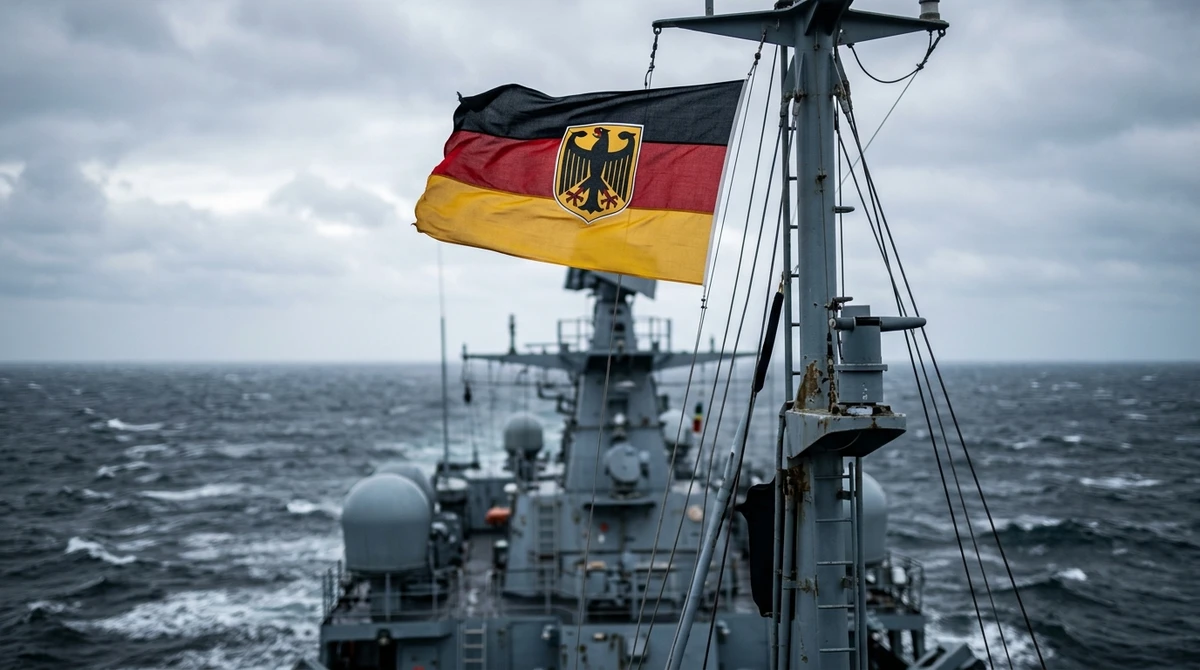
Diehl Defence and Germany's BAAINBw procurement office signed a contract on October 2, 2026 to adapt the IRIS-T SLM surface-to-air missile system for the German Navy's four Baden-Württemberg-class frigates, which were completed without a medium-range air defense missile.
US Navy Awards Raytheon Up to $24.4 Billion Multiyear Contract for SM-6 Missiles
The US Navy on Oct. 1, 2026 awarded RTX's Raytheon unit a multiyear contract worth up to $24.4 billion for Standard Missile-6 interceptors, a five-year deal with two option years whose quantities remain undisclosed and whose funding Congress has yet to appropriate.
Pentagon Awards Raytheon Up to $20.7 Billion to Nearly Double AMRAAM Production
The Pentagon on 28 September announced a five-year AIM-120 AMRAAM production contract with RTX's Raytheon business worth up to $20.7 billion, an undefinitized award that Reuters described as provisional because Congress has not yet funded the full deal.