Joint Base Langley–Eustis
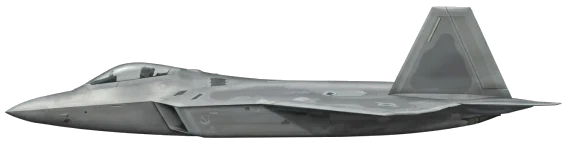
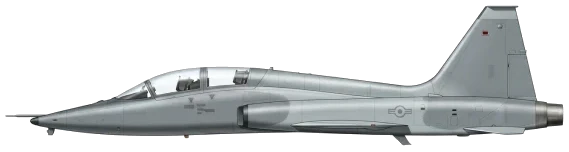
Joint Base Langley–Eustis (ICAO KLFI) is an active military air base in Virginia, United States, operated by the US Air Force. It has 1 runway (3,049 m). Home to Headquarters Air Combat Command, the 633rd Air Base Wing, the 1st Fighter Wing, the 363rd Intelligence, Surveillance and Reconnaissance Wing and 14 other units, flying F-22 Raptor, T-38 Talon.
Facility Details
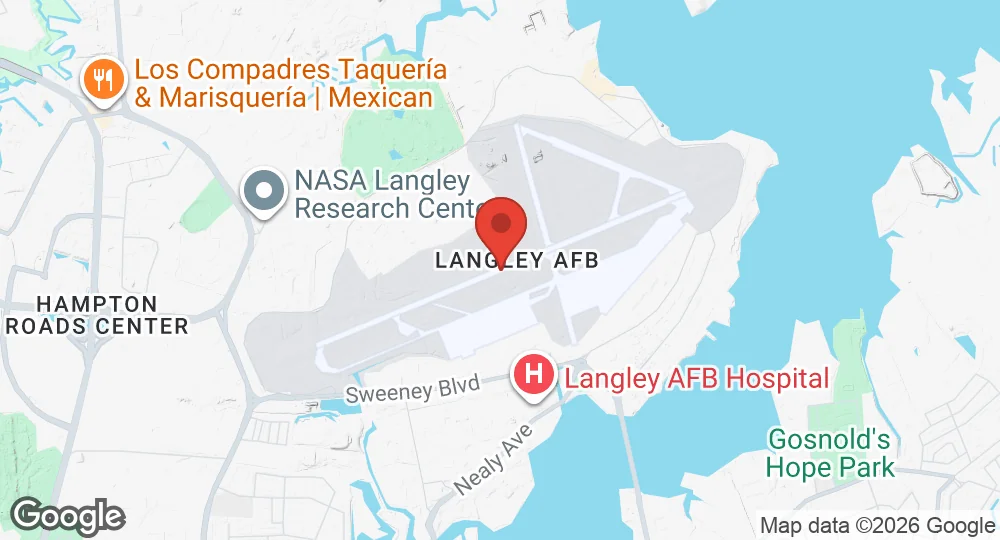
37.0828°N, 76.3606°W · 2 m elevation
| Operating Country | 🇺🇸 United States |
| Location | 🇺🇸 United States |
| Status | Active |
| Usage | Military only |
| Year built | 1917 |
| Operating Organization | US Air Force |
| Units |
Headquarters Air Combat Command633rd Air Base Wing1st Fighter Wing363rd Intelligence, Surveillance and Reconnaissance Wing480th Intelligence, Surveillance and Reconnaissance Wing688th Cyberspace Wing505th Command and Control Wing82nd Training Wing635th Supply Chain Operations WingThe United States Air Force Heritage of America Band940th Air Refueling Wing655th Intelligence, Surveillance and Reconnaissance Wing960th Cyberspace Wing192nd Wing7th Transportation Brigade (Expeditionary)27th Fighter Squadron597th Transportation Brigade71st Fighter Training Squadron
|
| Elevation | 2 m (7 ft) |
| IATA code | LFI |
| ICAO code | KLFI |
| Runways |
08/26 · 3,049 m (10,003 ft) · Concrete
|
| Website | www.jble.af.mil/ |
- 17 km Naval Station Norfolk - Chambers Field Helicopter Sea Combat Wing Atlantic
- 41 km Naval Air Station Oceana Strike Fighter Wing Atlantic
- 134 km Naval Air Station Patuxent River Naval Test Wing Atlantic
- 178 km MCAF Quantico HMX-1
- 195 km Davison Army Airfield 12th Aviation Battalion
- 197 km Joint Base Andrews 316th Wing
 633rd Air Base Wing
 1st Fighter Wing
 688th Cyberspace Wing
 505th Command and Control Wing
 635th Supply Chain Operations Wing
 940th Air Refueling Wing
 27th Fighter Squadron
Description
Joint Base Langley–Eustis is a United States military installation located near Hampton and Newport News, Virginia. Established on October 1, 2010, the base resulted from the consolidation of Langley Air Force Base and Fort Eustis under the 2005 Base Realignment and Closure Commission recommendations. Langley Air Force Base was originally built in 1917, while Fort Eustis was established in 1918 as Camp Abraham Eustis. Although managed as a single joint base, the two components are geographically separated by 17 miles.
The United States Air Force operates the installation, with the 633rd Air Base Wing serving as the host unit under the jurisdiction of Air Combat Command. The facility houses the headquarters for Air Combat Command and the United States Army Training and Doctrine Command.
The Langley component facilitates air combat and intelligence operations. It hosts the 1st Fighter Wing, which operates squadrons of F-22 Raptors and T-38 Talons. The Virginia Air National Guard 192nd Wing also operates F-22 Raptors at the site. Resident units include the 363rd and 480th Intelligence, Surveillance and Reconnaissance Wings. The installation also hosts the F-22 Raptor Demo Team and the NASA Langley Research Center.
The Fort Eustis component serves as a center for Army transportation, aviation maintenance, and logistics training. Stationed units include the 128th Aviation Brigade, the 7th Transportation Brigade (Expeditionary), and the 597th Transportation Brigade. The site utilizes its proximity to the James River for logistics and deployment doctrine activities. Fort Eustis houses the Transportation Regiment and absorbed activities from Fort Monroe following that installation's 2011 decommissioning. Additional tenant units include the Joint Task Force – Civil Support and the United States Coast Guard Port Security Unit 305.
- AUG 142026 Updated Based aircraft recorded: F-22 Raptor, T-38 Talon
- AUG 132026 Updated Runway designations, surfaces and lengths recorded
- APR 112026 Updated Description updated in a site-wide editorial pass
- JAN 122026 Updated Sources and cross-references refreshed
- JUL 12025 Updated Airbase data reviewed and updated