Y-8
Chinese medium-size, medium-range transport aircraft, developed in the late 20th century based on the Soviet Antonov An-12, and extensively deployed in military and civilian transport operations. Key figures: top speed 660 km/h, range 5,615 km, service ceiling 10,400 m, max takeoff weight 61,000 kg, built 169. In service with 5 air forces as of 2026 — China (66), Myanmar (8), Venezuela (8) and 2 others.
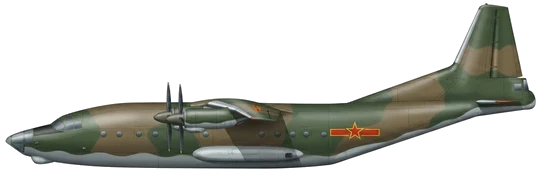
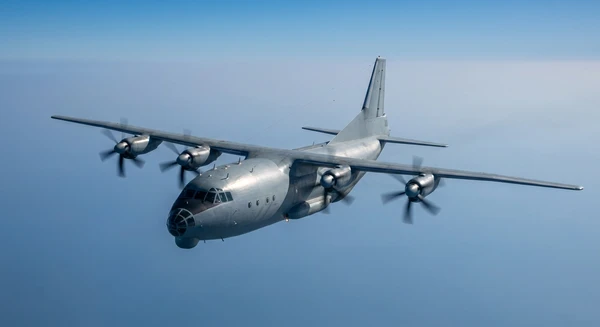
| Crew | 2–5 |
| Length | 34.0 m (111.6 ft) |
| Wingspan | 38 m (124.7 ft) |
| Height | 11.2 m (36.6 ft) |
| Wing area | 121.9 m² (1312.1 sqft) |
| Empty weight | 35,490 kg (78,242 lbs) |
| Max. takeoff weight | 61,000 kg (134,482 lbs) |
| Powerplant | 4 × Zhuzhou WoJiang-6 (WJ-6) 3,170 kW each |
| Maximum speed | 660 km/h (410 mph) |
| Operational range | 5,615 km (3,489 mi) |
| Service ceiling | 10,400 m (34,121 ft) |
| Climb rate | 10.0 m/s (32.8 ft/s) |





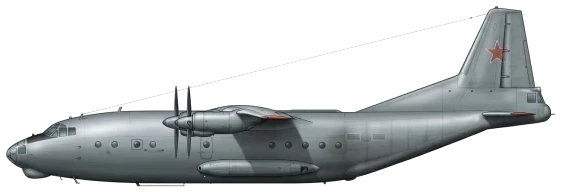
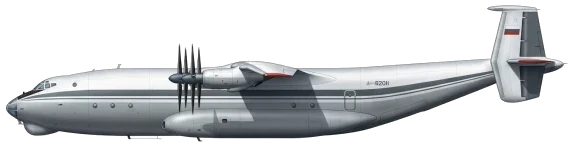
Description
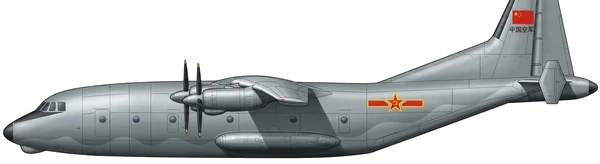
The Shaanxi Y-8 is a medium-size, medium-range transport aircraft produced by Shaanxi Aircraft Corporation. Based on the Soviet Antonov An-12, the Y-8 was developed after the Soviet Union withdrew technical assistance during the Sino-Soviet split. Xi'an Aircraft Company and Xi'an Aircraft Design Institute reverse engineered the An-12, completing the design in February 1972. Trial production began at the Xi'an Aircraft Factory in June 1972, and the first Chinese-assembled aircraft flew in December 1974. Production subsequently transferred to the Shaanxi Aircraft Factory, where test flights took place in December 1975. The Y-8 was certified for government use and entered serial production in 1981, with an estimated 169 aircraft built by 2010. In 1986, Lockheed conducted wind tunnel and flight testing to resolve wing stall issues and landing gear deck slope design flaws, and later assisted in developing a pressurized cabin. Joint work with Antonov in 2001 and 2002 resulted in a redesigned wing and fuselage that increased fuel capacity by 50 percent.
Design
The Y-8 features a high-mounted non-swept wing with four Zhuzhou WoJiang-6 (WJ-6) turboprop engines rated at 3,170 kW each, driving four-bladed constant-speed propellers. It has a tricycle landing gear with low-pressure tires. Early units featured two side-hinged, inward-opening cargo doors, while subsequent variants introduced a rear loading ramp. The aircraft incorporates a glazed nose, a gaseous oxygen system, and a roller-type palletized-cargo-handling device.
Armament
The Y-8 has a payload capacity of 20,000 kg, carrying up to 96 soldiers, 82 paratroopers, or 60 stretchers with 20 ambulatory patients and three medical attendants. The cargo compartment measures 13.5 meters long, 3 meters wide, and 2.4 meters high. Early variants carried an armament of two 23 mm cannons in a tail turret derived from the H-6 bomber, though this was removed on later versions. Specialized variants, such as the Y-8Q, feature an internal bomb bay.
Operational History
The Y-8 is operated by the Chinese People's Liberation Army Air Force, Navy Air Force, and Ground Force, as well as the National Guard of Kazakhstan. Export operators include Myanmar, Sudan, Sri Lanka, Pakistan, Tanzania, and Venezuela. During the Sri Lankan Civil War, the Sri Lanka Air Force operated Y-8s as makeshift bombers, losing one to anti-aircraft fire and another to mechanical failure.
Variants
- Y-8: The baseline unpressurized transport aircraft produced primarily for transport duties with the PLAAF.
- Y-8C: A fully pressurized transport version equipped with the rear cargo ramp of the Y-8B.
- Y-8E: A drone carrier aircraft designed to launch WZ-5 Chang Hong-1 reconnaissance drones.
- Y-8F-600: A civilian transport variant featuring a redesigned fuselage, Pratt and Whitney turboprop engines, a glass cockpit, and a two-person crew.
- Y-8Q: An anti-submarine warfare variant equipped with surface search radar, FLIR, an internal bomb bay, SATCOM, and a tail-mounted magnetic anomaly detector.
Identified in 833 sorties in the official China-Taiwan Tensions activity reports between 2020 and 2024 — a floor, not a census: only sorties the source identified by type are counted, and how much it disclosed varies by year.
Frequently Asked Questions
What type of aircraft is the Y-8?
What is the maximum speed of the Y-8?
What is the range of the Y-8?
When did the Y-8 first fly?
How many Y-8 have been built?
Which countries operate the Y-8?
What is the service ceiling of the Y-8?
- JUN 302026 Created Page created: Y-8