China, North Korea and India Field the World's Largest Tank Fleets
Across 81 armies tracked by GlobalMilitary.net, China fields 4,770 main battle tanks, more than any other country. Greece, in fifteenth place, holds more than Germany, the United Kingdom and France combined.
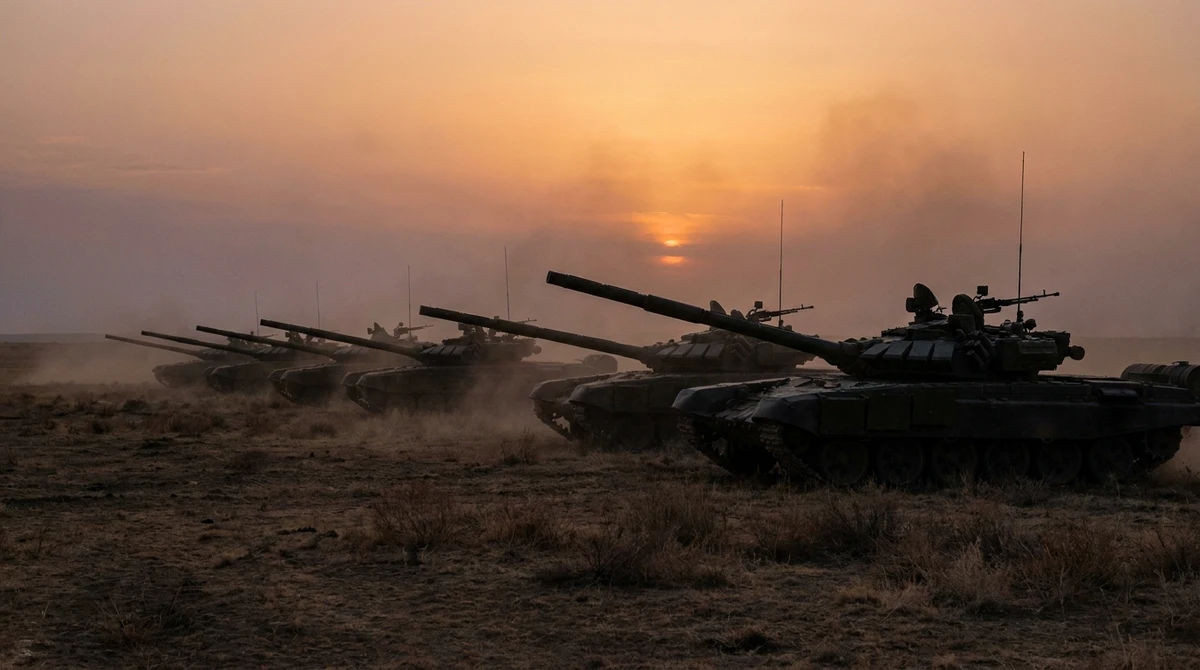
GlobalMilitary.net's ground forces database records 56,821 main battle tanks in active service across 81 countries in its 2026 snapshot, with a further 5,927 declared in storage. Three armies alone account for nearly a quarter of the active total, and none of them is Western.
China leads with 4,770 active MBTs. The bulk is the Type 96 at 2,500 vehicles, followed by 1,370 Type 99s, the only modern design in the fleet in any quantity, and roughly 900 Type 59, Type 79 and Type 88 hulls of Cold War lineage.
North Korea is second with 4,235, and the composition matters more than the count: 1,600 T-54/55s and 800 T-62s make up more than half the park, alongside 1,400 Chonma-ho and 250 Pokpung-ho vehicles of domestic design. India is third with 3,854, dominated by 2,418 T-72M1 Ajeya and 1,310 T-90s, with only 126 indigenous Arjuns in service.
Russia comes fourth at 3,460 active vehicles across six families, led by 1,470 T-72 and T-72B3 hulls, 620 T-90s and 600 T-80s, with 600 T-62s, 120 T-54/55s and 50 T-64s making up the tail. The figure counts only tanks recorded as active; it does not attempt to track the storage bases from which Russia has been reactivating vehicles since 2022.
The United States is fifth with 2,666, of which 2,640 are M1 Abrams and 26 the M10 Booker, an assault gun whose program the Army canceled in May 2025 after those first vehicles were delivered. It also declares 2,000 tanks in storage, by far the largest reserve of any army in the database, and enough to lift the American total above Russia's active park. Seventeen other countries declare a stored reserve, the largest being Jordan with 924, Israel with 900 and Greece with 471.
That is the main caveat on any ranking of this kind. Storage figures are published inconsistently, and a blank field in the database means "not declared" rather than zero: several armies with well-documented reserves report none at all. Active counts are the comparable number; stored totals are indicative.
The European picture is the one that most often surprises. Setting aside Russia and Ukraine, the largest tank park on the continent belongs to Greece, with 1,273 active vehicles and 471 more in storage, a mixed fleet of Leopard 2A4 and 2A6 HEL, Leopard 1A5 and upgraded M48A5 and M60A3 Pattons. That is more than Germany (296), the United Kingdom (288) and France (222) hold between them. Poland, at 827, is the only other European army above 600.
Elsewhere the top twenty is dominated by armies built around large conscript formations and Soviet-era or Chinese-supplied hardware: Pakistan (2,612), Turkey (2,284), Egypt (2,000), South Korea (1,814), Ethiopia (1,531), Iran (1,513), Cuba (1,500) and Algeria (1,485). Ukraine is recorded at 1,085 active vehicles, a figure that moves faster than any other in the database.
Fleet size is not capability, and the tables make that plain: China's lead over the United States on hull count coexists with a far smaller share of modern designs, while Greece's park is largely a legacy of 1990s and 2000s surplus transfers rather than of current procurement. The same tension runs through the military strength ranking, where armor is one weighted pillar among six.
All figures come from GlobalMilitary.net's per-country army inventories for the 2026 reporting year, which can be browsed for each operator, including China and the United States. They cover main battle tanks only, excluding light tanks, tank destroyers and infantry fighting vehicles.
More News
All news →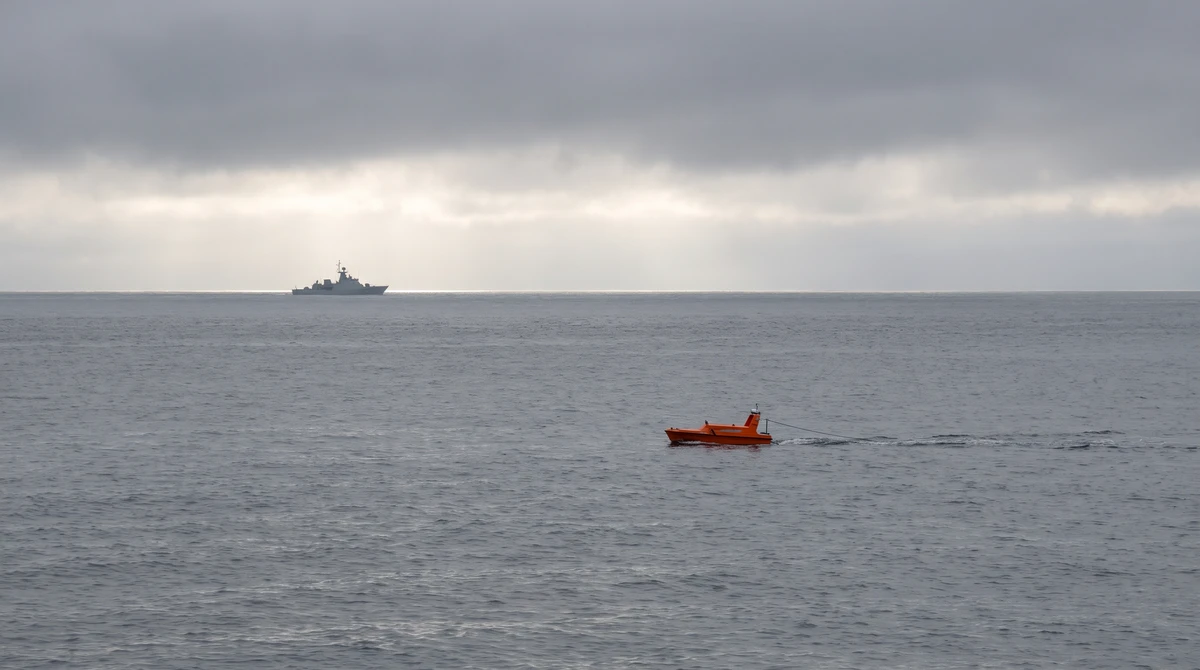
How Crewed Minehunters and Drone Motherships Find and Destroy Sea Mines
The three motherships the UK said on November 12 it will buy are meant to stay outside the minefield and send uncrewed boats, towed sonars and underwater vehicles in, where today's non-magnetic minehunters and their divers go themselves.
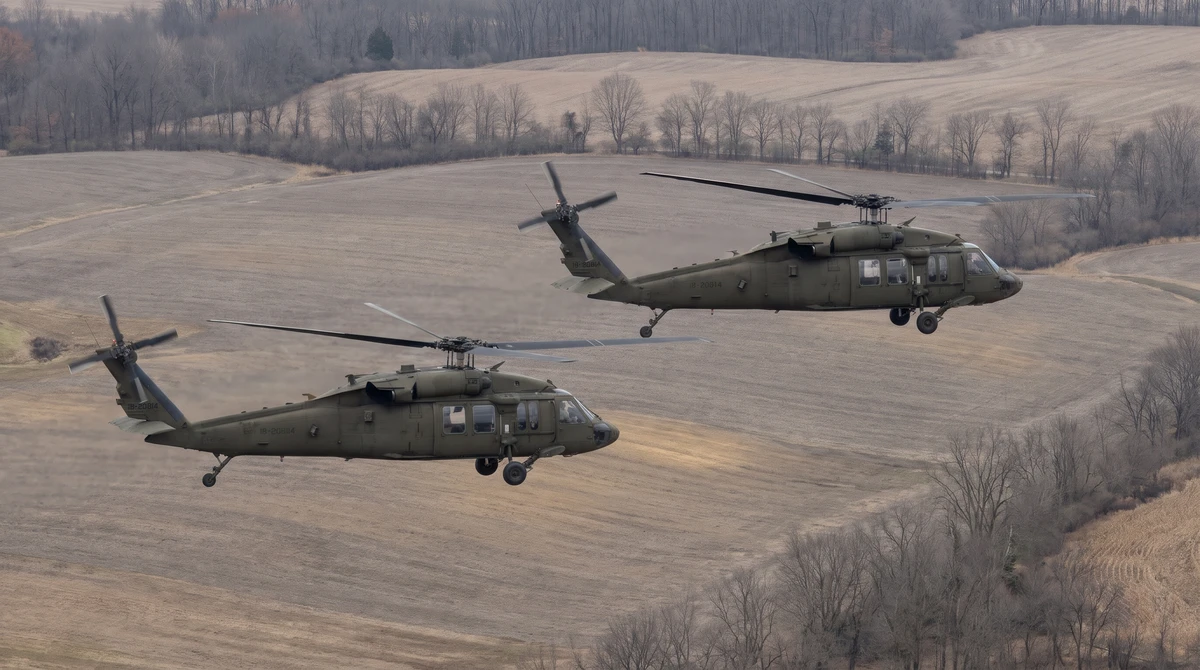
US Army Aviation, Larger Than All but Two Foreign Militaries' Air Fleets, Sees Class A Flight Mishaps Double
The Army's aviation branch fields 4,263 aircraft and about one in five of the world's military helicopters on GMN's count, and its own safety newsletter lists 10 Class A flight mishaps in fiscal 2026, up from five, as the under secretary says readiness is below goal.

Senate Energy Bill Funds a New B94 Nuclear Bomb at $77.1 Million, Cuts SLCM-N Warhead by 59%
The Senate Appropriations Committee's fiscal 2027 Energy and Water Development bill, released on November 12, 2026, opens a B94 line at $77.108 million and reduces the W80-5 warhead for the nuclear sea-launched cruise missile from $186.0 million to $76.9 million.

Senate FY2027 Defense Bill Adds F-35s and a Second Destroyer, Cuts F-15EX Buy From 24 to 18
The Senate Appropriations Committee's fiscal 2027 defense bill, released on November 16, 2026, funds more F-35s, C-130Js and a second DDG-51 than requested, and fewer F-15EX, P-8A, KC-130J and E-2D aircraft, its explanatory statement shows.
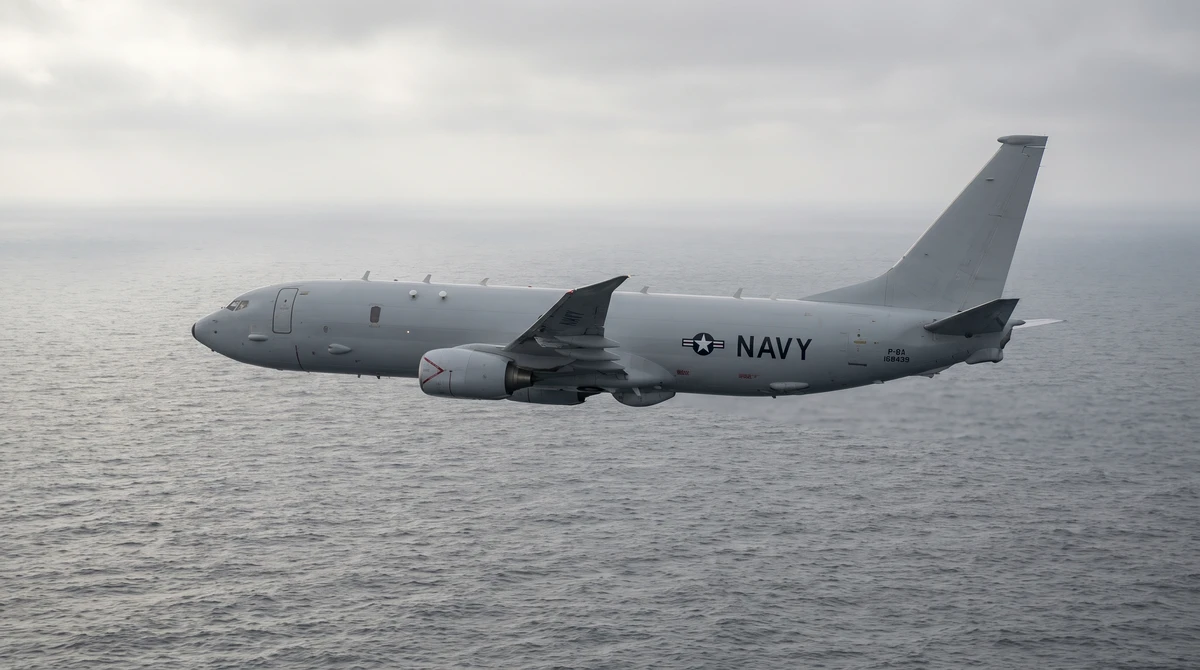
Senate Appropriators Fund 4 of 12 P-8A Poseidons as Worldwide Fleet Stands at 171 Aircraft
The Senate Appropriations Committee's fiscal 2027 defense bill, released November 16, 2026, funds four of the 12 P-8A Poseidons the US Navy requested, a cut to an aircraft GlobalMilitary.net's inventory data counts at 171 in service in eight countries.
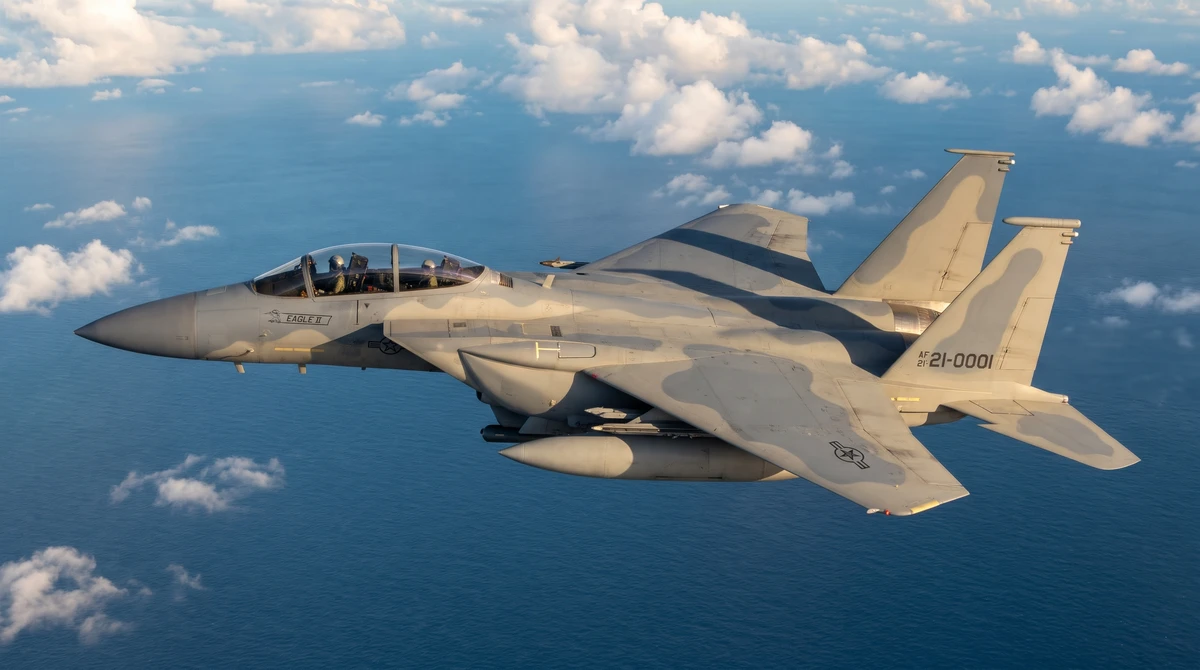
First Permanently Assigned US Air Force F-15EX Eagle II Arrives at Kadena Air Base, Okinawa
The first U.S. Air Force F-15EX Eagle II permanently assigned to Kadena Air Base, Okinawa, arrived on Nov. 15, 2026, the 18th Wing said, making Kadena the first overseas Air Force installation to receive combat-coded examples of the fighter.