F-15E Strike Eagle vs F/A-18 Hornet
F-15E Strike Eagle vs F/A-18 Hornet at a glance — top speed 2,655 vs 1,915 km/h, range 3,889 vs 2,017 km, max takeoff weight 36,741 vs 23,541 kg, built 525 vs 1,480 units.
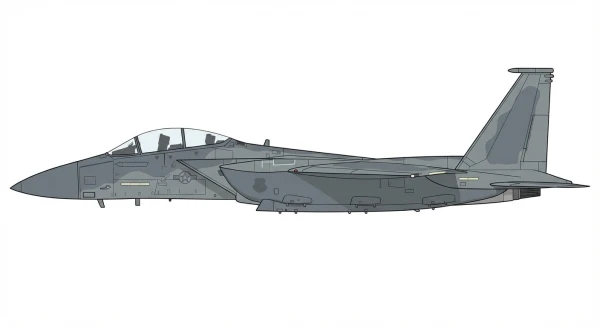
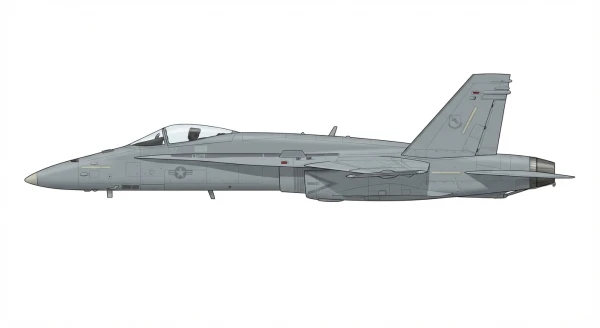
| F-15E Strike Eagle | F/A-18 Hornet | |
|---|---|---|
| Origin country | 🇺🇸 United States | 🇺🇸 United States |
| Category | Combat Aircraft | Combat Aircraft |
| Manufacturer | McDonnell Douglas | McDonnell Douglas |
| First flight | 11 December 1986 | 18 November 1978 |
| Year introduced | 1986 | 1983 |
| Number produced | 525 units | 1480 units |
| Average unit price | $31.1 million | $29 million |
| Wing area | 56.0 m² | 38.0 m² |
| Wingspan | 13.1 m | 12.3 m |
| Height | 5.6 m | 4.7 m |
| Length | 19.4 m | 17.1 m |
| Maximum speed | 2655 km/h | 1915 km/h |
| Operational range | 3,889 km | 2,017 km |
| Service ceiling | 18,288 m | 15,000 m |
| Max. takeoff weight | 36,741 kg | 23,541 kg |
| Empty weight | 14,379 kg | 10,433 kg |
| Total thrust | 2 x 13,200 kgf | 2 x 8,051 kgf |
Detailed Comparison
The F/A-18 Hornet and F-15E Strike Eagle were developed from different operational requirements, resulting in two distinct but highly capable aircraft. The F/A-18 was conceived as a carrier-capable, multirole fighter to replace multiple aging U.S. Navy aircraft, balancing fighter (F) and attack (A) missions from its inception. In contrast, the F-15E was an evolution of the F-15 air superiority fighter, specifically adapted for the U.S. Air Force's deep interdiction and ground-attack role, replacing the F-111.
Development and Design
The F/A-18's design is dictated by the rigors of naval aviation. Features like a compact frame, foldable wings, and a robust structure for catapult launches and arrested recoveries are fundamental. Its "F/A" designation reflects a design philosophy that prioritized multirole flexibility from day one. It evolved from the YF-17, leveraging leading-edge extensions (LEX) to achieve remarkable agility and high angle-of-attack performance, critical for both dogfighting and controlled carrier landings.
The F-15E's lineage is from an air dominance fighter. Its design retains the F-15's powerful aerodynamic performance while adding capabilities for strike missions. Key modifications include a strengthened airframe to handle a higher maximum takeoff weight and the integration of Conformal Fuel Tanks (CFTs). These CFTs significantly increase range without occupying weapon stations, a crucial innovation for the F-15E's intended role as a long-range interdictor. Its two-seat cockpit, with a pilot and a Weapon Systems Officer (WSO), is standard and essential for managing complex, all-weather strike missions.
Specifications and Performances
A performance analysis reveals the aircraft's differing design priorities. The F-15E is a larger, heavier, and more powerful platform. It possesses a significantly higher maximum speed of 2,655 km/h (Mach 2.5) compared to the F/A-18's 1,915 km/h (Mach 1.8) and a higher service ceiling. The Strike Eagle's Max Takeoff Weight of 36,741 kg far exceeds the Hornet's 29,937 kg, allowing it to carry a heavier and more diverse payload over greater distances. This raw performance is a direct result of its mission: to penetrate deep into enemy airspace at high speed. The F/A-18, while slower and carrying less, is a highly maneuverable aircraft optimized for the balanced performance required in the multi-mission naval environment, where extreme speed and range are often secondary to flexibility and carrier compatibility.
Deployment and usage
In combat, both aircraft have proven exceptionally effective, often in the same conflicts, but typically performing different primary functions.
- The F-15E Strike Eagle has been the premier asset for deep strike missions against high-value, heavily defended targets, as demonstrated in Operation Desert Storm and subsequent conflicts. Its range, payload, and the WSO's presence make it ideal for complex, planned interdiction.
- The F/A-18 Hornet (and Super Hornet) serves as the backbone of the U.S. Navy carrier air wing. Its operational history shows its use in a wider spectrum of roles on any given sortie, including fleet air defense, close air support, SEAD, and strike. Its versatility allows it to adapt to rapidly changing tactical situations.
Conclusion
The F-15E Strike Eagle is an unparalleled long-range, land-based strike platform, optimized for speed, range, and payload to execute deep interdiction missions. It represents the successful adaptation of an air superiority design for a specialized ground-attack role. The F/A-18 is the quintessential naval multirole fighter, designed from the outset to be a versatile asset capable of performing nearly any tactical aviation mission from an aircraft carrier. While the Strike Eagle excels in a specific, demanding niche, the Hornet's value lies in its exceptional flexibility and ability to project multi-mission airpower from the sea.