F-15EX Eagle II vs F/A-18 E/F Super Hornet
F-15EX Eagle II vs F/A-18 E/F Super Hornet at a glance — top speed 2,655 vs 1,915 km/h, range 3,889 vs 2,346 km, max takeoff weight 36,741 vs 29,900 kg, built 154 vs 632 units.
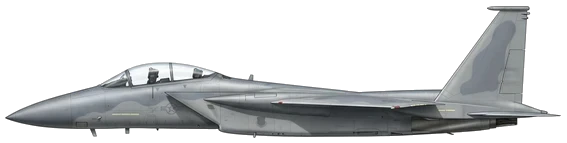
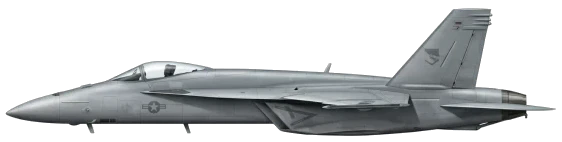
| F-15EX Eagle II | F/A-18 E/F Super Hornet | |
|---|---|---|
| Origin country | 🇺🇸 United States | 🇺🇸 United States |
| Category | Combat Aircraft | Combat Aircraft |
| Manufacturer | Boeing | Boeing |
| First flight | 2 February 2021 | 29 November 1995 |
| Year introduced | 2024 | 2001 |
| Number produced | 154 units | 632 units |
| Average unit price | $90 million | $70 million |
| Wing area | 56.5 m² | 46.5 m² |
| Wingspan | 13.1 m | 13.6 m |
| Height | 5.7 m | 4.9 m |
| Length | 19.4 m | 18.3 m |
| Maximum speed | 2655 km/h | 1915 km/h |
| Operational range | 3,889 km | 2,346 km |
| Service ceiling | 18,000 m | 15,940 m |
| Max. takeoff weight | 36,741 kg | 29,900 kg |
| Empty weight | 16,103 kg | 14,550 kg |
| Total thrust | 2 x 129 kN | 2 x 9,979 kgf |
Detailed Comparison
The USAF’s F-15EX Eagle II and the USN’s F/A-18E/F Super Hornet stem from divergent procurement realities. Boeing manufactures both, but the Super Hornet is a 1990s compromise designed to fill carrier decks after the A-12 cancellation, while the F-15EX is a heavy payload interceptor pushed into production to replace fatigued F-15Cs while next-generation airframes mature.
Development and Design
The Super Hornet emerged from the "Hornet 2000" concept. The Navy selected it to avoid the costs of clean-sheet designs or F-14 upgrades following the Cold War. Boeing scaled up the legacy Hornet by 20%, altering the aerodynamics with enlarged leading-edge extensions and rectangular intakes to manage carrier-specific low-speed handling.
Conversely, the F-15EX leverages a development cycle funded largely by Saudi Arabia (F-15SA) and Qatar (F-15QA). Boeing transitioned the F-15’s legacy hydro-mechanical controls to a digital fly-by-wire system, unlocking outboard wing stations 1 and 9 for weapons carriage. The EX integrates the ADCP II open mission systems architecture and the AN/ALQ-250 EPAWSS electronic warfare suite, bypassing the proprietary upgrade bottlenecks of earlier F-15 blocks.
Specifications and Performances
At $150 million per unit, the F-15EX costs more than twice the $70 million Super Hornet. This capital buys raw kinematic performance and magazine depth:
- A maximum speed of 2655 km/h versus the Super Hornet's 1915 km/h
- A payload capacity of 29,500 lb, exceeding the F/A-18's 17,750 lb limit
- The ability to carry 12 AIM-120 AMRAAMs internally, compared to the F/A-18's typical mixed loadout of 6 to 8 missiles
The Super Hornet suffers from inherent aerodynamic drag, exacerbated by its canted wing pylons. While its stated ferry range is 2346 km, its practical combat radius dictates continuous reliance on organic "buddy store" refueling. The F-15EX uses its larger thrust-to-weight ratio from dual F110-GE-129 engines to operate as an unrefueled theater interceptor.
Deployment and usage
The F/A-18E/F executed the bulk of U.S. Navy tactical aviation missions over the last two decades. From Operation Southern Watch to recent anti-ship drone and missile interceptions against Houthi forces over the Red Sea, the airframe operated continually in semi-permissive airspace. It recorded an air-to-air kill against a Syrian Su-22 in 2017.
The F-15EX achieved initial operational capability in July 2024 with the 142nd Wing and lacks a combat record. USAF doctrine positions it for homeland defense and as a standoff weapons platform in the Indo-Pacific. It is designed to loiter behind F-35s to launch AGM-158 JASSMs or long-range air-to-air effectors, rather than penetrating contested airspace.
Conclusion
For localized carrier strike missions and low-speed angle-of-attack engagements, the F/A-18E/F holds the edge due to its maturity and unit cost. However, in a Pacific theater defined by vast distances and peer adversaries, the F-15EX is the superior airframe. The Super Hornet lacks the speed, radar aperture, and unrefueled combat radius to contest modern Chinese airspace. The F-15EX provides the necessary magazine depth and kinematic reach to act as a heavy standoff platform, justifying its $150 million price.
-
 Saudi Arabia
83
Saudi Arabia
83
-
 Qatar
48
Qatar
48
-
 United States
22
United States
22
- All 4 operators →

