Tornado
European multirole combat aircraft, renowned for operational history in Gulf War and Balkans conflict. Key figures: top speed 2,420 km/h, range 3,890 km, service ceiling 15,240 m, max takeoff weight 27,215 kg, unit price $35M, built 990. In service with 3 air forces as of 2026 — Germany (86), Saudi Arabia (81), Italy (35).
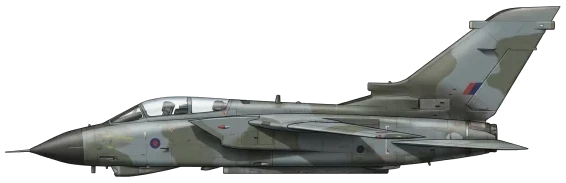
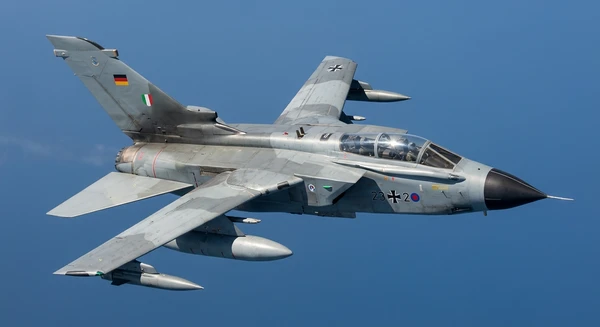
| Crew | 2 (pilot, WSO) |
| Length | 16.7 m (54.9 ft) |
| Wingspan | 13.9 m (45.6 ft) |
| Height | 6.0 m (19.5 ft) |
| Wing area | 26.6 m² (286.3 sqft) |
| Empty weight | 13,890 kg (30,622 lbs) |
| Max. takeoff weight | 27,215 kg (59,999 lbs) |
| Powerplant | 2 × turbofans Turbo-Union RB.199-34R Mk 103 7,831 kgf each |
| Ejection seat | Martin-Baker Mk 10 |
| Maximum speed | 2420 km/h (Mach 2.3) |
| Operational range | 3,890 km (2,417 mi) |
| Service ceiling | 15,240 m (50,000 ft) |
| Climb rate | 76.7 m/s (251.6 ft/s) |


- Air-to-Surface AGM-65 Maverick
- Anti-Radiation AGM-88 HARM
- Anti-Radiation ALARM
- Cruise Missiles KEPD 350 Taurus
- Air-to-Surface MBB Kormoran
- Air-to-Air Short-Range MBDA AIM-132 ASRAAM
- Air-to-Surface MBDA Brimstone
- Air-to-Air Short-Range MBDA IRIS-T
- Air-to-Air Short-Range Raytheon AIM-9 Sidewinder
- Cruise Missiles SCALP / Storm Shadow
- Air-to-Surface Sea Eagle
- Thermonuclear B61
- Cluster BL755
- Pods Cluster Hunting Engineering JP-233
- Laser-Guided Raytheon GBU-10 Paveway II
- Laser-Guided Raytheon GBU-12
- Nuclear WE.177
Description
The Panavia Tornado is a twin-engine, two-seat, variable-sweep wing combat aircraft developed jointly by the United Kingdom, West Germany and Italy for low-level strike against Warsaw Pact forces. Built in three main versions — the IDS interdictor/strike aircraft, the ECR defence-suppression aircraft and the ADV long-range interceptor — it first flew on 14 August 1974, entered service in 1979–1980; 990 were built before production ended in 1998. The Royal Air Force retired its last Tornados in 2019; Germany, Italy and Saudi Arabia still flew the type as of 2026, the German and Italian fleets in their final years.
Development
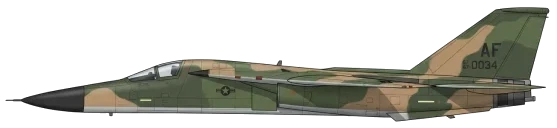
The Tornado grew out of a 1968 working group formed by West Germany, the Netherlands, Belgium, Italy and Canada to replace the F-104G Starfighter, joined the same year by Britain after the cancellations of the TSR-2, the F-111K and the Anglo-French AFVG. The Multi-Role Combat Aircraft (MRCA) was to cover strike, reconnaissance, maritime attack and air defence with one airframe; Canada, Belgium and the Netherlands had dropped out by 1970.
Panavia Aircraft GmbH was set up in March 1969 with the work shared 42.5 percent each between British Aircraft Corporation (later BAE Systems) and Messerschmitt-Bölkow-Blohm (now part of Airbus) and 15 percent for Aeritalia (now Leonardo). Turbo-Union (Rolls-Royce, MTU and Fiat) was formed in 1970 for the RB199 afterburning turbofan, whose choice over an American engine Britain had made a condition of taking part. The governments signed an Intention to Proceed in September 1971.
The first of nine prototypes flew from Manching in Germany on 14 August 1974. Deliveries to the RAF and Luftwaffe began in June 1979 and to Italy in September 1981; a Tri-National Tornado Training Establishment at RAF Cottesmore trained the partners' crews until 1999. Saudi Arabia, under the Al Yamamah agreements of 1985 and 1993, was the only export customer.
Design
The Tornado is optimised for high-speed, low-level penetration in all weathers. Its wings sweep from 25 degrees for take-off, landing and loiter to 67 degrees for the low-level dash; full-span flaps, slats and thrust reversers give short-field performance. The GR4 is 16.72 m (54 ft 10 in) long, spans 13.91 m (45 ft 8 in) unswept and has a maximum take-off weight of 27,215 kg (60,000 lb). Two Turbo-Union RB199 Mk 103 turbofans each deliver 76.8 kN (17,300 lbf) in afterburner, for Mach 2.2 at altitude and a ferry range of 3,890 km (2,100 nmi).
The flight controls are a hybrid fly-by-wire system: a four-channel analogue Command and Stability Augmentation System (CSAS) works with a digital autopilot, and some mechanical backup survives in case of electrical failure. The IDS carries a combined navigation/attack Doppler radar with a terrain-following mode permitting hands-off low-level flight and one of the first digital data buses fitted to a combat aircraft. The ADV was the deepest modification, with a stretched fuselage, the AI.24 Foxhunter radar, able to track 20 targets at some 160 km (100 mi), and uprated engines; the ECR carries an emitter-locator system to find hostile radars.
Upgrades
Lessons from the 1991 Gulf War moved the RAF to medium-level operations, and 142 GR1s were rebuilt as GR4s between 1996 and 2003 with new avionics, GPS, a wider head-up display and a FLIR sensor where the port cannon had been, bringing in Storm Shadow, Brimstone, Paveway III and the RAPTOR pod; 59 later received the CUSP package with Paveway IV and a tactical datalink. Germany's ASSTA programme from 2000 added a new weapons computer, GPS/laser-inertial navigation, Taurus KEPD 350 and the Litening pod, then digital avionics and laser JDAM for the 85 aircraft retained. Italy upgraded part of its A-200 fleet for Storm Shadow, JDAM and Paveway III, added Link 16 from 2010 and cleared the AGM-88E AARGM on its EA-200s in 2018. Saudi Arabia's £2.5 billion Tornado Sustainment Programme of 2006 brought up to 80 IDSs close to GR4 standard.
Armament
Seven hardpoints carry up to 9,000 kg (19,800 lb) of stores. Built around low-level airfield attack with the JP233 and MW-1 dispensers and unguided or BL755 cluster bombs, the IDS later took Paveway II/III and IV laser-guided bombs, JDAM, the ALARM and AGM-88 HARM anti-radiation missiles, Brimstone, the Storm Shadow and Taurus cruise missiles and the Sea Eagle and Kormoran anti-ship missiles. Self-defence is by AIM-9 Sidewinder or ASRAAM and one or two internal 27 mm Mauser BK-27 revolver cannon, developed for the Tornado; the ADV carried Skyflash and AIM-120 AMRAAM. RAF Germany squadrons stood nuclear alert with the WE.177 bomb until 1998; German and Italian IDSs remain certified for the US B61 under NATO nuclear sharing.
Operational History
Cold War, the Gulf and the Balkans
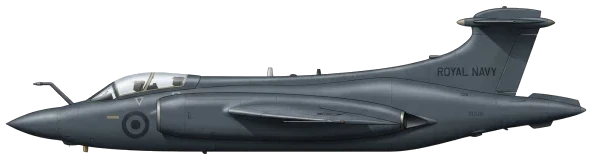
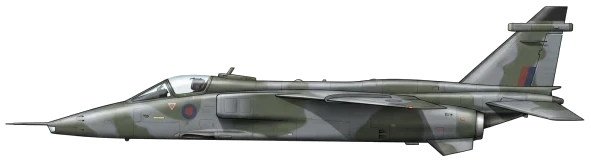
No. IX (B) Squadron became the first operational Tornado unit in June 1982, and RAF squadrons in West Germany replaced Buccaneers and Jaguars against Warsaw Pact airfields and SAM sites; the Luftwaffe equipped five wings and the Marineflieger two anti-shipping wings. The 1991 Gulf War was the combat debut. Forty-nine RAF GR1s flew low-level airfield attacks with JP233 and loft-bombed 1,000 lb bombs in the opening nights, losing six aircraft in the war, most on unguided-bomb sorties, before moving to medium-level precision strikes with Buccaneer and then TIALD designation. Italy and Saudi Arabia each lost one IDS. RAF GR1s then patrolled the Iraqi no-fly zones and struck in Operation Desert Fox in 1998. German Tornados flew reconnaissance over Bosnia in 1995 and, in Germany's first offensive air operation since 1945, its ECRs fired 236 HARMs over Yugoslavia in 1999, where 22 Italian aircraft and RAF GR1s also flew.
Iraq, Afghanistan, Libya
RAF GR4s opened the 2003 invasion of Iraq with the first operational Storm Shadow launches; one was shot down by a US Patriot battery in March 2003, killing both crew. In Afghanistan, German Tornados flew reconnaissance from 2007 to 2010 and RAF GR4s replaced Harriers at Kandahar from 2009 to 2014. Over Libya in 2011 RAF Tornados flew 3,000-mile (4,800 km) strike missions from Britain and Italian Tornados launched Storm Shadow, Paveway and JDAM.
Islamic State, Yemen and the last decade
From August 2014 eight RAF GR4s at Akrotiri struck Islamic State in Iraq and, from December 2015, Syria; on 14 April 2018 four fired Storm Shadow at a Syrian military facility after the suspected chemical attack on Douma, and flew their last Shader sorties in January 2019. Italy deployed reconnaissance Tornados against Islamic State from November 2014, and Germany followed. Saudi Tornados have operated over Yemen since 2009 and carried a heavy share of the campaign from 2015: one was lost over Saada in January 2018 to what Riyadh called technical reasons, and on 14 February 2020 a Tornado on a close air support mission was shot down by a Houthi surface-to-air missile over Al-Jawf governorate, both crew being captured.
Retirements
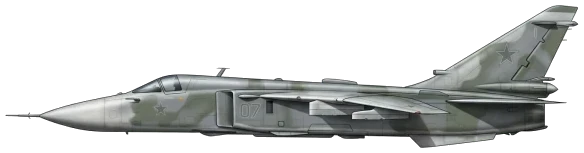
The RAF retired the F3 in 2011, having lent 24 to Italy from 1995 to 2004, and the GR4 on 1 April 2019; in July 2023 pylons from retired GR4s were reported fitted to Ukrainian Su-24s to carry Storm Shadow. Saudi Arabia's ADVs have long been withdrawn. Italy's 6° Stormo at Ghedi stood down the IDS in July 2025 as the 154° Gruppo converted to the F-35A, leaving the ECRs with the 155° Gruppo.
Operators
As of 2026 the Luftwaffe flew around 86 Tornados (65 IDS and 21 ECR) at Büchel and Jagel, Italy a dwindling fleet at Ghedi, chiefly ECRs after the IDS stood down in 2025, and the Royal Saudi Air Force 81 upgraded IDSs.
Future and Replacement
Germany ordered 35 F-35A Lightning IIs in 2022 to take over the nuclear role; the first flew in September 2026 and deliveries to Büchel are due from late 2027, while Eurofighter EK electronic-combat aircraft take over the ECR mission and Eurofighters the conventional strike task; the whole fleet retires by 2030. Italy is replacing its Tornados with the F-35A, the ECRs due to follow the IDS out of service within a few years.
Variants
- Tornado IDS: Interdictor/strike baseline for Germany, Italy (A-200) and Saudi Arabia; two BK-27 cannon, terrain-following radar.
- Tornado GR1 / GR1A / GR1B: RAF IDS, with infrared reconnaissance (GR1A) and Sea Eagle anti-ship (GR1B) sub-variants.
- Tornado GR4 / GR4A: 142 GR1s rebuilt from 1996 to 2003 for medium-level precision attack; retired in 2019.
- Tornado ECR: Suppression of enemy air defences with HARM and later AARGM; 35 new-build for Germany (no cannon, Mk 105 engines), 16 Italian conversions (EA-200).
- Tornado ADV (F2 / F3): Stretched interceptor with Foxhunter radar and Skyflash/AMRAAM; 18 interim F2s, then the definitive F3 production standard with the uprated Mk 104 engines. All retired by 2011.
Frequently Asked Questions
What type of aircraft is the Tornado?
What is the maximum speed of the Tornado?
What is the range of the Tornado?
When did the Tornado first fly?
How many Tornado have been built?
Which countries operate the Tornado?
How much does a Tornado cost?
What is the service ceiling of the Tornado?
- OCT 52026 Updated Description overhauled: Panavia programme, GR4 and ECR upgrades, Gulf to Yemen operations, retirements and F-35 replacement
- OCT 52026 Updated Maximum takeoff weight corrected
- AUG 122026 Updated Range corrected to the sourced ferry range
- AUG 52026 Updated Powerplant and thrust updated
- JUL 232026 Updated Sources and cross-references refreshed
- JUN 262026 Updated Missiles updated
- APR 72026 Updated Sources and cross-references refreshed