Yak-11 Moose
Soviet trainer aircraft, widely deployed during the Cold War, notable for its robustness and maintenance simplicity. Key figures: top speed 465 km/h, range 1,280 km, service ceiling 7,100 m, max takeoff weight 2,500 kg, unit price $0.03M, built 4,566.
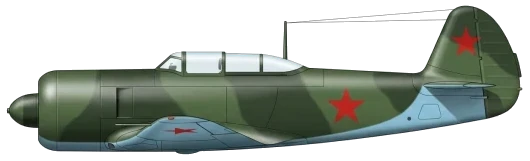
| Crew | 2 (pilot, instructor) |
| Length | 8.5 m (27.9 ft) |
| Wingspan | 9.4 m (30.8 ft) |
| Height | 3.3 m (10.8 ft) |
| Wing area | 15.4 m² (165.8 sqft) |
| Empty weight | 1,900 kg (4,189 lbs) |
| Max. takeoff weight | 2,500 kg (5,512 lbs) |
| Powerplant | 1 × radial engine Shvetsov ASh-21 419 kW each |
| Maximum speed | 465 km/h (289 mph) |
| Operational range | 1,280 km (795 mi) |
| Service ceiling | 7,100 m (23,294 ft) |
| Climb rate | 8.1 m/s (26.6 ft/s) |
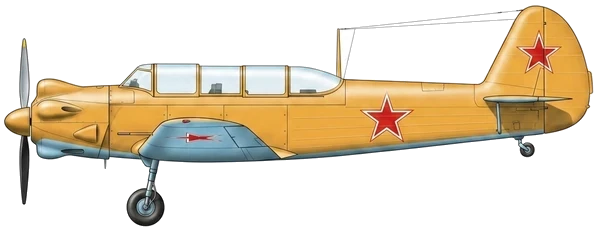
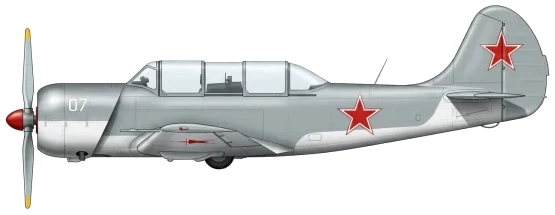
Description
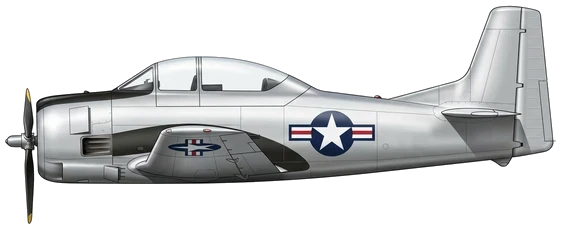
The Yak-11, nicknamed the "Moose," was a Soviet training aircraft used after World War II. It was developed from the Yakovlev Yak-3U, which itself was derived from the Yak-3 fighter. The Yak-11 was primarily used for basic pilot training and was the Soviet equivalent of the North American T-6 Texan.
Design
The Yak-11 was constructed with a blend of wood and metal, including fully metallic wings. It had a tandem seating arrangement with two cockpits and was powered by a reduced-power piston engine. The aircraft had a top speed of approximately 600 km/h in a dive and was highly maneuverable in flight. It was equipped with a 7.62 mm machine gun mounted on the engine cowling and could carry two 100 kg bombs.
Operational History
The first Yak-11s entered service in the Soviet Union in 1946, with mass production starting in 1947. Approximately 3,900 Yak-11s were produced in the Soviet Union. In 1953, a production license was granted to the Czechoslovakian aerospace industry, which manufactured 707 aircraft under the names C-11 or LET C-11. The Yak-11 was widely used by the Soviet Union and its satellite countries. In the Soviet Union, it was actively used until 1962, after which some units were repurposed as liaison or target-towing aircraft. Egypt also received a number of aircraft, one of which crashed in Cyprus in 1964 and was subsequently recovered and re-registered as G-AYAK. The Yak-11 was the first victim of an American aircraft engaged in the Korean War on June 27, 1950, shot down by a North American F-82 Twin Mustang.
Variants
The Yak-11U was a tricycle landing gear version intended to replace the Yak-11, but only a small quantity of units were produced. Currently, a few Yak-11s are still in service as collector's aircraft.
Frequently Asked Questions
What type of aircraft is the Yak-11 Moose?
What is the maximum speed of the Yak-11 Moose?
What is the range of the Yak-11 Moose?
When did the Yak-11 Moose first fly?
How many Yak-11 Moose have been built?
Which countries operate the Yak-11 Moose?
How much does a Yak-11 Moose cost?
What is the service ceiling of the Yak-11 Moose?
- AUG 52026 Updated Climb rate added
- JUL 232026 Updated Sources and cross-references refreshed
- APR 72026 Updated Sources and cross-references refreshed