Six Months of War With Iran Have Left US Carriers, Interceptors and Crews Stretched Thin
Record carrier deployments, a western Pacific without a flat deck, two-thirds of the Patriot stockpile expended and a defense strategy that ranked the Middle East behind two other theaters: an assessment of what the 2026 Iran conflict has cost the US force.
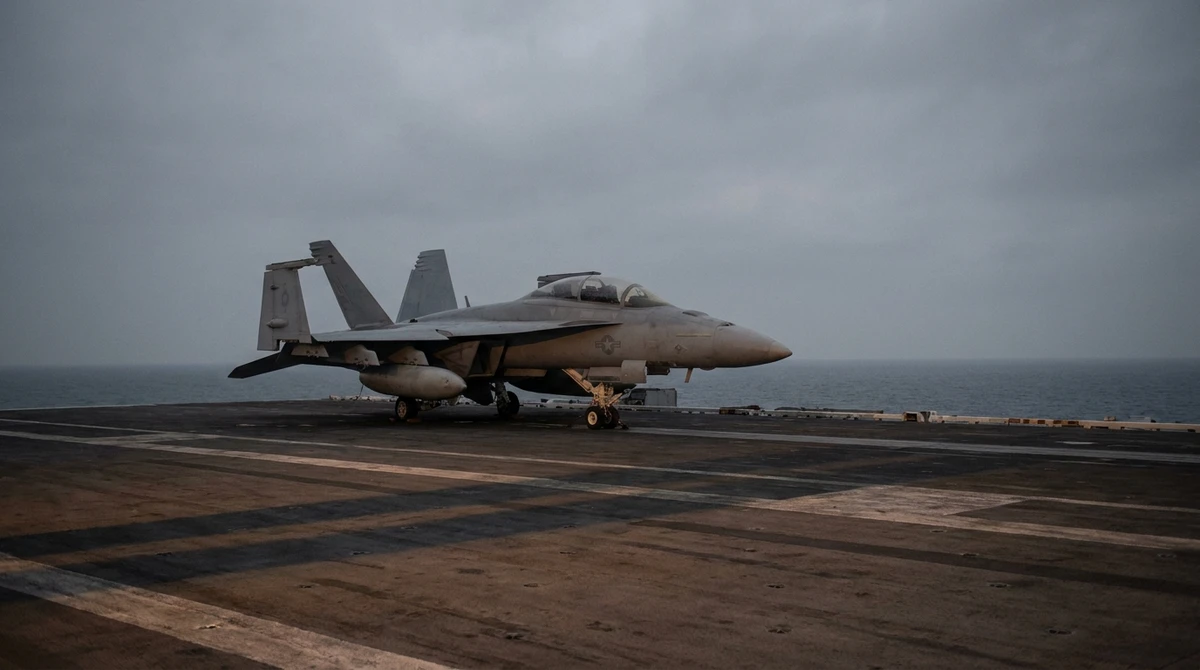
Nearly six months into the 2026 Iran conflict, the strain on the US military has stopped being a matter of argument and become a matter of record. It is visible in carrier deployment lengths, in interceptor inventories, in the position of aircraft carriers on the map, in the tanker fleet and in the words of the Navy's own leadership, and it runs against a defense strategy published seven months ago that ranked the Middle East behind two other theaters. This is an attempt to measure it, service by service, with the figures that are public.
Start with the carriers, because they are the most finite asset. The US Navy operates 11: ten Nimitz-class ships and USS Gerald R. Ford, lead ship of the Ford class. Its force-generation plan, as Chief of Naval Operations Adm. Daryl Caudle has described it, is built around a predictable three-year cycle with a seven-month, 210-day deployment. Between 2018 and 2022 most deployments landed within a few days of that target, according to a CNN analysis of deployment announcements and the USNI News fleet tracker. Since October 2023 the service has routinely missed it: Ford came home in January 2024 after 260 days, Dwight D. Eisenhower in July 2024 after 274. Then the Iran war stretched the curve further. Ford's 2025-26 deployment, which took it from Norfolk to Europe, to the Caribbean for the strike on Venezuela and finally to the Middle East, ran 326 days, the longest by a US carrier since the Vietnam War, and it was completed despite a 30-hour laundry-space fire in March that left some 600 sailors without bunks. USS Abraham Lincoln, which left San Diego on November 21, 2025 and was due home in May, is now in its ninth month; its crew last touched land in Guam on December 11 and has set a modern record for consecutive days at sea. It may pass Ford's total on the transit home.
The Navy has not hidden the cost. Roughly 200 family members put food shortages, water problems, lost mail and mental-health fears to Acting Navy Secretary Hung Cao and two three-star commanders at town halls in San Diego; a sailor went overboard on August 3 and was recovered within the hour; Sen. Richard Blumenthal wrote to the Pentagon asking how "today's operational requirements do not create tomorrow's readiness crisis", and Rep. Seth Moulton said the House Armed Services Committee would investigate. The service's first response was that it had "not observed an increase in suicidal ideations or attempts aboard the ship". Its later statements were more candid. "A small number of mental health cases were treated with no loss of life," Cao wrote on August 14, adding that the Lincoln "was extended because the mission demanded it" and that additional counselors and social workers were being sent. Central Command's Adm. Brad Cooper, after visiting the ship, said it had "among the lowest number of cases related to mental health" of the 11 carriers, while conceding "this doesn't mean that all is perfect". Defense Secretary Pete Hegseth said the conditions had been "completely misrepresented"; President Donald Trump said the deployment had been "not nearly long enough". The most telling comment came from the Navy's senior enlisted sailor, Master Chief Petty Officer of the Navy John Perryman, who called the current cycle a "conveyor belt that's very prescriptive" born of a "peacetime mindset" and said the service would "have to come up with a different force generation model". Retention of naval aviators and maintainers is already a concern: Hegseth ordered a review of strike fighter squadron retention in a March memo, and the Navy is paying tens of thousands of dollars a year in bonuses to keep aircrew.
Relief for the Lincoln comes from the one place the strategy said it should not. USS George Washington, the only American carrier homeported abroad, at Yokosuka, left the South China Sea in mid-August to take over the Arabian Sea station. That leaves the western Pacific without a US carrier for at least a month, according to Hudson Institute analyst Bryan Clark, and the largest US naval formation in the region is an amphibious ready group built around USS Tripoli. USS Theodore Roosevelt, just back from leading RIMPAC, is next in the cycle, but Clark expects it to pass through the Pacific on its way to the Middle East too. Beijing has noticed: the carrier Liaoning and its group have been operating in the Philippine Sea and South China Sea, China and Russia held their Joint Sea exercise in July, and China test-fired a submarine-launched ballistic missile the same month. "They're using this as part of the narrative to demonstrate to the Philippines, to Japan, to Indonesia and others that the U.S. is not the big dog in the western Pacific anymore," Clark told the Associated Press. He also warned of the bill to come: carriers pushed this hard "will be lined up to get into the shipyard", and the United States has two yards that can take them. The relief pipeline is not helping. USS John F. Kennedy began acceptance trials in August and is due for delivery in March 2027, about two years late, and the decision to put steam catapults back on USS Doris Miller means a redesign that Clark estimates could push that ship from about 2034 to the end of the next decade.
The second measure is the magazine. Using public expenditure data, production rates and inventory estimates, the Center for Strategic and International Studies assessed at the end of July that the United States had fired about 65 percent of its Patriot interceptors between February and July, taking a pre-war stock of roughly 2,330 modern PAC-3 rounds to fewer than 850, and about 38 percent of its THAAD interceptors, from 452 to somewhere between 234 and 278. More than 1,000 Tomahawks have been launched from a pre-war inventory of about 3,000. Reuters reported on August 4 that the Army had used "virtually all" of its ATACMS and its newer Precision Strike Missile; CNN put the THAAD drawdown closer to 80 percent. The Pentagon and the White House dispute the figures without publishing their own. What is not disputed is the replacement arithmetic. The Army's $58.6 billion PAC-3 award and the $3 billion Northrop rocket-motor deal are meant to lift Patriot output from about 600 a year to 2,000 by the end of 2030 and to quadruple THAAD production; the $22.9 billion Tomahawk contract signed on August 17 aims at 1,000 missiles a year against a current 60. None of it lands before 2028. "What we're getting now are missiles that were funded in 2023," CSIS's Mark Cancian said. His institute's conclusion was that the greater risk is not sustaining this war but answering another high-intensity contingency before the inventories are rebuilt.
The Air Force shows the same pattern in a less visible fleet. Operation Epic Fury opened with some 50,000 personnel and around 200 fighters in theater, and every sortie from Europe or the Gulf depended on tankers: GlobalMilitary.net data credits the service with 376 KC-135 Stratotankers, airframes built in the 1950s and 1960s, and 100 KC-46s, with the KC-10 only just retired. The campaign has already cost the fleet a KC-135 lost in a mid-air collision over western Iraq on March 12, six airmen with it, another destroyed and five damaged on the ground in Iranian strikes on Prince Sultan Air Base, alongside an E-3 Sentry. "There's a huge strain on the entire ecosystem," retired Col. Troy Pananon, a former commander of the 100th Air Refueling Wing at RAF Mildenhall, told The War Zone; nearly half the tanker force sits in the Guard and Reserve. Across all services, GlobalMilitary.net's conflict tracker records 65 US airframes lost since February 28, 48 of them uncrewed, out of 141 for all belligerents.
Set that against the strategy. The National Defense Strategy released in January 2026 sequenced US priorities explicitly: the homeland and Western Hemisphere first, then deterring China through a "denial defense" along the First Island Chain, with the Middle East handled by Israel and the Gulf states "with U.S. support calibrated to needs", and it named the "simultaneity problem" of several threats arriving at once as a central concern. Seven months later the United States has, at various points since April, operated three carriers simultaneously in Central Command's area, moved its forward-deployed Pacific carrier to the Arabian Sea, transferred stocks of long-range missiles and interceptors out of Asia, and scaled back the Ulchi Freedom Shield exercise with South Korea. Undersecretary Elbridge Colby insisted in Bangkok that the military's focus "is really" on the First Island Chain; Greg Poling of CSIS told the AP the administration was "doing the exact opposite" of its stated goal of pulling out of the Middle East. Domestic tasking adds a further draw at the margin: just over 5,000 National Guard and active-duty personnel remained activated in US cities at the end of 2025, at a cost the Congressional Budget Office put at $496 million for the year, and the Washington, D.C. mission runs through 2026.
The reason none of this is winding down is on the water. GlobalMilitary.net's Strait of Hormuz monitor logged an average of four commercial transits a day in the first half of August against 56 a day in January, and the blockade of Iran the Lincoln has been enforcing, along with roughly 10,000 sorties by its air wing according to Central Command, is the mission George Washington inherits. The Iranian navy has lost every frigate and corvette it had, yet the ceasefire collapsed on July 8 and there is no announced end state.
What to watch is therefore a schedule rather than a battle. George Washington should reach the Arabian Sea in the second half of August, after which the Lincoln begins a passage home that will likely give it the deployment record; Theodore Roosevelt's departure will show whether the Navy accepts a longer Pacific gap or a fourth carrier deployed at once; the House Armed Services inquiry will test the Navy's account of conditions aboard the Lincoln; and the first full year of Northrop and Raytheon deliveries, not before 2028, will show whether the interceptor and cruise-missile lines can close the gap the war has opened. The United States remains first in the global military power ranking by a wide margin, and nothing in this campaign has changed that. What the campaign has shown is that the margin was sized for a short war and a peacetime rotation, and that both crews and magazines are now being spent faster than the system was designed to replace them.
More News
All news →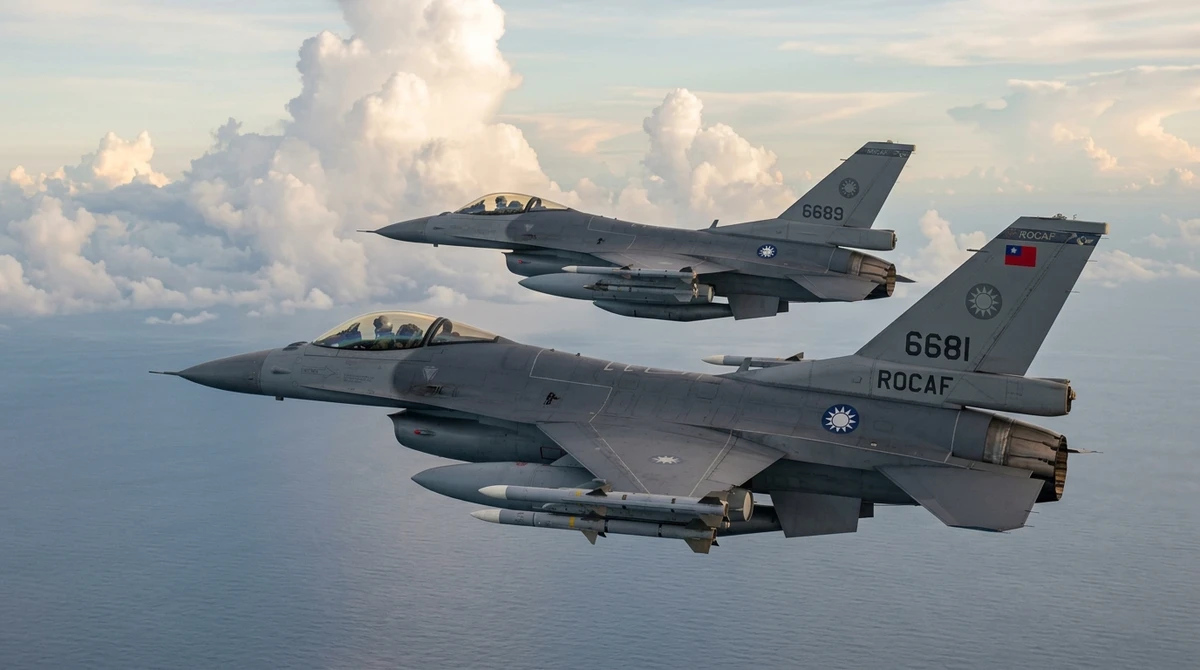
Taiwan Receives Its First Two F-16 Block 70s From the Largest F-16 Order Still Outstanding
The first two new-build F-16C Block 70 fighters landed at Chihhang Air Base on October 2, 2026, beginning deliveries on a 66-jet order that GMN's inventory data shows is the largest open F-16 order anywhere and that would lift Taiwan from seventh to fifth among F-16 operators on current figures.

Northrop Grumman's YFQ-48A Talon Blue Completes First Fully Autonomous Flight at Mojave
Northrop Grumman said on October 3, 2026 that its company-funded YFQ-48A Talon Blue had taxied, taken off, maneuvered and landed without pilot input at Mojave, California, as the US Air Force prepares to select designs for Increment 2 of its Collaborative Combat Aircraft program.
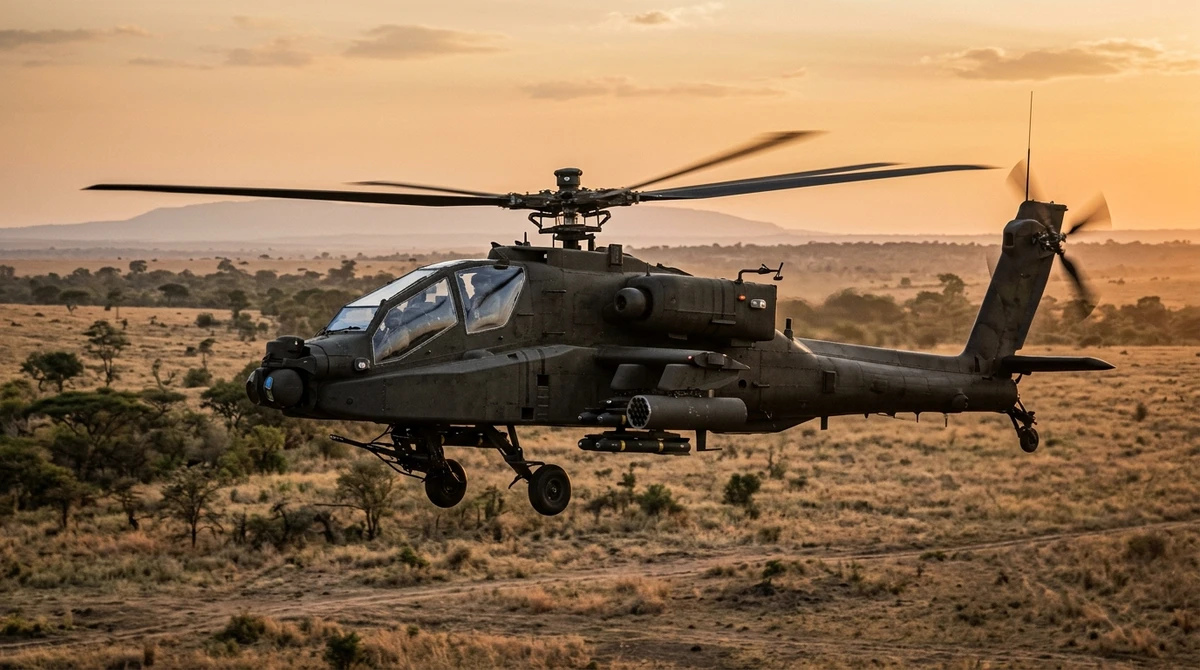
Australia Retires Its Tigers, Leaving Three Operators Among the World's 3,623 Attack Helicopters
The Australian Army has retired its Tiger attack helicopters, marking the fleet's sundown in Darwin on 30 September and leaving France, Germany and Spain as the only users; GlobalMilitary.net data counts 3,623 active attack helicopters in 81 countries.
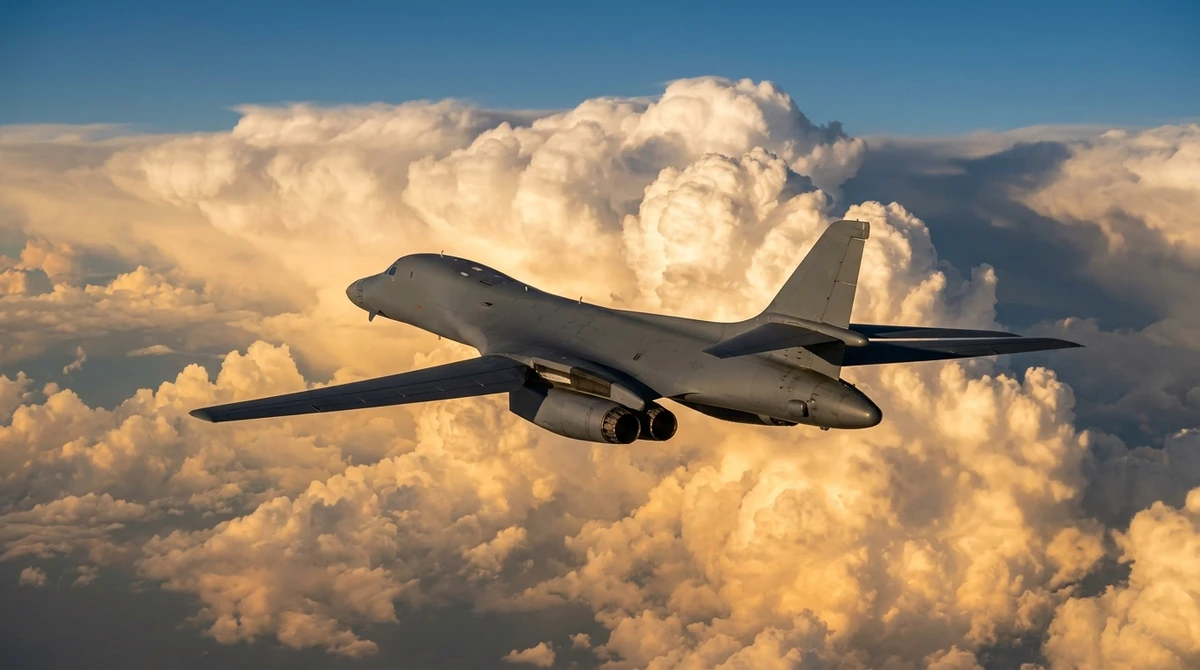
B-1B Lancer Reaches 40 Years in Service as US Air Force Plans to Keep It Flying Through 2037
The B-1B Lancer achieved initial operational capability on 1 October 1986; four decades later, 45 of the 100 bombers built remain in US Air Force service at Ellsworth and Dyess, and modernization funding is now planned to keep the type relevant through 2037.
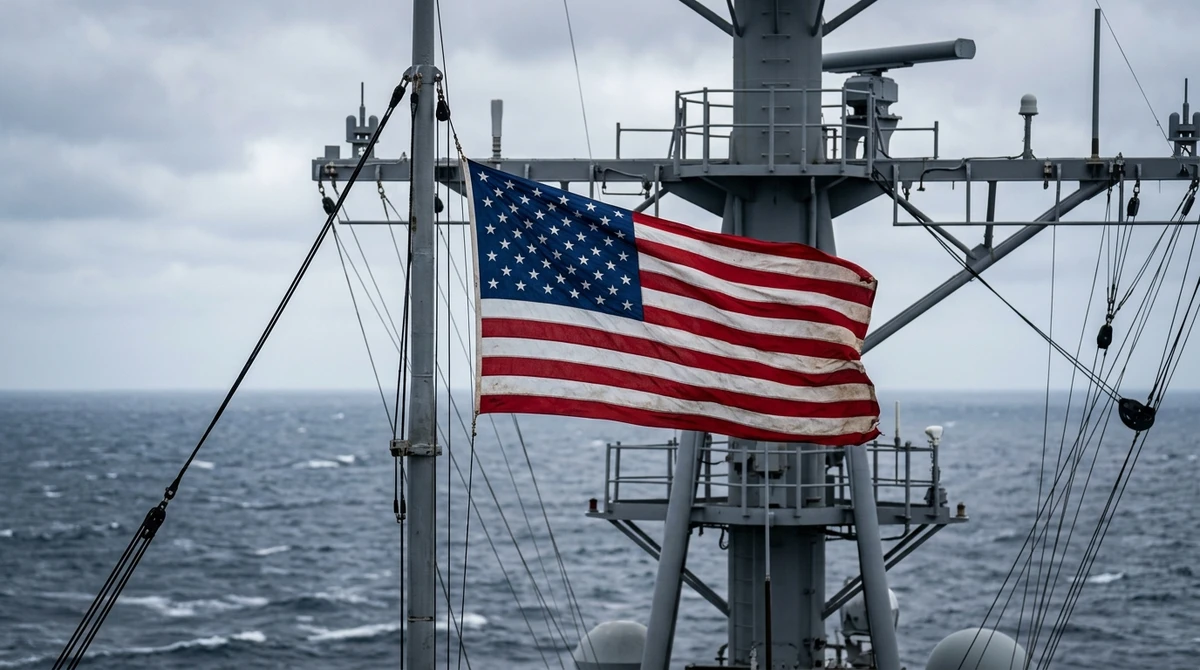
US Navy Awards Raytheon Up to $24.4 Billion Multiyear Contract for SM-6 Missiles
The US Navy on Oct. 1, 2026 awarded RTX's Raytheon unit a multiyear contract worth up to $24.4 billion for Standard Missile-6 interceptors, a five-year deal with two option years whose quantities remain undisclosed and whose funding Congress has yet to appropriate.
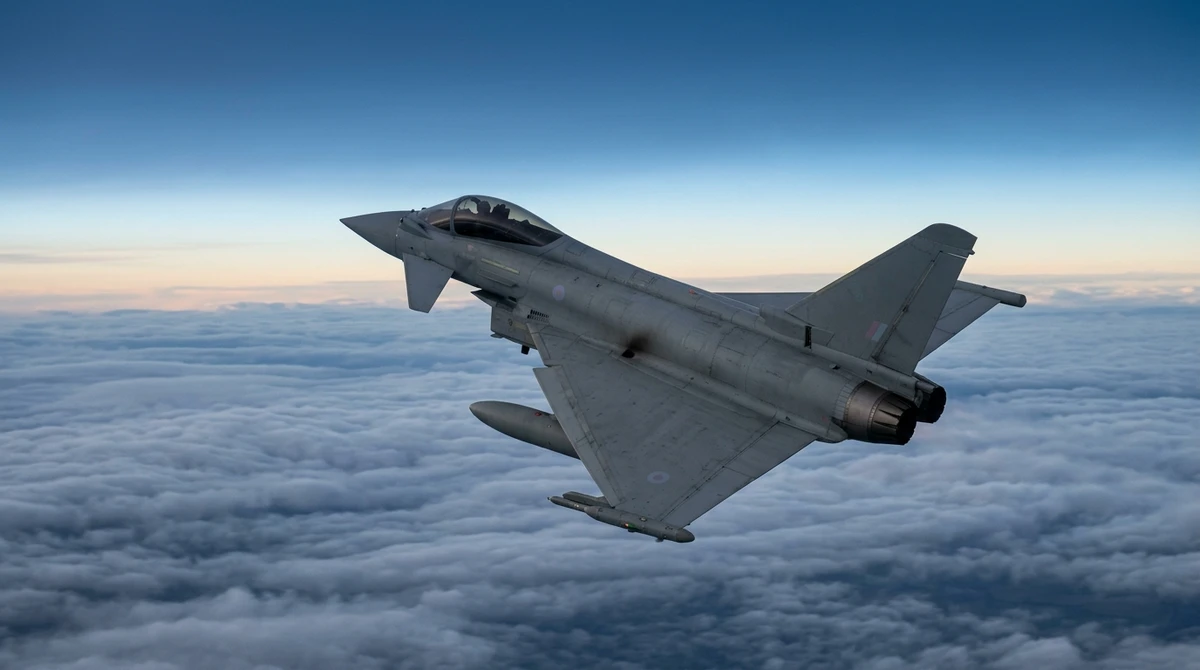
Ramjet vs Rocket: How the Meteor Keeps Thrusting to the Target While the AMRAAM Coasts
The Pentagon's AMRAAM contract of up to $20.7 billion, announced on September 28, 2026, expands output of a missile whose rocket burns early and then coasts; Europe's Meteor uses a throttleable ramjet that MBDA says thrusts until intercept.