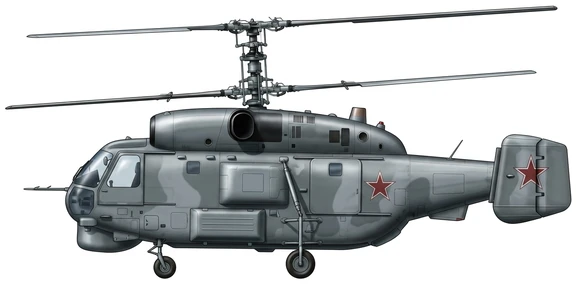
Ka-29 Helix-B
Soviet naval assault transport helicopter, developed in the 1970s for shipborne operations, troop transport, and fire support. Key figures: top speed 270 km/h, range 980 km, service ceiling 5,000 m, max takeoff weight 12,000 kg, built 60.
| Crew | 1–3 |
| Length | 11.3 m (37.1 ft) |
| Wingspan | 15.8 m (51.8 ft) |
| Height | 5.5 m (18.0 ft) |
| Wing area | 392.2 m² (4221.6 sqft) |
| Empty weight | 6,500 kg (14,330 lbs) |
| Max. takeoff weight | 12,000 kg (26,455 lbs) |
| Powerplant | 2 × turboshafts Isotov TV3-117V 1,660 kW each |
| Maximum speed | 270 km/h (168 mph) |
| Operational range | 980 km (609 mi) |
| Service ceiling | 5,000 m (16,404 ft) |
- Anti-Tank 9K114 Shturm
- Unguided Bomb Depth charge
- Nuclear Nuclear depth charge
Description
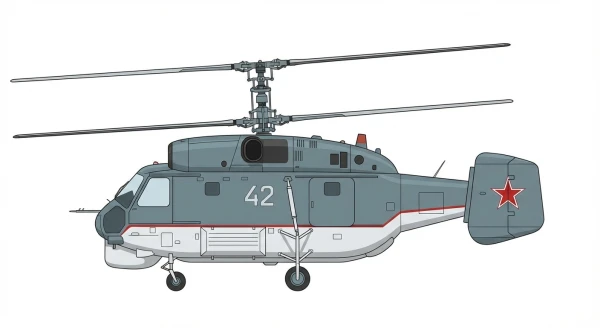
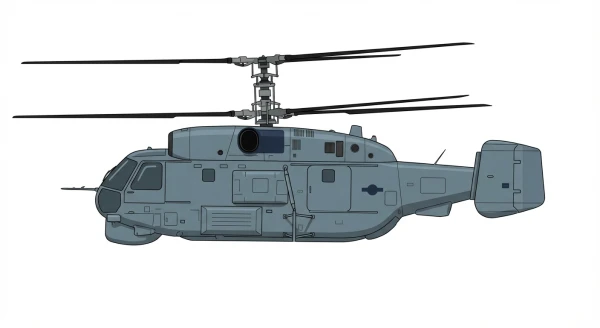
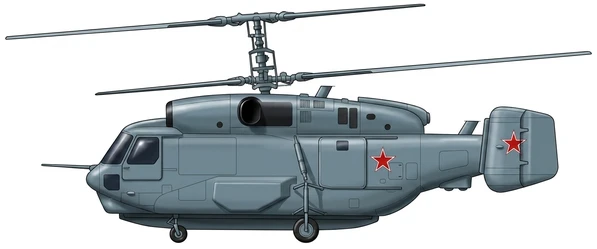
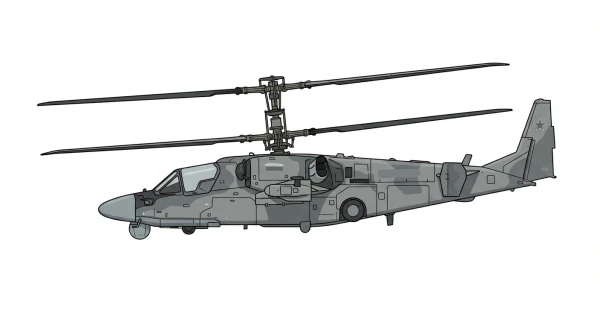
The Kamov Ka-29 (NATO reporting name 'Helix-B') is an assault transport armored military helicopter developed in the Soviet Union by Kamov for the Soviet Navy. Derived from the baseline Ka-27 platform, it entered Soviet service in 1987. The helicopter operates from amphibious landing ships or aircraft carriers to deliver troops and supply direct weapons support.
Development
Design work on the baseline Ka-27 helicopter family began in 1969 to replace the Kamov Ka-25, with the first prototype flying in 1973. Series production of the baseline platform started at Kumertau in July 1979 and officially entered Soviet Navy service in April 1981. Production of the Ka-29TB assault transport model began in circa 1984, with over 60 units produced.
Design
The Ka-29 features coaxial contra-rotating rotors, eliminating the requirement for a tail rotor. The airframe utilizes a four-leg fixed landing gear and accommodates a crew of two pilots alongside up to 16 troops in the main cabin. Existing airframes have undergone re-activation and modernization programs to update their engines, avionics, and weapons integration.
Armament
The Ka-29 features four external suspensions capable of carrying bombs, rockets, gun pods, munitions dispensers, and four-round launchers for 9K114 Shturm anti-tank missiles. For organic firepower, it incorporates a mobile forward-firing 7.62 mm GShG-7.62 machine gun supplied with 1,800 rounds. Alternatively, a 30 mm Shipunov 2A42 cannon with 250 rounds can be fitted to a flexible semi-rigid mount.
Operational History
The Ka-29 entered operational service with the Soviet Navy in 1987. On 21 June 2024, a Russian Ka-29 was reportedly shot down over Crimea by a Russian Pantsir-S1 system during a Ukrainian drone attack involving air and naval drones, resulting in the death of all four crew members.
Variants
- Ka-252: Initial prototype for the baseline helicopter platform.
- Ka-27PL: Anti-submarine warfare version equipped with radar and dipping sonar or magnetic anomaly detection equipment.
- Ka-27PS: Search and rescue version fitted with a 300 kg rescue winch and fuselage hooks for external loads up to 5,000 kg.
- Ka-29TB: Armored assault transport version featuring accommodation for 16 troops and four external weapon suspensions.
- Ka-28: Export version of the anti-submarine variant featuring an increased maximum takeoff weight of 12,000 kg and expanded fuel capacity.
Frequently Asked Questions
What type of aircraft is the Ka-29 Helix-B?
What is the maximum speed of the Ka-29 Helix-B?
What is the range of the Ka-29 Helix-B?
When did the Ka-29 Helix-B first fly?
How many Ka-29 Helix-B have been built?
What is the service ceiling of the Ka-29 Helix-B?
- AUG 62026 Created Page created: Ka-29 Helix-B