F-16 Fighting Falcon vs F-22 Raptor
F-16 Fighting Falcon vs F-22 Raptor at a glance — top speed 2,178 vs 2,414 km/h, range 4,217 vs 3,220 km, max takeoff weight 19,200 vs 38,000 kg, built 4,604 vs 195 units.
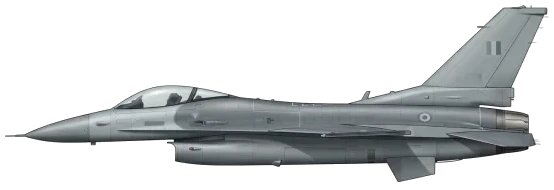
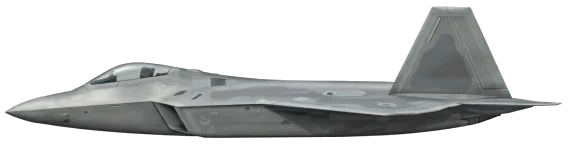
F-16 Fighting Falcon F-22 Raptor
Origin country
🇺🇸 United States 🇺🇸 United States
Category
Combat Aircraft Combat Aircraft
Manufacturer
General Dynamics
Lockheed Martin
First flight
2 February 1974
7 September 1997
Year introduced
1979
2003
Number produced
4604 units
195 units
Average unit price
$18.8 million
$150 million
Wing area
27.9 m² 78.0 m²
Wingspan
10.0 m 13.6 m
Height
4.9 m 5.1 m
Length
15.1 m 18.9 m
Maximum speed
2178 km/h 2414 km/h
Operational range
4,217 km 3,220 km
Service ceiling
15,240 m 19,812 m
Max. takeoff weight
19,200 kg 38,000 kg
Empty weight
8,570 kg 19,700 kg
Total thrust
1 x 12,701 kgf
2 x 15,876 kgf
Detailed Comparison The United States Air Force force structure relies on a high-low capability mix where the F-16 Fighting Falcon executes the bulk of tactical strike missions, while the F-22 Raptor operates as an exclusive air-dominance wedge. Procured decades apart, these platforms execute different strategic mandates: the F-16 emerged from the demand for a low-cost, high-turn-rate dogfighter, whereas the F-22 was engineered to penetrate contested Soviet airspace using low observability and sensor fusion.
Development and Design
General Dynamics built the F-16 around energy-maneuverability theory. By implementing relaxed static stability managed by a computerized fly-by-wire system, engineers extracted 9G performance from an 8,570 kg airframe. This single-engine architecture constrained production costs to roughly $75 million per unit, pushing total output past 4,600 airframes. Conversely, Lockheed Martin designed the F-22 at an empty weight of 19,700 kg, relying on edge alignment and radar-absorbent materials to minimize its radar cross-section. The requirement for sustained supersonic flight without afterburners dictated twin Pratt & Whitney F119 engines, adding 2D thrust vectoring for pitch control at high angles of attack. Post-Cold War budget cuts capped F-22 production at 195 units.
Specifications and Performances
The F-22 ’s twin engines generate 31,752 kgf, enabling Mach 1.5+ supercruise and pushing a 38,000 kg maximum takeoff weight (MTOW) to an operational ceiling of 19,812 meters. The F-16 carries a 19,200 kg MTOW on a single engine producing 7,777 kgf (dry). Payload carriage strictly dictates their aerodynamic profiles in combat:
F-22 Raptor :F-16 Fighting Falcon :AGM-88 HARMs and Harpoon missiles, though this increases aerodynamic drag.
Deployment and usage
The F-16 has accumulated millions of combat hours. Israeli F-16s destroyed the Osirak nuclear reactor in 1981, and USAF squadrons executed strike missions throughout Desert Storm, Allied Force, and Inherent Resolve. It constitutes the primary strike platform for 25 allied nations. The F-22 achieved Initial Operational Capability in 2005 but did not enter combat until 2014 over Syria. Instead of visual-range dogfighting, the USAF utilizes the F-22 as an airborne command node, using its AN/APG-77 AESA radar to map the airspace and route targeting data to fourth-generation assets. F-22 sortie generation is heavily constrained by maintenance requirements for its stealth coatings.
Conclusion
The F-22 holds the edge in day-one operations against integrated air defense systems and hostile fifth-generation fighters. Its supercruise and radar evasion allow it to dictate the terms of engagement before detection. The F-16 wins out in sustained, high-volume combat operations and permissive-airspace ground attack. At half the unit cost and requiring drastically fewer maintenance hours per flight hour, the F-16 provides the sortie generation rate and payload flexibility required for prolonged campaigns. Planners allocate the F-22 to crack anti-access/area-denial networks, while the F-16 is deployed to deliver tonnage once the airspace is cleared.
Largest operators · in service
Largest operators · in service
Change comparison
-- Select an aircraft --
206 JetRanger
208 Caravan
210 Centurion
421 Golden Eagle
429 GlobalRanger
441 Conquest II
500 Citation I
505 Jet Ranger X
A-1 Skyraider
A-10 Thunderbolt II
A-3 Skywarrior
A-37 Dragonfly
A-4 Skyhawk
A-40 Mermaid
A-5 Vigilante
A-50 Mainstay
A-6 Intruder
A-7 Corsair II
A1-CM Furia
A129 Mangusta
A400M Atlas
A900
AC-130
AH-1 Cobra
AH-1W Super Cobra
AH-1Z Viper
AH-2 Rooivalk
AH-6 Little Bird
AH-64 Apache
AMCA
AMX
AN-BK-1 Horlytsia
AQ-400 Scythe
AQM-34 Lightning Bug
AS 202 Bravo
AS332 Super Puma
AS565 Panther
ASN-209 Silver Eagle
AT-3 Tsu Chiang
ATL-2 Atlantique
ATR-42
ATR-72
AV-8B Harrier II
AW.660 Argosy
AW101
AW109
AW119
AW139
AW149
AW159
AW169
AW249 Fenice
AW609
Aarok
Ababil-3
Aermacchi M-345
Aermacchi S-211
Aerosonde
Aerostar
Air Tractor AT-500
Airbus A310 MRTT
Airbus A319 CJ
Airbus A321
Airbus A330
Airbus A330 MRTT
Airbus A350
Ajeet
Alarus CH2000
Alizé
Alpha Jet
An-12 Cub
An-124 Condor
An-14 Clod
An-140
An-148
An-178
An-196 Liutyi
An-2 Colt
An-22 Cock
An-225 Cossack
An-24 Coke
An-26 Curl
An-28 Cash
An-30 Clank
An-32 Cline
An-71 Madcap
An-72/74 Coaler
Ansat
Arava
Archytas
Atlas Cheetah
Atlas Oryx
Azarakhsh
B-1A
B-1B Lancer
B-2 Spirit
B-21 Raider
B-29 Superfortress
B-36 Peacemaker
B-45 Tornado
B-47 Stratojet
B-52 Stratofortress
B-57 Canberra
B-58 Hustler
B-66 Destroyer
BAE Tempest
BAe 146
BD-700 Global Express
BN-2B Defender
BQM-167 Skeeter
BQM-74 Chukar
BZK-005 Giant Eagle
Bayraktar Akıncı
Bayraktar Kızılelma
Bayraktar TB2
Bayraktar TB3
Be-12 Tchaïka Mail
Be-200
Be-6 Madge
Beechcraft 1900 Beechliner
Beechcraft 390 Premier I
Beechcraft Baron
Beechcraft Bonanza
Bell 214
Bell 407
Bell 412
Bell 430
Bell 47
Bird-Eye
Black Hornet
Blackburn Beverley
Bober
Boeing 707
Boeing 727
Boeing 737
Boeing 747
Boeing 757
Boeing 767
Br.1150 Atlantic
Bristol Belvedere
Bristol Sycamore
Buccaneer
Burraq
C-101 Aviojet
C-123 Provider
C-130 Hercules
C-140 JetStar
C-141 Starlifter
C-160 Transall
C-17 Globemaster III
C-2 Greyhound
C-212 Aviocar
C-23 Sherpa
C-27J Spartan
C-295 Persuader
C-32
C-390 Millennium
C-5 Galaxy
CF-100 Canuck
CF-105 Arrow
CH-3 Rainbow
CH-4 Rainbow
CH-46 Sea Knight
CH-47 Chinook
CH-5 Rainbow
CH-53 Sea Stallion
CH-54 Tarhe
CH-7 Rainbow
CH-92 Rainbow
CH-95 Rainbow
CL-215 Scooper
CL-41 Tutor
CL-415 Super Scooper
CL-600 Challenger
CM 170 Magister
CN-235
CP-107 Argus
CT/4 Airtrainer
Calidus B250
Canadair CL-289
Canberra
Cessna 340
Cessna 402
Cessna 404 Titan
Cirrus SR-20
Cirrus SR22
Commander 500
Crécerelle
DA42 Twin Star
DH.100 Vampire
DH.106 Comet
DH.110 Sea Vixen
DH.112 Venom
DHC-1 Chipmunk
DHC-2 Beaver
DHC-3 Otter
DHC-4 Caribou
DHC-5 Buffalo
DHC-6 Twin Otter
DHC-7 Dash 7
DHC-8 Dash 8
Denel Seeker
Dhruv
Diamond DA62
Djinn
Do 128
Do 228
Do 27
Do 328
Douglas DC-3
E-1 Tracer
E-2 Hawkeye
E-3 Sentry AWACS
E-4 NOAC
E-6 Mercury TACAMO
E-7 Wedgetail
E-8 Joint STARS
EA-18G Growler
EA-37B Compass Call
EA-6B Prowler
EC-130 Commando Solo
EC-130H Compass Call
EC-135 / EC-18 ARIA
EC665 Tiger
EF-111 Raven
EMB 110
EMB 120 Brasilia
EMB 121 Xingu
EMB 312 Tucano
EMB-314 Super Tucano
EMT Luna
ERJ 135
Eitan (Heron TP)
Elbit Skylark
Eleron-3
English Electric Lightning
Enstrom 480
Enstrom F-28
Eurodrone
F-100 Super Sabre
F-101 Voodoo
F-102 Delta Dagger
F-104 Starfighter
F-105 Thunderchief
F-106 Delta Dart
F-111 Aardvark
F-117 Nighthawk
F-14 Tomcat
F-15 Eagle
F-15E Strike Eagle
F-15EX Eagle II
F-15I Ra'am
F-16 Fighting Falcon
F-16I Sufa
F-16V Viper
F-22 Raptor
F-35 Lightning II
F-4 Phantom II
F-47
F-5 Freedom Fighter
F-5E Tiger II
F-8 Crusader
F-80 Shooting Star
F-84 Thunderjet
F-84F Thunderstreak
F-86 Sabre
F-CK-1 Ching-Kuo
F/A-18 E/F Super Hornet
F/A-18 Hornet
F11F Tiger
F27 Friendship
F28 Fellowship
F406 Caravan II
F4D Skyray
F9F Panther
FA-50 Fighting Eagle
FJ-4 Fury
FP-1
FQ-42 Vengeance
FQ-44 Fury
FT5 Łoś
Fairchild Metroliner
Fairey Gannet
Falcon 10
Falcon 20
Falcon 2000
Falcon 50
Falcon 7X
Falcon 8X
Falcon 900
FlyEye
Fokker 50
Folland Gnat
Forpost
Fotros
Fuji T-1
Fuji T-3
Fuji T-5
Fuji T-7
G-2 Galeb
G.222
G.91 Gina
GAF Nomad
GEC-Marconi Phoenix
GJ-11 Sharp Sword
GNAT-750
Garpiya-A1
Geran-5
Gerbera
GippsAero GA8 Airvan
GlobalEye
Gloster Javelin
Gloster Meteor
Grob G-115
Grob G-120
Guimbal Cabri G2
Gulfstream G100
Gulfstream G550
Gulfstream G650
Gulfstream II
Gulfstream III
Gulfstream IV
Gulfstream V
H-19 Chickasaw
H-21 Shawnee
H-34 Choctaw
H-37 Mojave
H-5
H-6
H120 / EC120 Colibri
H125M / AS550 Fennec
H135M / EC365
H145M / EC645
H155 / EC155 Dauphin 2
H160M Guépard
H175
H215M / AS532 Cougar
H225M / EC725 Caracal
HF-24 Marut
HH-3 Jolly Green Giant
HH-52 Seaguard
HH-60 Pave Hawk
HJT-16 Kiran
HPT-32 Deepak
HS 748
HTT-40
Harfang
Harrier
Hawk
Hawker 400
Hawker 800
Hawker Hunter
Hermes 450
Hermes 900
Hürjet
Hürkus
I-22 Iryda
IA 58 Pucará
IA-63 Pampa
IAI Harop
IAI Harpy
IAI Heron
IAI Scout
IAI Searcher
IAR-823
IAR-93 / J-22 Orao
IAR-99 Șoim
Il-10 Beast
Il-112
Il-114
Il-14 Crate
Il-18 Coot
Il-2 Sturmovik
Il-20 Coot-A
Il-276 SVTS
Il-28 Beagle
Il-38 May
Il-62 Classic
Il-76 Candid
Il-78 Midas
Il-80
Il-86 Camber
Il-96
Iomax Archangel
Italmas
J-10 Vigorous Dragon
J-11 Responsive Dragon
J-12
J-15 Flying Shark
J-16 Qianlong
J-20 Kraguj
J-20 Mighty Dragon
J-21 Jastreb
J-29 Tunnan
J-32 Lansen
J-35 Draken
J-36
J-5 Fresco
J-50
J-6 Farmer
J-7 Fishcan
J-8 Finback
JA 37 Viggen
JAS 39 Gripen
JF-17 Thunder
JH-7 Flounder
JL-10
JL-8
JL-9
Jaguar
Jasoos II
Jet Provost
Jetstream 31
Jetstream 41
KAAN
KC-10 Extender
KC-130 Hercules
KC-135 Stratotanker
KC-46 Pegasus
KC-767
KF-21 Boramae
KJ-200 Moth
KJ-2000 Mainring
KJ-500
KQ-200
KT-1 Woongbi
KT-100
KUB-BLA
KUH-1 Surion
KUS-FS
KZO
Ka-22 Hoop
Ka-226 Hoodlum-C
Ka-25 Hormone
Ka-26
Ka-27 Helix
Ka-29 Helix-B
Ka-31
Ka-50 Hokum "Black Shark"
Ka-52 Alligator Hokum-B
Ka-60 Kasatka
Kaman-22
Karayel
Kargu
Karrar
Kawasaki C-1
Kawasaki C-2
Kawasaki P-1
Kawasaki T-4
Kfir
King Air 350
King Air 90
Korsar
Kowsar
Kronshtadt Orion
L-159 ALCA
L-29 Delfin
L-39 Albatros
L-70 Vinka
L-90 Redigo
La-7 Fin
Lakshya
Lasta-95
Learjet 35
Learjet 45
Leleka-100
Leonardo Falco
Let L-410
M-18 Dromader
M-346 Master
M-4 Bison
M-50 Bounder
M-55 Mystic
M28 Skytruck
MB-326K
MB-339
MBB Bo 105
MD-450 Ouragan
MD-500
MD-900
MFI-15 Safari
MH-53J Pave Low III
MQ-1 Predator
MQ-1C Gray Eagle
MQ-20 Avenger
MQ-25 Stingray
MQ-28 Ghost Bat
MQ-4 Triton
MQ-8 Fire Scout
MQ-9 Reaper
MQ-9B SkyGuardian
MQM-107 Streaker
MS 733 Alcyon
MV-75 Cheyenne II
McDonnell Douglas DC-10
Meraj-521
Mi-1 Hare
Mi-10
Mi-14 Haze
Mi-17 Hip-H
Mi-2 Hoplite
Mi-24 Hind
Mi-26 Halo
Mi-28 Havoc
Mi-34 Hermit
Mi-35M
Mi-38
Mi-4 Hound
Mi-6 Hook
Mi-8 Hip
MiG-15 Fagot
MiG-17 Fresco
MiG-19 Farmer
MiG-21 Fishbed
MiG-23 Flogger
MiG-25 Foxbat
MiG-27 Flogger
MiG-29 Fulcrum
MiG-29K Fulcrum-D
MiG-31 Foxhound
MiG-35
MiG-9 Fargo
Mirage 2000
Mirage 4000
Mirage F1
Mirage F2 / F3
Mirage G
Mirage I / MD-550 Mystère Delta
Mirage III / 5 / 50
Mirage IV
Mitsubishi F-1 / T-2
Mitsubishi F-2
Mohajer-10
Mohajer-4
Mohajer-6
Mudry CAP 10
Mudry CAP 232
Mystère IV
NAMC YS-11
NCSIST Albatross
NH90 / Caiman
Nagastra-1
Nanchang CJ-6
Nesher
Nimrod
Nishant
Noratlas
Nord 3400
O-2 Skymaster
OA-1K Skyraider II / AT-802U
OH-1 Ninja
OH-58 Kiowa
OH-6 Cayuse
OV-1 Mohawk
OV-10 Bronco
Orbiter
Orlan-10
Orlan-30
P-2 Neptune
P-3 Orion
P-8 Poseidon
P.166
P180 Avanti
PA-31 Navajo
PA-32 Cherokee Six
PA-34 Seneca
PA-44 Seminole
PC-12 Eagle
PC-6 Porter
PC-7 Turbo Trainer
PD-2
PZL-130 Orlik
Pacific Aerospace P750
Palianytsia
Pe-2 Buck
Pegasus II
Phenom 100
Pilatus PC-21
Pilatus PC-24
Pilatus PC-9
Pipistrel Virus SW80
Po-2 Mule
Prachand
Q-5 / A-5 Fantan
QH-50 DASH
Quest Kodiak
R-4
R-99 Erieye
RC-135 Rivet Joint
RQ-101 Night Intruder
RQ-11 Raven
RQ-16 T-Hawk
RQ-170 Sentinel
RQ-180
RQ-2 Pioneer
RQ-20 Puma
RQ-21 Blackjack
RQ-4 Global Hawk
RQ-5 Hunter
RQ-7 Shadow
RUAG Ranger
Rafale
Robinson R22
Robinson R44 Raven
S-100 Camcopter
S-2 Tracker
S-3 Viking
S-70 Okhotnik
S-76 Spirit
S-92 Superhawk
S330 / S333
SA 315B Lama
SA315 Alouette II
SA316 Alouette III
SA321 Super Frelon
SA330 Puma
SA340 Gazelle
SAAB 105
SH-2 Seasprite
SH-3 Sea King
SH-5
SH-60 Seahawk
SIAI-Marchetti SF-260
SIAI-Marchetti SM.1019
SIRTAP
SO 4050 Vautour
SR-71 Blackbird
SW-4 Puszczyk
Saab 340 AEW&C
Saegheh
Saeqeh
Safran Patroller
Samad
Saro Skeeter
ScanEagle
Scottish Aviation Bulldog
Sea Harrier
Sea Hawk
Shackleton
Shahed 129
Shahed 131
Shahed 136
Shahed 238
Shahed-101
Shahed-107
Shahed-149 Gaza
Shahed-171 Simorgh
Shahpar
Shahpar-II
Shenyang J-35
ShinMaywa US-2
Short 330
Short 360
Short Skyvan
Skeldar V-200
Socata TBM
Sokil-300
Soko G-4 Super Galeb
Sokol Altius
Sperwer
Strikemaster
Su-11 Fishpot
Su-15 Flagon
Su-17 Fitter
Su-24 Fencer
Su-25 Frogfoot
Su-27 Flanker
Su-30 Flanker-C
Su-33 Flanker-D
Su-34 Fullback
Su-35 Flanker-E
Su-37 Super Flanker
Su-47 "Berkut" Firkin
Su-57 Felon
Su-7 Fitter
Su-75 Checkmate
Su-9 / Su-11 Fishpot
Super Etendard
Super Mystère B2
Supermarine Scimitar
Switchblade 300
Switchblade 600
T-2 Buckeye
T-23 Uirapuru
T-25 Universal
T-28 Trojan
T-33 Shooting Star
T-34 Mentor
T-35 Pillan
T-37 Tweet
T-38 Talon
T-39 Sabreliner
T-41 Mescalero
T-45 Goshawk
T-5 Brave Eagle
T-50 Golden Eagle
T-6 Texan II
T-67 Firefly
T-7 Red Hawk
T-CH-1 Chung Hsing
T129 ATAK
TAI Aksungur
TAI Anka
TAI Anka-3
TB-001 Twin-tailed Scorpion
TB-30 Epsilon
TH-55 Osage
TS-11 Iskra
TS-8 Bies
Tadiran Mastiff
Taranis
Tecnam P2002
Tecnam P2006T
Tejas
Tornado
Tsaigumi
Tu-104 Camel
Tu-123 Yastreb
Tu-126 Moss
Tu-128 Fiddler
Tu-134 Crusty
Tu-141 Strizh
Tu-142
Tu-143 Reys
Tu-144 Charger
Tu-154 Careless
Tu-16 Badger
Tu-160 Blackjack
Tu-2 Bat
Tu-214
Tu-22 Blinder
Tu-22M / Tu-26 Backfire
Tu-4 Bull
Tu-95 Bear
Twin Pioneer
Typhoon
U-2 Dragon Lady
UA Dynamics Punisher
UH-1 Iroquois "Huey"
UH-1N Twin Huey
UH-1Y Venom
UH-60 Black Hawk
UH-72 Lakota
UJ-22 Airborne
UJ-25 Skyline
UTVA-75
V-12 Homer
V-22 Osprey
V-BAT
VC-25 "Air Force One"
VH-60 White Hawk
Valiant
Victor
Vulcan
Vulcanair P68
W-3 Sokol
WJ-700
WZ-7 Soaring Dragon
WZ-8
Warmate
Wasp III
Watchkeeper WK450
Wessex
Westland Lynx
Westland Scout
Westland Wasp
Westland Whirlwind
Wing Loong I
Wing Loong II
Wing Loong-10
Wulung
X-31 EFM Vector
X-47B
XQ-58 Valkyrie
Y-12
Y-20
Y-7
Y-8
Y-9
YF-23 Black Widow II
YFQ-48 Talon Blue
Yabhon United 40
Yak-11 Moose
Yak-130 Mitten
Yak-141 Freestyle
Yak-15 Feather
Yak-152
Yak-18 Max
Yak-24 Horse
Yak-25 Flashlight
Yak-28 Brewer / Firebar
Yak-36 Freehand
Yak-38 Forger
Yak-40 Codling
Yak-42 Clobber
Yak-52
Yak-9 Frank
Z-10
Z-11
Z-18
Z-19
Z-20
Z-8
Z-9 Haitun
ZALA Lancet
ZDK-03 Karakoram Eagle
Zlin Z 42
Zlin Z 43
nEUROn
Étendard IVM
vs
-- Select an aircraft --
206 JetRanger
208 Caravan
210 Centurion
421 Golden Eagle
429 GlobalRanger
441 Conquest II
500 Citation I
505 Jet Ranger X
A-1 Skyraider
A-10 Thunderbolt II
A-3 Skywarrior
A-37 Dragonfly
A-4 Skyhawk
A-40 Mermaid
A-5 Vigilante
A-50 Mainstay
A-6 Intruder
A-7 Corsair II
A1-CM Furia
A129 Mangusta
A400M Atlas
A900
AC-130
AH-1 Cobra
AH-1W Super Cobra
AH-1Z Viper
AH-2 Rooivalk
AH-6 Little Bird
AH-64 Apache
AMCA
AMX
AN-BK-1 Horlytsia
AQ-400 Scythe
AQM-34 Lightning Bug
AS 202 Bravo
AS332 Super Puma
AS565 Panther
ASN-209 Silver Eagle
AT-3 Tsu Chiang
ATL-2 Atlantique
ATR-42
ATR-72
AV-8B Harrier II
AW.660 Argosy
AW101
AW109
AW119
AW139
AW149
AW159
AW169
AW249 Fenice
AW609
Aarok
Ababil-3
Aermacchi M-345
Aermacchi S-211
Aerosonde
Aerostar
Air Tractor AT-500
Airbus A310 MRTT
Airbus A319 CJ
Airbus A321
Airbus A330
Airbus A330 MRTT
Airbus A350
Ajeet
Alarus CH2000
Alizé
Alpha Jet
An-12 Cub
An-124 Condor
An-14 Clod
An-140
An-148
An-178
An-196 Liutyi
An-2 Colt
An-22 Cock
An-225 Cossack
An-24 Coke
An-26 Curl
An-28 Cash
An-30 Clank
An-32 Cline
An-71 Madcap
An-72/74 Coaler
Ansat
Arava
Archytas
Atlas Cheetah
Atlas Oryx
Azarakhsh
B-1A
B-1B Lancer
B-2 Spirit
B-21 Raider
B-29 Superfortress
B-36 Peacemaker
B-45 Tornado
B-47 Stratojet
B-52 Stratofortress
B-57 Canberra
B-58 Hustler
B-66 Destroyer
BAE Tempest
BAe 146
BD-700 Global Express
BN-2B Defender
BQM-167 Skeeter
BQM-74 Chukar
BZK-005 Giant Eagle
Bayraktar Akıncı
Bayraktar Kızılelma
Bayraktar TB2
Bayraktar TB3
Be-12 Tchaïka Mail
Be-200
Be-6 Madge
Beechcraft 1900 Beechliner
Beechcraft 390 Premier I
Beechcraft Baron
Beechcraft Bonanza
Bell 214
Bell 407
Bell 412
Bell 430
Bell 47
Bird-Eye
Black Hornet
Blackburn Beverley
Bober
Boeing 707
Boeing 727
Boeing 737
Boeing 747
Boeing 757
Boeing 767
Br.1150 Atlantic
Bristol Belvedere
Bristol Sycamore
Buccaneer
Burraq
C-101 Aviojet
C-123 Provider
C-130 Hercules
C-140 JetStar
C-141 Starlifter
C-160 Transall
C-17 Globemaster III
C-2 Greyhound
C-212 Aviocar
C-23 Sherpa
C-27J Spartan
C-295 Persuader
C-32
C-390 Millennium
C-5 Galaxy
CF-100 Canuck
CF-105 Arrow
CH-3 Rainbow
CH-4 Rainbow
CH-46 Sea Knight
CH-47 Chinook
CH-5 Rainbow
CH-53 Sea Stallion
CH-54 Tarhe
CH-7 Rainbow
CH-92 Rainbow
CH-95 Rainbow
CL-215 Scooper
CL-41 Tutor
CL-415 Super Scooper
CL-600 Challenger
CM 170 Magister
CN-235
CP-107 Argus
CT/4 Airtrainer
Calidus B250
Canadair CL-289
Canberra
Cessna 340
Cessna 402
Cessna 404 Titan
Cirrus SR-20
Cirrus SR22
Commander 500
Crécerelle
DA42 Twin Star
DH.100 Vampire
DH.106 Comet
DH.110 Sea Vixen
DH.112 Venom
DHC-1 Chipmunk
DHC-2 Beaver
DHC-3 Otter
DHC-4 Caribou
DHC-5 Buffalo
DHC-6 Twin Otter
DHC-7 Dash 7
DHC-8 Dash 8
Denel Seeker
Dhruv
Diamond DA62
Djinn
Do 128
Do 228
Do 27
Do 328
Douglas DC-3
E-1 Tracer
E-2 Hawkeye
E-3 Sentry AWACS
E-4 NOAC
E-6 Mercury TACAMO
E-7 Wedgetail
E-8 Joint STARS
EA-18G Growler
EA-37B Compass Call
EA-6B Prowler
EC-130 Commando Solo
EC-130H Compass Call
EC-135 / EC-18 ARIA
EC665 Tiger
EF-111 Raven
EMB 110
EMB 120 Brasilia
EMB 121 Xingu
EMB 312 Tucano
EMB-314 Super Tucano
EMT Luna
ERJ 135
Eitan (Heron TP)
Elbit Skylark
Eleron-3
English Electric Lightning
Enstrom 480
Enstrom F-28
Eurodrone
F-100 Super Sabre
F-101 Voodoo
F-102 Delta Dagger
F-104 Starfighter
F-105 Thunderchief
F-106 Delta Dart
F-111 Aardvark
F-117 Nighthawk
F-14 Tomcat
F-15 Eagle
F-15E Strike Eagle
F-15EX Eagle II
F-15I Ra'am
F-16 Fighting Falcon
F-16I Sufa
F-16V Viper
F-22 Raptor
F-35 Lightning II
F-4 Phantom II
F-47
F-5 Freedom Fighter
F-5E Tiger II
F-8 Crusader
F-80 Shooting Star
F-84 Thunderjet
F-84F Thunderstreak
F-86 Sabre
F-CK-1 Ching-Kuo
F/A-18 E/F Super Hornet
F/A-18 Hornet
F11F Tiger
F27 Friendship
F28 Fellowship
F406 Caravan II
F4D Skyray
F9F Panther
FA-50 Fighting Eagle
FJ-4 Fury
FP-1
FQ-42 Vengeance
FQ-44 Fury
FT5 Łoś
Fairchild Metroliner
Fairey Gannet
Falcon 10
Falcon 20
Falcon 2000
Falcon 50
Falcon 7X
Falcon 8X
Falcon 900
FlyEye
Fokker 50
Folland Gnat
Forpost
Fotros
Fuji T-1
Fuji T-3
Fuji T-5
Fuji T-7
G-2 Galeb
G.222
G.91 Gina
GAF Nomad
GEC-Marconi Phoenix
GJ-11 Sharp Sword
GNAT-750
Garpiya-A1
Geran-5
Gerbera
GippsAero GA8 Airvan
GlobalEye
Gloster Javelin
Gloster Meteor
Grob G-115
Grob G-120
Guimbal Cabri G2
Gulfstream G100
Gulfstream G550
Gulfstream G650
Gulfstream II
Gulfstream III
Gulfstream IV
Gulfstream V
H-19 Chickasaw
H-21 Shawnee
H-34 Choctaw
H-37 Mojave
H-5
H-6
H120 / EC120 Colibri
H125M / AS550 Fennec
H135M / EC365
H145M / EC645
H155 / EC155 Dauphin 2
H160M Guépard
H175
H215M / AS532 Cougar
H225M / EC725 Caracal
HF-24 Marut
HH-3 Jolly Green Giant
HH-52 Seaguard
HH-60 Pave Hawk
HJT-16 Kiran
HPT-32 Deepak
HS 748
HTT-40
Harfang
Harrier
Hawk
Hawker 400
Hawker 800
Hawker Hunter
Hermes 450
Hermes 900
Hürjet
Hürkus
I-22 Iryda
IA 58 Pucará
IA-63 Pampa
IAI Harop
IAI Harpy
IAI Heron
IAI Scout
IAI Searcher
IAR-823
IAR-93 / J-22 Orao
IAR-99 Șoim
Il-10 Beast
Il-112
Il-114
Il-14 Crate
Il-18 Coot
Il-2 Sturmovik
Il-20 Coot-A
Il-276 SVTS
Il-28 Beagle
Il-38 May
Il-62 Classic
Il-76 Candid
Il-78 Midas
Il-80
Il-86 Camber
Il-96
Iomax Archangel
Italmas
J-10 Vigorous Dragon
J-11 Responsive Dragon
J-12
J-15 Flying Shark
J-16 Qianlong
J-20 Kraguj
J-20 Mighty Dragon
J-21 Jastreb
J-29 Tunnan
J-32 Lansen
J-35 Draken
J-36
J-5 Fresco
J-50
J-6 Farmer
J-7 Fishcan
J-8 Finback
JA 37 Viggen
JAS 39 Gripen
JF-17 Thunder
JH-7 Flounder
JL-10
JL-8
JL-9
Jaguar
Jasoos II
Jet Provost
Jetstream 31
Jetstream 41
KAAN
KC-10 Extender
KC-130 Hercules
KC-135 Stratotanker
KC-46 Pegasus
KC-767
KF-21 Boramae
KJ-200 Moth
KJ-2000 Mainring
KJ-500
KQ-200
KT-1 Woongbi
KT-100
KUB-BLA
KUH-1 Surion
KUS-FS
KZO
Ka-22 Hoop
Ka-226 Hoodlum-C
Ka-25 Hormone
Ka-26
Ka-27 Helix
Ka-29 Helix-B
Ka-31
Ka-50 Hokum "Black Shark"
Ka-52 Alligator Hokum-B
Ka-60 Kasatka
Kaman-22
Karayel
Kargu
Karrar
Kawasaki C-1
Kawasaki C-2
Kawasaki P-1
Kawasaki T-4
Kfir
King Air 350
King Air 90
Korsar
Kowsar
Kronshtadt Orion
L-159 ALCA
L-29 Delfin
L-39 Albatros
L-70 Vinka
L-90 Redigo
La-7 Fin
Lakshya
Lasta-95
Learjet 35
Learjet 45
Leleka-100
Leonardo Falco
Let L-410
M-18 Dromader
M-346 Master
M-4 Bison
M-50 Bounder
M-55 Mystic
M28 Skytruck
MB-326K
MB-339
MBB Bo 105
MD-450 Ouragan
MD-500
MD-900
MFI-15 Safari
MH-53J Pave Low III
MQ-1 Predator
MQ-1C Gray Eagle
MQ-20 Avenger
MQ-25 Stingray
MQ-28 Ghost Bat
MQ-4 Triton
MQ-8 Fire Scout
MQ-9 Reaper
MQ-9B SkyGuardian
MQM-107 Streaker
MS 733 Alcyon
MV-75 Cheyenne II
McDonnell Douglas DC-10
Meraj-521
Mi-1 Hare
Mi-10
Mi-14 Haze
Mi-17 Hip-H
Mi-2 Hoplite
Mi-24 Hind
Mi-26 Halo
Mi-28 Havoc
Mi-34 Hermit
Mi-35M
Mi-38
Mi-4 Hound
Mi-6 Hook
Mi-8 Hip
MiG-15 Fagot
MiG-17 Fresco
MiG-19 Farmer
MiG-21 Fishbed
MiG-23 Flogger
MiG-25 Foxbat
MiG-27 Flogger
MiG-29 Fulcrum
MiG-29K Fulcrum-D
MiG-31 Foxhound
MiG-35
MiG-9 Fargo
Mirage 2000
Mirage 4000
Mirage F1
Mirage F2 / F3
Mirage G
Mirage I / MD-550 Mystère Delta
Mirage III / 5 / 50
Mirage IV
Mitsubishi F-1 / T-2
Mitsubishi F-2
Mohajer-10
Mohajer-4
Mohajer-6
Mudry CAP 10
Mudry CAP 232
Mystère IV
NAMC YS-11
NCSIST Albatross
NH90 / Caiman
Nagastra-1
Nanchang CJ-6
Nesher
Nimrod
Nishant
Noratlas
Nord 3400
O-2 Skymaster
OA-1K Skyraider II / AT-802U
OH-1 Ninja
OH-58 Kiowa
OH-6 Cayuse
OV-1 Mohawk
OV-10 Bronco
Orbiter
Orlan-10
Orlan-30
P-2 Neptune
P-3 Orion
P-8 Poseidon
P.166
P180 Avanti
PA-31 Navajo
PA-32 Cherokee Six
PA-34 Seneca
PA-44 Seminole
PC-12 Eagle
PC-6 Porter
PC-7 Turbo Trainer
PD-2
PZL-130 Orlik
Pacific Aerospace P750
Palianytsia
Pe-2 Buck
Pegasus II
Phenom 100
Pilatus PC-21
Pilatus PC-24
Pilatus PC-9
Pipistrel Virus SW80
Po-2 Mule
Prachand
Q-5 / A-5 Fantan
QH-50 DASH
Quest Kodiak
R-4
R-99 Erieye
RC-135 Rivet Joint
RQ-101 Night Intruder
RQ-11 Raven
RQ-16 T-Hawk
RQ-170 Sentinel
RQ-180
RQ-2 Pioneer
RQ-20 Puma
RQ-21 Blackjack
RQ-4 Global Hawk
RQ-5 Hunter
RQ-7 Shadow
RUAG Ranger
Rafale
Robinson R22
Robinson R44 Raven
S-100 Camcopter
S-2 Tracker
S-3 Viking
S-70 Okhotnik
S-76 Spirit
S-92 Superhawk
S330 / S333
SA 315B Lama
SA315 Alouette II
SA316 Alouette III
SA321 Super Frelon
SA330 Puma
SA340 Gazelle
SAAB 105
SH-2 Seasprite
SH-3 Sea King
SH-5
SH-60 Seahawk
SIAI-Marchetti SF-260
SIAI-Marchetti SM.1019
SIRTAP
SO 4050 Vautour
SR-71 Blackbird
SW-4 Puszczyk
Saab 340 AEW&C
Saegheh
Saeqeh
Safran Patroller
Samad
Saro Skeeter
ScanEagle
Scottish Aviation Bulldog
Sea Harrier
Sea Hawk
Shackleton
Shahed 129
Shahed 131
Shahed 136
Shahed 238
Shahed-101
Shahed-107
Shahed-149 Gaza
Shahed-171 Simorgh
Shahpar
Shahpar-II
Shenyang J-35
ShinMaywa US-2
Short 330
Short 360
Short Skyvan
Skeldar V-200
Socata TBM
Sokil-300
Soko G-4 Super Galeb
Sokol Altius
Sperwer
Strikemaster
Su-11 Fishpot
Su-15 Flagon
Su-17 Fitter
Su-24 Fencer
Su-25 Frogfoot
Su-27 Flanker
Su-30 Flanker-C
Su-33 Flanker-D
Su-34 Fullback
Su-35 Flanker-E
Su-37 Super Flanker
Su-47 "Berkut" Firkin
Su-57 Felon
Su-7 Fitter
Su-75 Checkmate
Su-9 / Su-11 Fishpot
Super Etendard
Super Mystère B2
Supermarine Scimitar
Switchblade 300
Switchblade 600
T-2 Buckeye
T-23 Uirapuru
T-25 Universal
T-28 Trojan
T-33 Shooting Star
T-34 Mentor
T-35 Pillan
T-37 Tweet
T-38 Talon
T-39 Sabreliner
T-41 Mescalero
T-45 Goshawk
T-5 Brave Eagle
T-50 Golden Eagle
T-6 Texan II
T-67 Firefly
T-7 Red Hawk
T-CH-1 Chung Hsing
T129 ATAK
TAI Aksungur
TAI Anka
TAI Anka-3
TB-001 Twin-tailed Scorpion
TB-30 Epsilon
TH-55 Osage
TS-11 Iskra
TS-8 Bies
Tadiran Mastiff
Taranis
Tecnam P2002
Tecnam P2006T
Tejas
Tornado
Tsaigumi
Tu-104 Camel
Tu-123 Yastreb
Tu-126 Moss
Tu-128 Fiddler
Tu-134 Crusty
Tu-141 Strizh
Tu-142
Tu-143 Reys
Tu-144 Charger
Tu-154 Careless
Tu-16 Badger
Tu-160 Blackjack
Tu-2 Bat
Tu-214
Tu-22 Blinder
Tu-22M / Tu-26 Backfire
Tu-4 Bull
Tu-95 Bear
Twin Pioneer
Typhoon
U-2 Dragon Lady
UA Dynamics Punisher
UH-1 Iroquois "Huey"
UH-1N Twin Huey
UH-1Y Venom
UH-60 Black Hawk
UH-72 Lakota
UJ-22 Airborne
UJ-25 Skyline
UTVA-75
V-12 Homer
V-22 Osprey
V-BAT
VC-25 "Air Force One"
VH-60 White Hawk
Valiant
Victor
Vulcan
Vulcanair P68
W-3 Sokol
WJ-700
WZ-7 Soaring Dragon
WZ-8
Warmate
Wasp III
Watchkeeper WK450
Wessex
Westland Lynx
Westland Scout
Westland Wasp
Westland Whirlwind
Wing Loong I
Wing Loong II
Wing Loong-10
Wulung
X-31 EFM Vector
X-47B
XQ-58 Valkyrie
Y-12
Y-20
Y-7
Y-8
Y-9
YF-23 Black Widow II
YFQ-48 Talon Blue
Yabhon United 40
Yak-11 Moose
Yak-130 Mitten
Yak-141 Freestyle
Yak-15 Feather
Yak-152
Yak-18 Max
Yak-24 Horse
Yak-25 Flashlight
Yak-28 Brewer / Firebar
Yak-36 Freehand
Yak-38 Forger
Yak-40 Codling
Yak-42 Clobber
Yak-52
Yak-9 Frank
Z-10
Z-11
Z-18
Z-19
Z-20
Z-8
Z-9 Haitun
ZALA Lancet
ZDK-03 Karakoram Eagle
Zlin Z 42
Zlin Z 43
nEUROn
Étendard IVM
Which is faster, the F-16 Fighting Falcon or F-22 Raptor?
The F-22 Raptor is faster with a maximum speed of 2,414 km/h compared to the F-16 Fighting Falcon's 2,178 km/h, a difference of 236 km/h.
Which has longer range, the F-16 Fighting Falcon or F-22 Raptor?
The F-16 Fighting Falcon has a longer range at 4,217 km compared to the F-22 Raptor's 3,220 km.
Which can fly higher, the F-16 Fighting Falcon or F-22 Raptor?
The F-22 Raptor has a higher service ceiling at 19,812 meters (65,000 ft) compared to the F-16 Fighting Falcon's 15,240 meters (50,000 ft).
Which is heavier, the F-16 Fighting Falcon or F-22 Raptor?
The F-22 Raptor has a higher maximum takeoff weight at 38,000 kg compared to the F-16 Fighting Falcon's 19,200 kg.
Which is larger, the F-16 Fighting Falcon or F-22 Raptor?
The F-22 Raptor is longer at 18.9 meters compared to the F-16 Fighting Falcon's 15.1 meters.
Which is more expensive, the F-16 Fighting Falcon or F-22 Raptor?
The F-22 Raptor is more expensive at approximately $150 million per unit compared to the F-16 Fighting Falcon at $19 million.
Which entered service first, the F-16 Fighting Falcon or F-22 Raptor?
The F-16 Fighting Falcon entered service first in 1979, 24 years before the F-22 Raptor which entered service in 2003.
Which has been built in greater numbers, the F-16 Fighting Falcon or F-22 Raptor?
The F-16 Fighting Falcon has been produced in greater numbers with 4,604 units compared to 195 units of the F-22 Raptor.
 United States
846
 Turkey
235
 Egypt
220