F-16 Fighting Falcon vs F/A-18 E/F Super Hornet
F-16 Fighting Falcon vs F/A-18 E/F Super Hornet at a glance — top speed 2,178 vs 1,915 km/h, range 4,217 vs 2,346 km, max takeoff weight 19,200 vs 29,900 kg, built 4,604 vs 632 units.
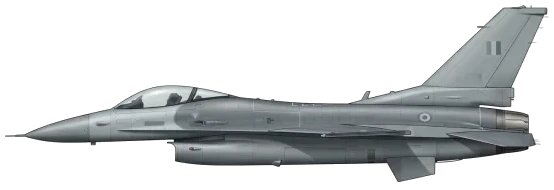
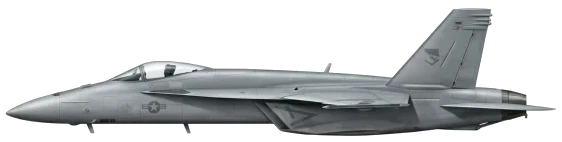
| F-16 Fighting Falcon | F/A-18 E/F Super Hornet | |
|---|---|---|
| Origin country | 🇺🇸 United States | 🇺🇸 United States |
| Category | Combat Aircraft | Combat Aircraft |
| Manufacturer | General Dynamics | Boeing |
| First flight | 2 February 1974 | 29 November 1995 |
| Year introduced | 1979 | 1999 |
| Number produced | 4604 units | 632 units |
| Average unit price | $18.8 million | $70 million |
| Wing area | 27.9 m² | 46.5 m² |
| Wingspan | 10.0 m | 13.6 m |
| Height | 4.9 m | 4.9 m |
| Length | 15.1 m | 18.3 m |
| Maximum speed | 2178 km/h | 1915 km/h |
| Operational range | 4,217 km | 2,346 km |
| Service ceiling | 15,240 m | 15,940 m |
| Max. takeoff weight | 19,200 kg | 29,900 kg |
| Empty weight | 8,570 kg | 14,550 kg |
| Total thrust | 1 x 12,701 kgf | 2 x 9,979 kgf |
Detailed Comparison
General Dynamics designed the F-16 around raw energy maneuverability and cost-efficiency, producing an agile, single-engine land-based platform. Boeing’s F/A-18 E/F Super Hornet prioritizes carrier suitability, bring-back payload, and maritime survivability through a twin-engine, larger-airframe architecture. The resulting platforms serve divergent doctrines: mass-produced tactical volume versus heavy, carrier-centric strike capacity.
Development and Design
The F-16 emerged from the US Air Force’s 1970s Lightweight Fighter program as a rejection of heavy, complex interceptors. Its relaxed static stability and fly-by-wire controls enable sustained turn rates and acceleration. The Super Hornet was a 1990s procurement compromise. Following the cancellation of the A-12 stealth bomber, the US Navy opted to enlarge the legacy F/A-18 by 20%. The design accepted kinetic penalties—specifically higher drag and lower acceleration—in exchange for a 33% increase in internal fuel and reduced frontal radar cross-section. The F-16 relies on its bubble canopy and kinematic energy for survival, while the Super Hornet uses high angle-of-attack handling via enlarged leading-edge extensions for nose-pointing authority.
Specifications and Performances
The data isolates the kinematic divergence between the two airframes. The F-16’s single General Electric F110 engine pushes an 8,570 kg empty airframe to 2,410 km/h with a 254 m/s climb rate. It holds an energy advantage in almost all flight regimes above 250 knots. The Super Hornet, weighing 14,550 kg empty, trades raw speed for a 29,900 kg maximum takeoff weight. Its twin F414 engines generate 19,958 kgf of thrust, but the aircraft tops out at 1,915 km/h. The Super Hornet compensates with payload flexibility across 11 hardpoints and the structural strength to recover heavily laden on a carrier deck, a metric the F-16’s lighter landing gear cannot match.
Deployment and usage
With 4,604 units built, the F-16 saturates the global export market. It executes SEAD, close air support, and air defense for more than 25 nations, generating combat data from Israeli operations in Lebanon to US campaigns in Iraq and the Balkans. The Super Hornet’s operational footprint is narrower. Built for the US Navy, with exports limited to Australia and Kuwait, its 632 airframes function as the heavy lifters of carrier strike groups. It conducts maritime strike, defensive counter-air, and buddy-tanking missions. Combat feedback from Operation Inherent Resolve and Red Sea patrols shows the Super Hornet effectively loiters and integrates ordnance like JSOW, though pilots record rapid energy bleed in sustained turning fights compared to the F-16.
Conclusion
The platforms divide cleanly by basing and procurement budget:
- The F-16 wins in a land-based, cost-to-capability metric, dictating air-to-air engagements through raw thrust-to-weight advantages and sustained energy.
- The F/A-18 E/F wins in expeditionary maritime environments where twin-engine reliability, buddy-tanking, and heavy ordnance bring-back capacities dictate survival.
The Super Hornet cannot match the Viper in a sustained merge, but the F-16 lacks the structural architecture to recover 8,000 kg of munitions onto a pitching flight deck.
-
 United States
846
-
 Turkey
235
-
 Egypt
220
- All 24 operators →