F-16 Fighting Falcon vs KF-21 Boramae
F-16 Fighting Falcon vs KF-21 Boramae at a glance — top speed 2,178 vs 2,200 km/h, range 4,217 vs 2,900 km, max takeoff weight 19,200 vs 25,401 kg.
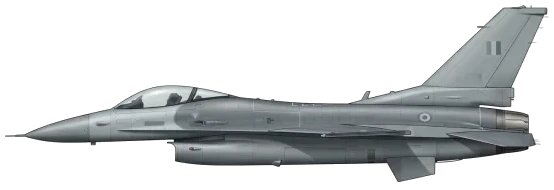
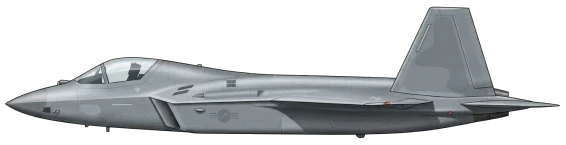
| F-16 Fighting Falcon | KF-21 Boramae | |
|---|---|---|
| Origin country | 🇺🇸 United States | 🇰🇷 South Korea |
| Category | Combat Aircraft | Combat Aircraft |
| Manufacturer | General Dynamics | KAI |
| First flight | 2 February 1974 | 19 July 2022 |
| Year introduced | 1979 | 2026 |
| Number produced | 4604 units | N/A |
| Average unit price | $18.8 million | $87.5 million |
| Wing area | 27.9 m² | 46.0 m² |
| Wingspan | 10.0 m | 11.2 m |
| Height | 4.9 m | 4.8 m |
| Length | 15.1 m | 16.8 m |
| Maximum speed | 2178 km/h | 2200 km/h |
| Operational range | 4,217 km | 2,900 km |
| Service ceiling | 15,240 m | 16,764 m |
| Max. takeoff weight | 19,200 kg | 25,401 kg |
| Empty weight | 8,570 kg | 11,793 kg |
| Total thrust | 1 x 12,701 kgf | 2 x 9,983 kgf |
Detailed Comparison
General Dynamics’ F-16 Fighting Falcon is a single-engine, fourth-generation platform that has structured Western tactical aviation since 1978. Korea Aerospace Industries’ (KAI) KF-21 Boramae, scheduled for service in 2026, is a twin-engine, 4.5-generation medium fighter designed to bridge legacy fourth-generation fleets and fifth-generation stealth assets. The F-16 relies on an optimized lightweight fighter architecture, while the KF-21 utilizes a larger, twin-engine airframe with reduced radar cross-section (RCS) shaping to survive modern integrated air defense systems (IADS).
Development and Design
The F-16 originated from the U.S. Air Force Lightweight Fighter program in the 1970s. The design prioritized energy maneuverability, adopting a single F100 (and later F110) engine, a blended wing-body, and a relaxed static stability framework governed by fly-by-wire controls. This minimized empty weight to 8,570 kg and maximized thrust-to-weight ratios for within-visual-range combat. South Korea structured the KF-21 program to replace aging F-4 and F-5 fleets while establishing domestic aerospace autonomy. KAI engineered a twin-engine airframe powered by license-built GE F414 turbofans, prioritizing future growth capacity. While the F-16 houses its avionics in a highly constrained nose volume, the KF-21 allocates physical space and power/cooling margins for an indigenous active electronically scanned array (AESA) radar, integrated electro-optical targeting, and future internal weapons carriage, utilizing radar-absorbent materials and canted vertical stabilizers to lower its baseline RCS.
Specifications and Performances
A direct comparison exposes the structural divergence between a lightweight single-engine and a medium twin-engine platform:
- The KF-21 operates with a maximum takeoff weight of 25,401 kg, exceeding the F-16's 19,200 kg structural limit.
- The dual F414 engines generate 12,246 kgf of combined thrust against an 11,793 kg empty weight, while the F-16's single F110 provides 7,777 kgf against an 8,570 kg frame.
- The KF-21 extends baseline unrefueled range to 1,000 km compared to the F-16's nominal 546 km radius.
The F-16 achieves a higher top speed (2,410 km/h vs 2,200 km/h) and a higher service ceiling (18,288 m vs 16,764 m) in clean configurations. However, the KF-21's 7,700 kg payload capacity across ten hardpoints allows it to carry heavier standoff munitions like the MBDA Meteor and Taurus KEPD 350 without the severe aerodynamic drag penalties that limit externally loaded F-16s.
Deployment and usage
The F-16 holds over four decades of combat data across 4,600 produced airframes. U.S. and allied forces operated F-16s in Operation Desert Storm, the Balkans, Afghanistan, and Iraq, primarily executing suppression of enemy air defenses (SEAD) and strike missions. Israeli F-16s executed long-range strikes against targets in Iraq and Syria. The KF-21 lacks combat history. Block I airframes will initially execute air-superiority missions against North Korean assets, relying on low-observability and Meteor missiles for beyond-visual-range (BVR) engagements, before Block II adds strike capabilities.
Conclusion
For air forces operating in permissive environments requiring a low-cost interceptor and close air support platform, the F-16 retains the edge. Its established global logistics network and Block 70/72 upgrades make it a low-risk procurement option at $75 million. The KF-21 has the edge in contested airspace requiring low observability and extended range. Its twin-engine redundancy, baseline AESA integration, and reduced RCS architecture give it a distinct structural advantage over the F-16 in BVR engagements against peer surface-to-air missiles. Nations confronting modernized IADS will extract higher survivability from KAI's airframe than from the fundamentally limited F-16 geometry.
-
 United States
846
-
 Turkey
235
-
 Egypt
220
- All 24 operators →