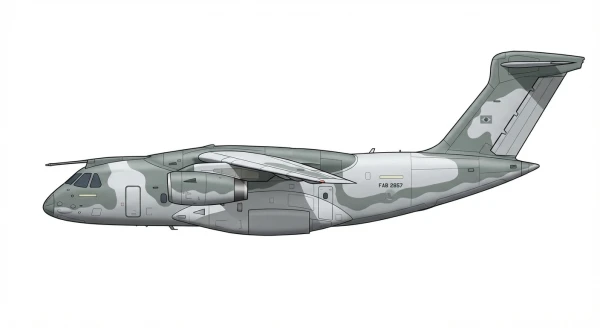
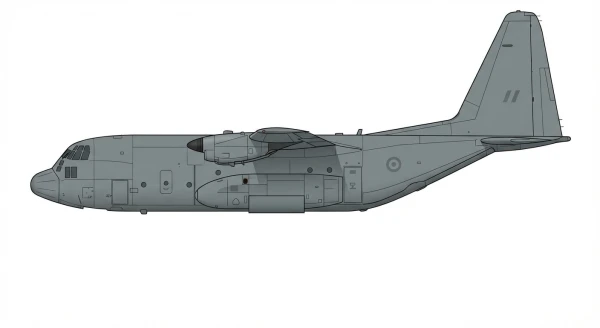
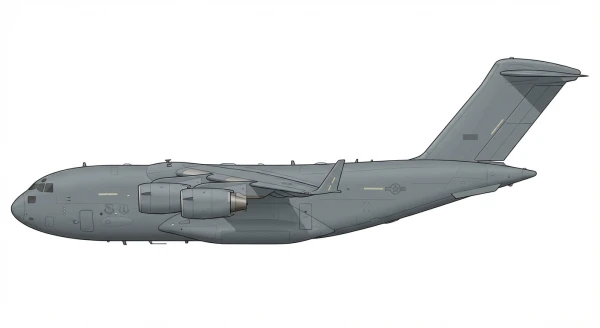
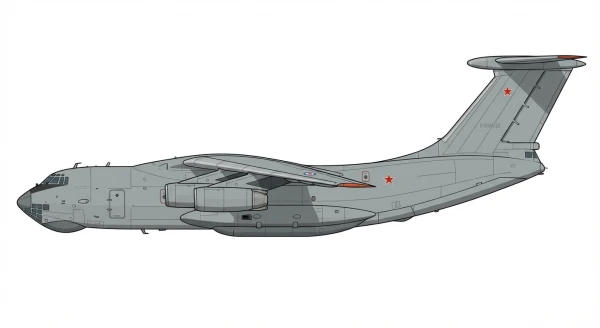
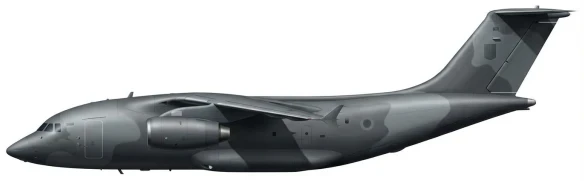
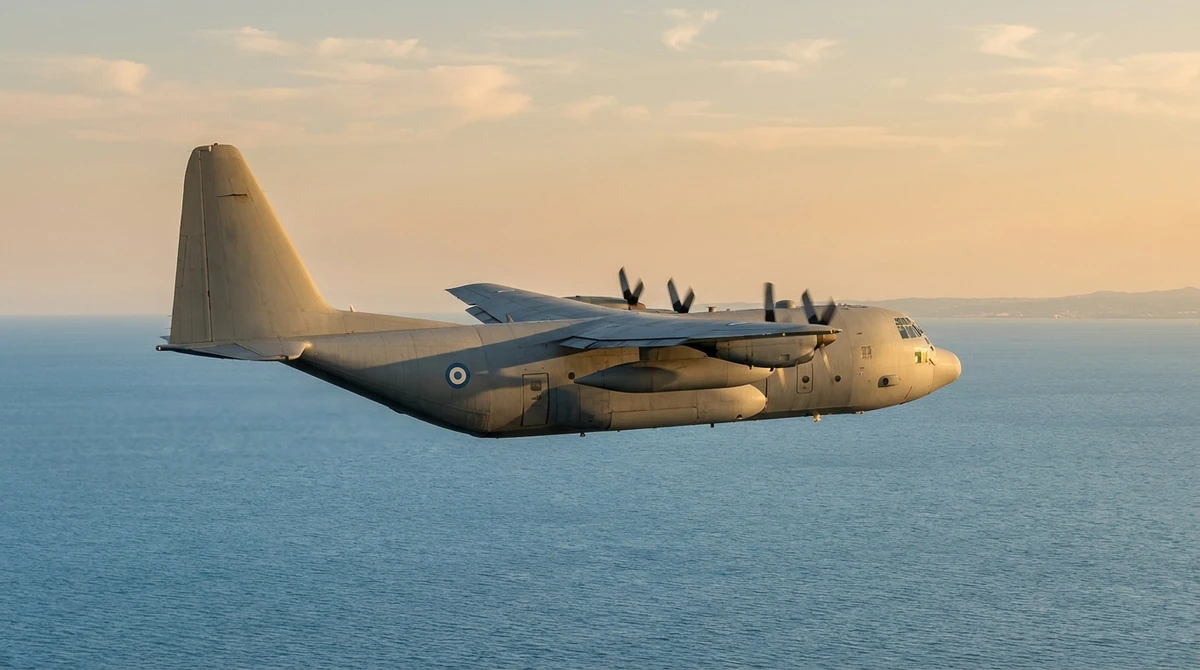
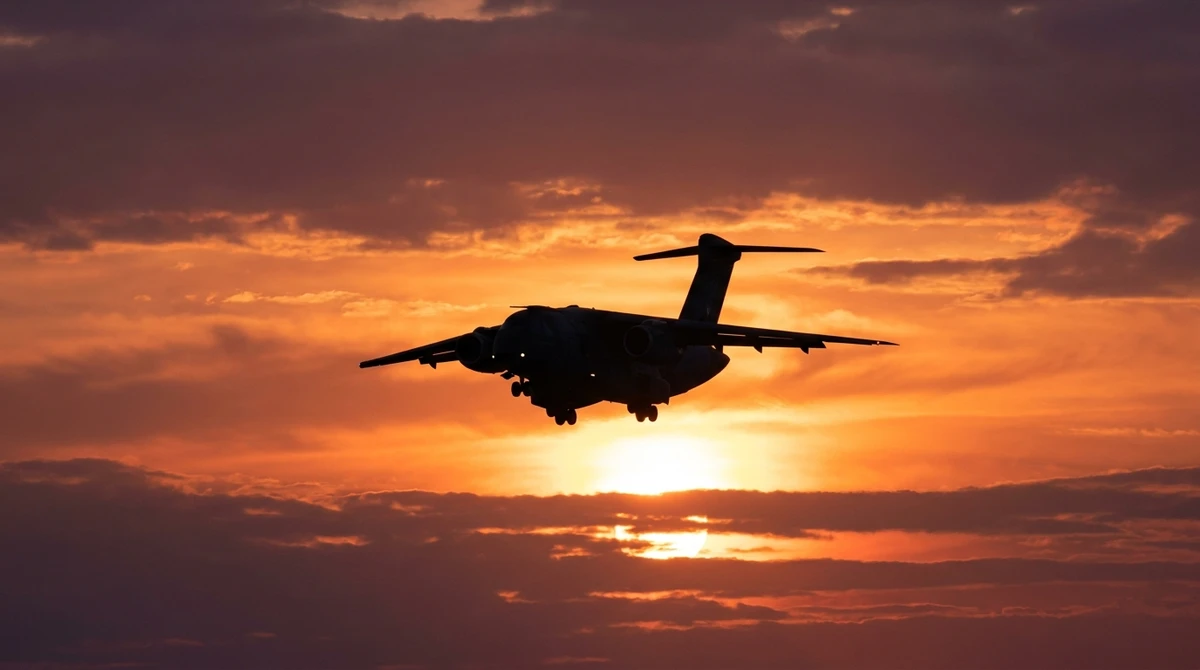
The Embraer C-390 Millennium is a medium-sized, twin-engine, jet-powered military transport aircraft designed and produced by the Brazilian manufacturer Embraer. The heaviest aircraft the company has built, it entered service with the Brazilian Air Force on 4 September 2019 and is marketed as a jet-powered alternative to the Lockheed C-130 Hercules, carrying up to 26 t of payload and available in a KC-390 aerial refuelling configuration.
Development
Embraer began studies in the early 2000s around a high-wing derivative of the E190 jetliner, pairing that aircraft's wing and GE CF34 engines with a cargo hold and rear ramp. By 2006 the company was examining a C-130-class design powered by 17,000–22,000 lbf engines. In May 2008 the Brazilian Congress released R$800 million (US$440M) for development, and on 14 April 2009 Embraer received a $1.5 billion contract for two prototypes; by then the fuselage, wing, flight deck and engine choice were all-new. Programme partners included ENAER, FAdeA, OGMA and, from 2012 to 2020, Boeing. Subcontractors include Aero Vodochody (rear fuselage), BAE Systems (fly-by-wire flight controls), ELEB (landing gear), Rockwell Collins (avionics and cargo handling) and International Aero Engines. The first prototype, PT-ZNF, flew on 3 February 2015; a two-year test delay followed in July 2015 owing to currency devaluation and budget cuts. The second prototype flew in April 2016, the first production aircraft on 6 October 2018, and Brazilian civil type certification came on 23 October 2018. The Final Type Certificate and full operational capability were achieved in March 2023. Unit cost is about €80 million as of 2024.
Design
The C-390 is powered by two IAE V2500-E5 turbofans of 139.4 kN each, mounted forward on an anhedral high wing with slats and flaps deflecting to 40°. Cruising speed is Mach 0.8 and maximum speed Mach 0.93. Low-pressure tyres — two at 5.9 bar on the nose, four at 7.2 bar per bogie — permit operation from unpaved strips. Flight controls are fully fly-by-wire with active sidesticks, permitting 3g load factors, and an autothrottle is fitted. Avionics comprise Rockwell Collins Pro Line Fusion with dual HUDs and a four-camera enhanced vision system; Thales supplied INS, GPS and TCAS. A SELEX Galileo Gabbiano radar provides GMTI, SAR, ISAR and SART modes, and an Elbit Systems DIRCM suite with RWR and chaff/flare dispensers is installed. Three hardpoints carry Rafael Litening II targeting pods or Cobham 900E refuelling pods, the latter delivering 1,500 L/min from a 35 t fuel capacity. The hold measures 18.5 m by 3.45 m by 2.95 m and accepts two M113 carriers, one Boxer or VBTP-MR Guarani, an H-60 helicopter, 74 litters, 80 troops or 66 paratroopers; up to 19 t can be airdropped.
Operational History
Brazil ordered 28 aircraft in 2014, reduced to 22 in February 2022. The type flew relief missions to Beirut after the 2020 explosion, airlifted patients and supplies from Manaus in January 2021, deployed to Haiti after the 2021 earthquake, and evacuated nationals from Ukraine in 2022 while delivering 12 t of aid. In February 2021 a KC-390 flew with USAF C-17s and C-130s during Exercise Culminating in Louisiana. Antarctic resupply drops for Comandante Ferraz station began in 2022. Over the first 3.5 years the FAB fleet logged 8,200 flight hours with 80% availability and a 99.5% mission completion rate. Export operators include Portugal (six ordered), Hungary (three delivered by November 2025) and the Czech Republic, with orders from Austria, the Netherlands, Sweden, South Korea, Greece, Colombia, Uzbekistan and the UAE.
Variants
- C-390: Standard transport model, also configured for search and rescue and aerial firefighting.
- KC-390: Aerial refuelling variant developed for the Brazilian Air Force.
- C-390 IVR: Maritime patrol and anti-submarine variant announced in December 2024 to replace Brazil's P-3 Orions.