GlobalMilitary.net Open-source military intelligence Updated daily
Asia ยท Jerusalem

Israel Military Forces

Open-source order of battle for 2026: 169,500 active troops, 534 aircraft, 50 warships, 1,570 ground vehicles, 90 nuclear warheads.

World rank #13 Military index 56.5/100
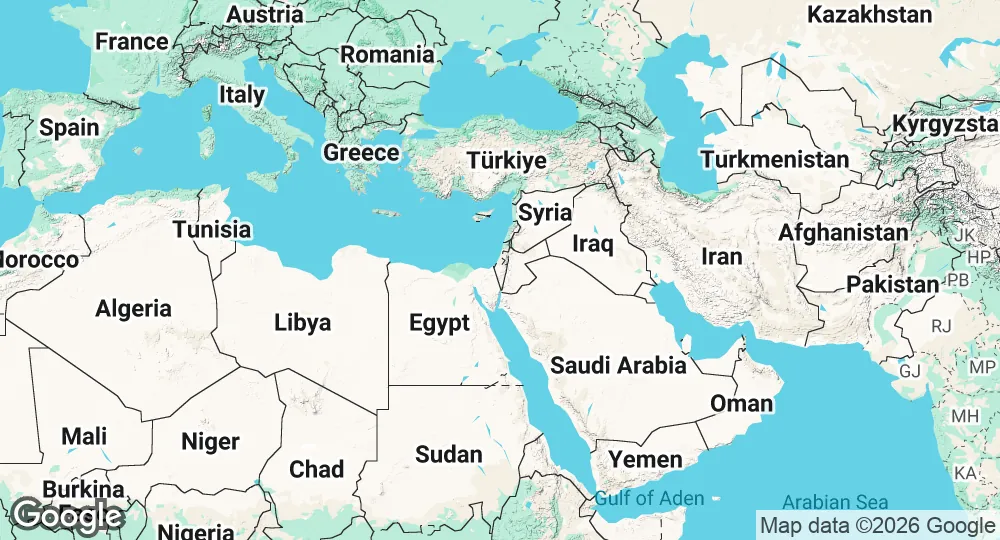
Map of Israel Flag of Israel
Active troops
169K
Reserve troops
465K
Defense budget
$43.2B2024
Share of GDP
8.0%
Population
10M2024
2026 Iran Conflict โ€” losses logged daily Open losses tracker โ†’

Armed Forces in 2026

Domain Strength Composition
Air Force 534 aircraft 284 combat 130 helicopters 11 air bases +125 on order
Israeli Navy 50 warships 6 major combatants 6 submarines
Ground Forces 1,570 vehicles 1,300 main battle tanks
Nuclear Forces 90 warheads Air, Sea, Land Active
Personnel 169,500 active 465,000 reserve 8,000 paramilitary

Global Military Index

Full ranking โ†’
Score & Pillar Breakdown World #13
56.5/ 100
The Global Military Index scores Israel's overall capability on a 0โ€“100 scale from verifiable data across six pillars: manpower, ground forces, naval power, air power, nuclear deterrent and defense budget, with a readiness modifier derived from budget per soldier.
Pillar Weight Score Basis
Manpower 15% 79.2 Active, reserve & paramilitary personnel
Ground forces 20% 61.0 Tanks, armor & artillery weighted by type
Naval power 20% 42.0 Weighted by hull type: carrier tiers, nuclear vs conventional submarines
Air power 25% 61.7 Weighted by aircraft type and fleet age
Nuclear deterrent 10% 35.6 Warhead count with delivery-mode modifiers
Defense budget 10% 67.8 Annual spending, purchasing-power adjusted
Readiness modifier ×1.13 Budget per soldier: proxy for training, maintenance & technology

Country File

Defense Statistics & Key Metrics
Population10M (2024)
GDP$540.4 billion (2024)
GDP per capita$54,177
Military budget$43.2 billion (2024)
Share of GDP8.0% (2024)
Military spending per capita$4,334 (2024)
Inflation rate3.07% (2024)
Military Budget History CIA World Factbook
2020 โ€” $21B, 5.00% of GDP $21B 2020 2021 โ€” $24B, 5.00% of GDP $24B 2021 2022 โ€” $24B, 4.50% of GDP $24B 2022 2023 โ€” $26B, 5.00% of GDP $26B 2023 2024 โ€” $43B, 8.00% of GDP $43B 2024
Budget (US$) Share of GDP (0-10%)
Geography
CapitalJerusalem
RegionAsia
Land area20,330 kmยฒ
Coastline273 km
Land borders1,017 km
Bordering countries5
CurrencyILS
National Flag Adopted 1948
Flag of Israel
Aspect ratio8:11
ColorsBlue, white
Compare this Country
๐Ÿ‡ฎ๐Ÿ‡ฑ Israel vs

Strategic Overview in 2026

Strategic Position

Israel occupies a central role in Middle Eastern security, currently managing a multi-front conflict environment involving state and non-state actors in the Levant, the Red Sea, and the Persian Gulf. The primary security concern remains the Iranian-led regional network, including Hezbollah in Lebanon and various paramilitary groups in Syria and Yemen. Israel is a Major Non-NATO Ally (MNNA) of the United States and operates within the US Central Command (USCENTCOM) area of responsibility. Bilateral security is anchored by a 10-year Memorandum of Understanding with the U.S. providing annual military assistance, while regional cooperation is facilitated through the Abraham Accords and security coordination with Egypt and Jordan. The current defense doctrine emphasizes a Qualitative Military Edge (QME) and has shifted toward a posture of preemption and decisive victory following the regional escalations in 2025 and 2026.

Military Forces

The Israel Defense Forces (IDF) is a unified command structure headed by the Chief of the General Staff. Service is based on universal conscription for most citizens, supported by a large reserve component.

  • Personnel: Active duty personnel total approximately 170,000, with a reserve force of roughly 465,000. High mobilization levels have been maintained through 2025 and 2026 to address multi-front operational requirements. In early 2026, the IDF launched new initiatives to expand recruitment, including outreach to diaspora populations.
  • Ground Forces: The army operates Merkava Mk 4 "Barak" main battle tanks, Namer heavy armored personnel carriers, and Eitan 8x8 wheeled armored fighting vehicles. Specialized units include the newly established Division 96 for eastern border security and various commando brigades.
  • Air Force: The Israeli Air Force (IAF) operates F-35I Adir stealth fighters, F-15I Ra'am strike aircraft, and F-16I Sufa multirole jets. In late 2025, a contract was signed for 25 F-15IA (Israel Advanced) fighters. The rotary fleet includes AH-64 Apache gunships and CH-53K King Stallion heavy-lift helicopters.
  • Navy: The naval fleet includes Sa'ar 6 and Sa'ar 5-class corvettes and Sa'ar 4.5 missile boats. The submarine force consists of Dolphin-I and Dolphin-II class vessels. The INS Drakon, a Dolphin-II class submarine featuring a vertical launch system, was commissioned in 2025.
  • Specialized Capabilities: Unit 8200 manages signals intelligence and cyber warfare. The layered air defense network comprises the Iron Dome (short-range), David's Sling (medium-range), and the Arrow 2 and Arrow 3 (long-range/exo-atmospheric) systems. The Iron Beam laser defense system reached operational status in late 2025.

Defense Industry

Israel maintains an expansive domestic defense industrial base led by three major entities: Israel Aerospace Industries (IAI), Rafael Advanced Defense Systems, and Elbit Systems.

  • Products: Key domestic technologies include the Trophy Active Protection System, Spike anti-tank guided missiles, and various unmanned aerial vehicles (UAVs) such as the Heron TP and Hermes 900.
  • Self-Sufficiency: In 2026, the Ministry of Defense prioritized "munitions independence," accelerating domestic production lines for air-launched munitions and missile interceptors to reduce reliance on external supply chains and mitigate potential pauses in foreign aid.
  • Export Programs: The industry reported a record-high order backlog exceeding $80 billion in early 2026. Major export programs include the supply of PULS rocket artillery to European partners and the sale of integrated air defense systems to various nations in Asia and the Americas.

Strategic Trends

  • Modernization Programs: The "Hoshen" multi-year plan (2026โ€“2030) focuses on the rehabilitation of platforms and infrastructure. It prioritizes the integration of AI-driven battlefield management, digital data dominance, and the expansion of robotic and autonomous platforms in all service branches.
  • Defense Budget: Defense expenditure is approximately 9% of GDP as of 2026, driven by high operational tempo and expanded procurement requirements. The budget framework for the coming decade is estimated at approximately 350 billion NIS (approximately $111 billion), excluding U.S. military aid.
  • Force Structure: Recent shifts include the permanent deployment of reinforced standing forces in security zones along the borders with Gaza and Syria. There is also an increased focus on developing the "third circle" capability, specifically long-range strike and intelligence assets directed at Iran.

Israeli Defense Manufacturing

Designed in Israel
Naval Shipbuilding 6 classes
Hetz Missile patrol vesselSa'ar 4.5 Missile boatDolphin Diesel-electric submarineSa'ar 6 CorvetteSa'ar 5 CorvetteProtector USV Unmanned surface vehicle
Military Vehicles 9 models
Merkava Heavy Main Battle TankMerkava 3 Heavy Main Battle TankSabra Heavy Main Battle TankMerkava 4 Heavy Main Battle TankNamer Heavy armoured personnel carrierMagach 7 Heavy Main Battle TankEitan Armoured fighting vehicleATMOS 2000 Self-propelled gun systemPULS Multiple rocket launcher
Missile Systems 13 systems
Spike Anti-TankAGM-142 Have Nap / Popeye Air-to-SurfaceArrow 2 Surface-to-AirArrow 3 Surface-to-AirBarak 8 Surface-to-AirDavid's Sling Surface-to-AirDerby Air-to-AirGabriel / Shiung Feng Anti-ShipI-Derby ER Air-to-AirIron Dome Surface-to-AirJericho BallisticLORA BallisticShafrir / Python Air-to-Air
Firearms 9 models
Galatz Sniper rifleGalil / R-4 Assault rifleGalil ACE Assault rifleJericho 941 Semi-automatic pistolMini-Uzi Submachine gunNegev Machine gunTAR-21 Tavor Assault rifleTavor X95 Assault rifleUzi Submachine gun

In the News

All news โ†’
Illustration
AUG 4, 2026

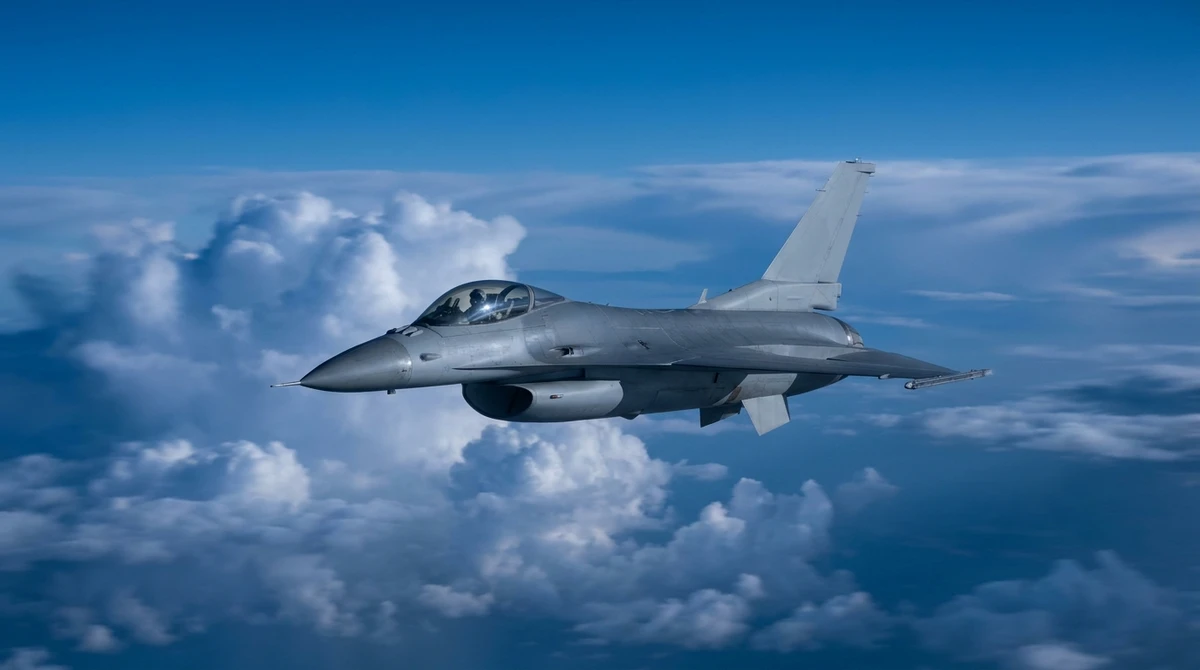
2,621 F-16s Still Fly With 27 Air Forces, GlobalMilitary.net Data Shows

Forty-seven years after entering service, the F-16 remains the most numerous combat aircraft in the world outside China and Russia, with 2,621 airframes active across 27 air forces in GlobalMilitary.net's 2026 inventory data.

๐Ÿ‡ช๐Ÿ‡ฌ ๐Ÿ‡ฌ๐Ÿ‡ท ๐Ÿ‡ฎ๐Ÿ‡ฑ ๐Ÿ‡ฐ๐Ÿ‡ท ๐Ÿ‡ต๐Ÿ‡ฐ ๐Ÿ‡น๐Ÿ‡ท ๐Ÿ‡น๐Ÿ‡ผ ๐Ÿ‡บ๐Ÿ‡ฆ ๐Ÿ‡บ๐Ÿ‡ธ
Illustration
AUG 2, 2026

129 Aircraft Lost in the Iran War, and 36 of Them Are MQ-9 Reapers

GlobalMilitary.net's conflict tracker has logged 129 aircraft destroyed since the war began on February 28, 2026. Uncrewed aircraft account for 60 of them, and a single type, the General Atomics MQ-9 Reaper, for 36.

๐Ÿ‡ฎ๐Ÿ‡ท ๐Ÿ‡ฎ๐Ÿ‡ฑ ๐Ÿ‡บ๐Ÿ‡ธ

Frequently Asked Questions

How large is Israel's military?
Israel has 169,500 active military personnel with an additional 465,000 in reserve. This includes army, navy, and air force service members.
What is Israel's defense budget?
Israel's annual defense budget is approximately $43.2 billion. This covers personnel costs, equipment procurement, operations, and maintenance of military forces.
How does Israel rank militarily in the world?
Israel ranks #13 globally on the Global Military Index with a score of 56.5 out of 100. This composite index measures military capability across manpower, ground forces, naval power, air power, nuclear deterrent, and defense budget, adjusted for equipment quality and readiness.
Does Israel have nuclear weapons?
Yes, Israel is a nuclear-armed state with approximately 90 nuclear warheads.
How many aircraft does Israel's air force have?
Israel operates 534 military aircraft including 284 combat aircraft. The fleet includes fighters, transport planes, helicopters, and training aircraft.
How large is Israel's navy?
Israel's navy operates 50 vessels including 6 submarines. The fleet includes surface combatants, support ships, and coastal patrol craft.
How many tanks does Israel have?
Israel operates approximately 1,300 main battle tanks. This figure includes both active inventory and reserve stocks available for mobilization.
What percentage of GDP does Israel spend on defense?
Israel spends approximately 8.0% of its GDP on defense. This meets the NATO target of 2% of GDP.
What is Israel's military personnel per capita?
Israel has approximately 17.0 active military personnel per 1,000 citizens. This ratio reflects the country's military manpower relative to its population of 9,974,400.
Does Israel have submarines?
Yes, Israel operates 6 submarines. The submarine fleet may include nuclear-powered attack submarines, ballistic missile submarines, and conventional diesel-electric boats depending on the country's naval doctrine.
Does Israel have paramilitary forces?
Yes, Israel maintains 8,000 paramilitary personnel. These forces typically include gendarmerie, border guards, coast guard, and internal security troops that supplement regular military capabilities.
Population, GDP, Inflation and Personnel: World Bank.
Military Expenditure: CIA World Factbook. Suggest a change