Strategic Position
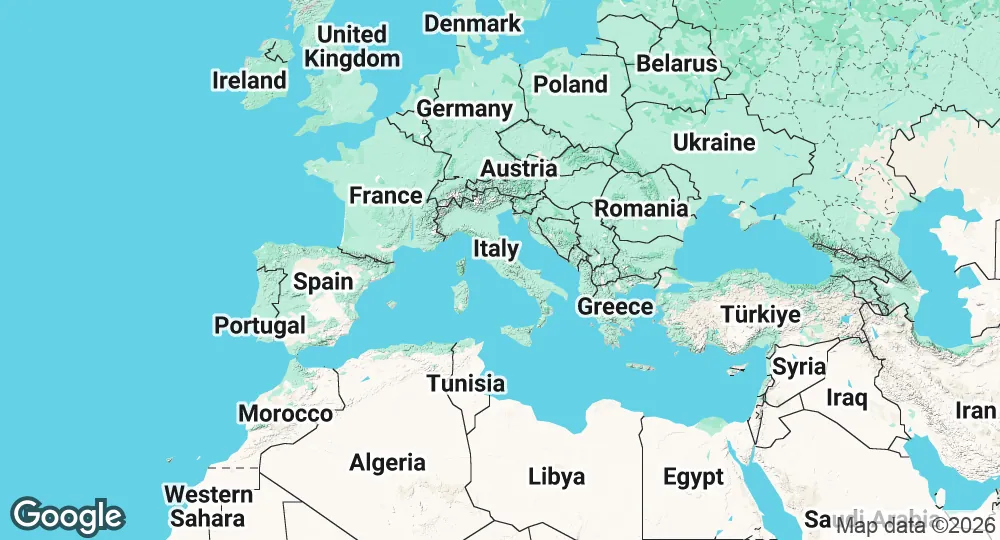
Italy occupies a central maritime position in the Mediterranean Sea, directing its defense doctrine toward the "Enlarged Mediterranean" concept. This area of interest encompasses North Africa, the Sahel, the Middle East, and the Black Sea. Primary security concerns include regional instability, maritime security, migration flows, and the protection of undersea infrastructure.
As a member of NATO and the European Union, Italy aligns its defense posture with Atlanticist and European integration frameworks. The country participates in PESCO (Permanent Structured Cooperation) and contributes to NATO's eastern flank deterrence through rotational deployments in the Baltics and Eastern Europe. Bilateral security relationships are underpinned by agreements such as the Quirinale Treaty with France. Strategic priorities focus on multi-domain operations, integrating traditional land, sea, and air capabilities with new space and cyber domains.
Military Forces
The Italian Armed Forces (Forze Armate Italiane) are organized into four branches: the Army, Navy, Air Force, and the Carabinieri, which maintains military status as a gendarmerie. Operational control is centralized under the Chief of Defence Staff, reporting to the Minister of Defence. Total active personnel across the four branches is approximately 165,000, supported by a reserve force of 18,000.
Army (Esercito Italiano): The land force is structured around heavy, mechanized, and light brigades, including specialized Alpine (Alpini) and paratrooper (Folgore) units. It operates the Ariete main battle tank, which is undergoing modernization, and the Centauro II tank destroyer. Mechanized units utilize the Freccia 8x8 infantry fighting vehicle. A multi-year procurement program for the Leopard 2A8 main battle tank is currently in the prototype and testing phase for 2025-2026. Air defense is provided by the SAMP/T system, with the upgraded SAMP/T NG variant scheduled for initial deployment in 2026.
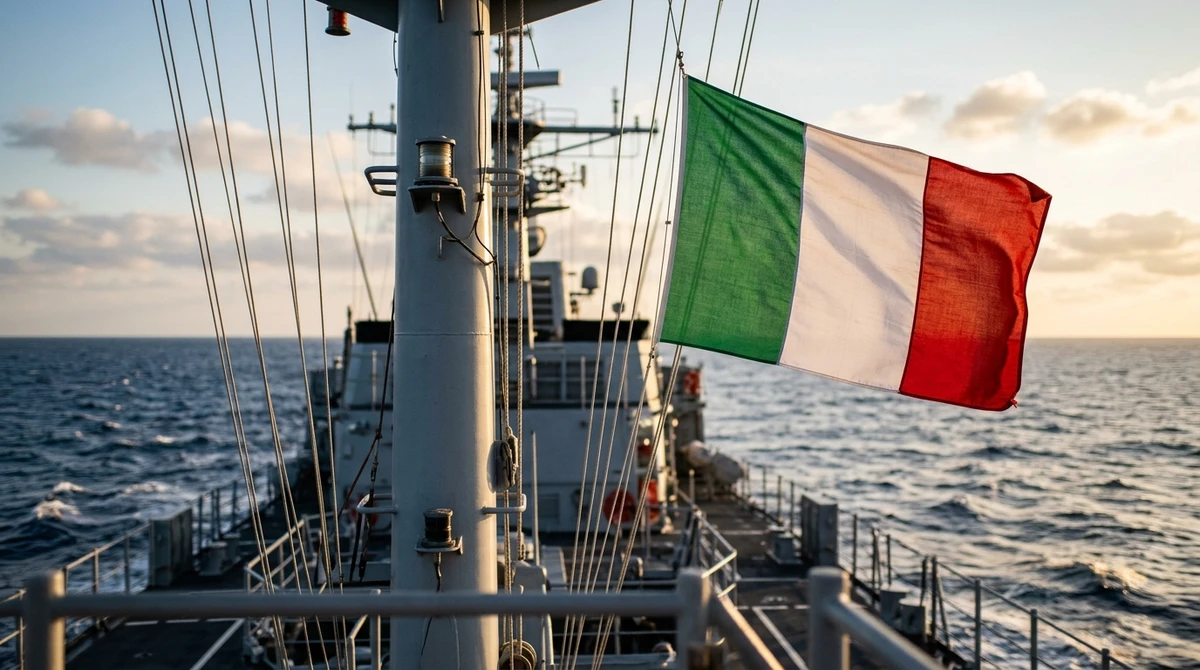
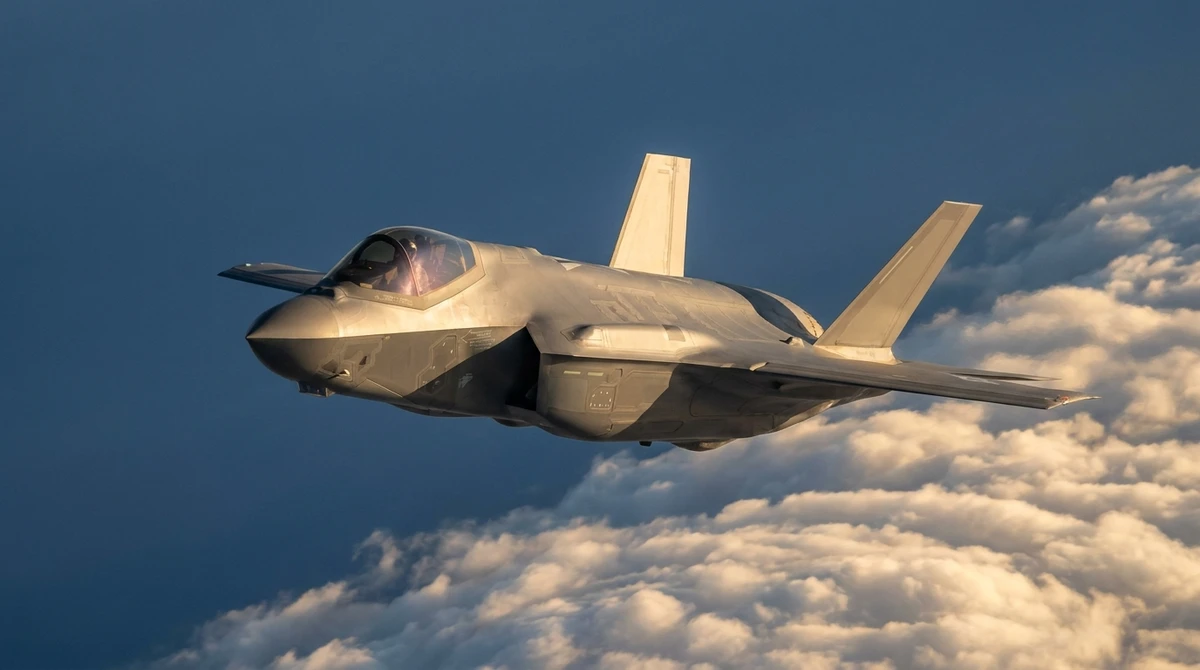
Navy (Marina Militare): The fleet is centered on power projection and Mediterranean maritime control. Its flagship is the aircraft carrier Cavour, which operates F-35B Lightning II aircraft. The Trieste landing helicopter dock (LHD), commissioned in late 2024, serves as an amphibious assault platform. The escort fleet consists of FREMM multipurpose frigates and Horizon-class destroyers. Subsurface capabilities are maintained by the U212A Todaro-class, with the U212 NFS (Near Future Submarine) program under development.
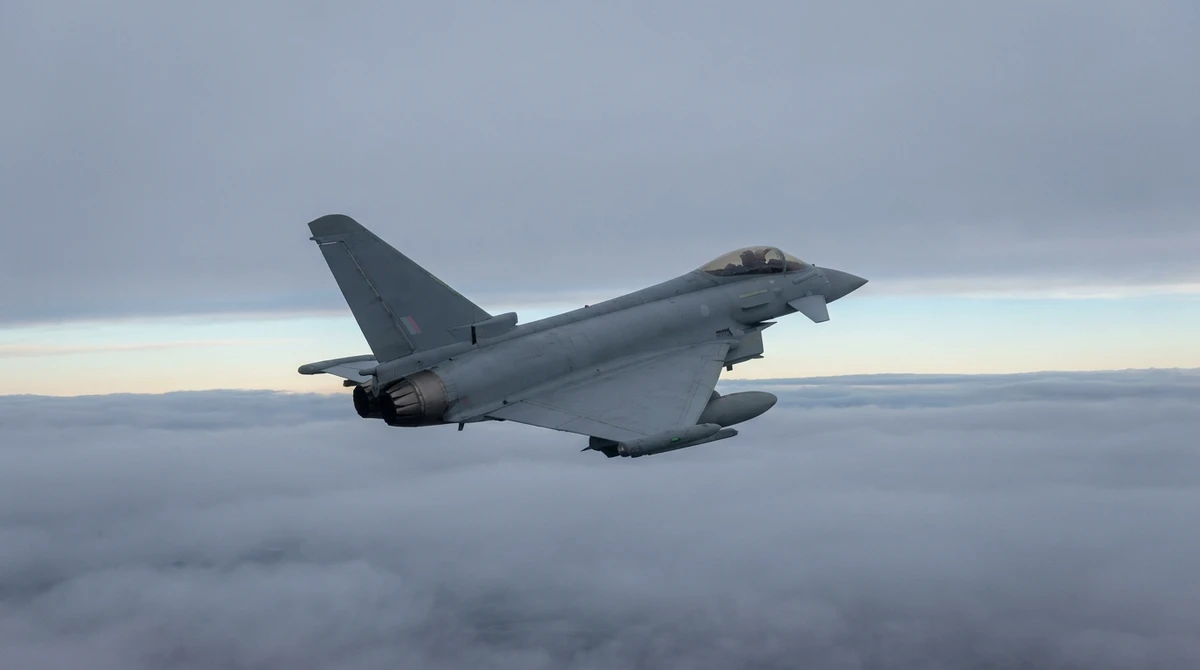
Air Force (Aeronautica Militare): The air branch operates a mix of fourth- and fifth-generation combat aircraft. The fleet includes the Eurofighter Typhoon and the F-35 Lightning II (A and B variants). For training, the force utilizes the M-346 Master. Strategic airlift is provided by C-130J and C-27J transport aircraft, while the G550 CAEW provides airborne early warning.
Carabinieri: While serving domestic policing roles, the Carabinieri maintain a specialized command for missions abroad, providing stability policing and military police functions in international theaters.
Defense Industry
Italy maintains a large domestic defense industrial base that facilitates a high degree of technological autonomy while participating in international co-production. Leonardo and Fincantieri are the primary contractors. Leonardo produces aerospace, electronics, and land systems, and as of 2025, it has consolidated its position in the land domain through the acquisition of Iveco Defence Vehicles. Fincantieri manages naval construction and has recently expanded its focus to the "underwater" domain, targeting sub-surface technology and drone integration.
Italy is a primary partner in the Global Combat Air Programme (GCAP) with the United Kingdom and Japan to develop a sixth-generation fighter. It also operates a Final Assembly and Check-Out (FACO) facility for the F-35 program, serving both domestic and European requirements. Significant co-production occurs with Germany through the Leonardo-Rheinmetall joint venture for the production of tanks and infantry fighting vehicles.
Strategic Trends
The defense budget for 2025 is approximately €31.2 billion, reflecting a trajectory toward the NATO target of 2% of GDP. Modernization priorities for 2026 focus on completing the F-35 fleet, the initial procurement of Leopard 2A8 tanks, and the development of the GCAP platform.
A notable doctrinal shift is the formal recognition of the cyber and space domains as operational theaters. This includes the development of a dedicated "Cyber Army" and the expansion of satellite constellations for Earth observation and military communications. Constraints facing the military include fiscal sustainability within EU deficit rules and the demographic challenge of maintaining recruitment levels for a professional force. Operational focus remains on the "Mediterranean 5.0" concept, emphasizing the use of unmanned systems and digital integration across all branches.