AW109
Italian multipurpose helicopter, notable for its use in law enforcement, air ambulance and military roles since the late 1970s. Key figures: top speed 311 km/h, range 932 km, service ceiling 6,000 m, max takeoff weight 3,000 kg, unit price $8M, built 124. In service with 24 air forces as of 2026 — Nigeria (27), South Africa (24), Sweden (20) and 21 others.
| Crew | 1 |
| Length | 13.0 m (42.8 ft) |
| Wingspan | 11 m (36.1 ft) |
| Height | 3.5 m (11.5 ft) |
| Empty weight | 2,000 kg (4,409 lbs) |
| Max. takeoff weight | 3,000 kg (6,614 lbs) |
| Powerplant | 2 × turboshafts Turbomeca Arrius 2K1 426 kW each |
| Maximum speed | 311 km/h (193 mph) |
| Operational range | 932 km (579 mi) |
| Service ceiling | 6,000 m (19,685 ft) |
| Climb rate | 9.8 m/s (32.2 ft/s) |
-
 Nigeria
27
Nigeria
27
-
 South Africa
24
South Africa
24
-
 Sweden
20
Sweden
20
-
 Philippines
12
Philippines
12
-
 Belgium
10
Belgium
10
-
 Malaysia
10
Malaysia
10
-
 Greece
5
Greece
5
-
 New Zealand
5
New Zealand
5
-
 Benin
4
Benin
4
-
 Bangladesh
4
Bangladesh
4
-
 Cameroon
4
Cameroon
4
-
 Mexico
4
Mexico
4
-
 United Arab Emirates
3
United Arab Emirates
3
-
 Egypt
3
Egypt
3
-
 Peru
3
Peru
3
-
 Angola
2 +4
Angola
2 +4
-
 Mauritania
2
Mauritania
2
-
 Qatar
2
Qatar
2
- 🇸🇸 South Sudan 2
-
 Albania
1
Albania
1
-
 United Kingdom
1
United Kingdom
1
-
 Cambodia
1
Cambodia
1
-
 Panama
1
Panama
1
-
 Turkmenistan
1
Turkmenistan
1
-
 Argentina
0 +8
Argentina
0 +8
Recent Events — AW109
1 event →
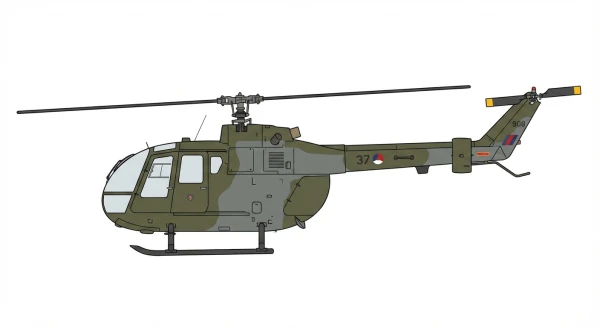
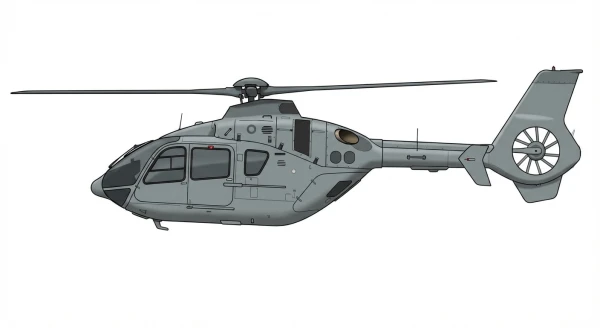
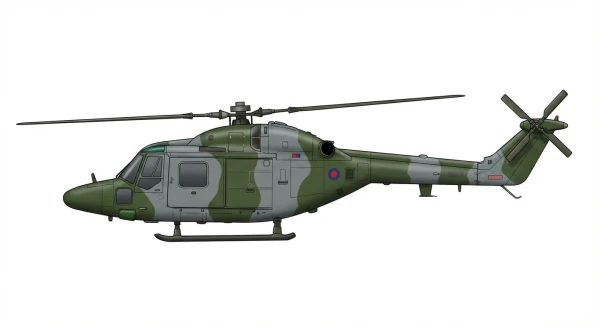
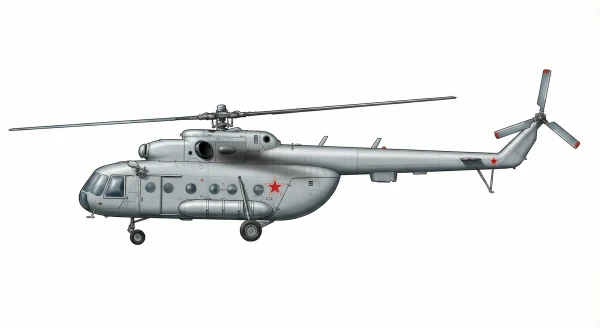
Description
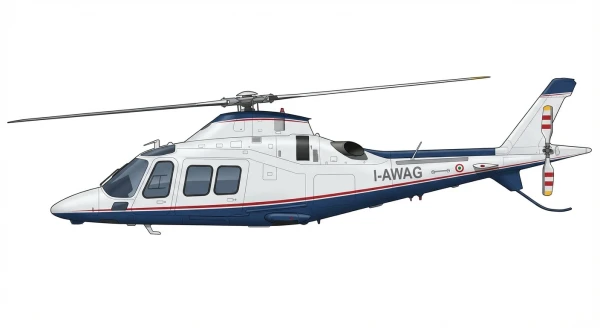
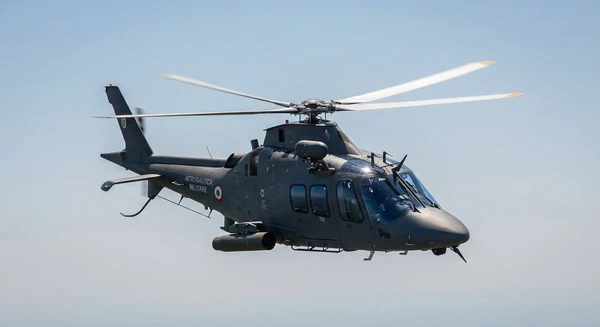
The AgustaWestland AW109, originally the Agusta A109, is a light twin-engine, eight-seat multi-purpose helicopter designed and initially produced by the Italian manufacturer Agusta, later AgustaWestland and now Leonardo. It was the first all-Italian helicopter to be mass-produced, entering service in 1976 after FAA certification on 1 June 1975. It has been used for light utility, VIP transport, aeromedical, law enforcement, search and rescue and armed military roles, and has remained in production for over 40 years.
Development
Work began in the late 1960s on a single-engine commercial rotorcraft. In 1969 the design was revised around two Allison 250-C14 turboshafts after the market showed preference for twin-engine machines, with effort concentrated on the eight-seat A109C and the militarised A109B given low priority. The first of three prototypes flew on 4 August 1971; flight testing was protracted by dynamic instability that took about a year to resolve through a modified transmission. The first production aircraft was completed in April 1975 and civil deliveries began in 1976. Between 1976 and 1977 five A109As were flown with Hughes TOW missiles, leading to a light attack version and a shipboard version. The A109A Mk2 with widened cabin followed in 1981, the Arriel 1K1-powered A109 K2 in 1993, the PW206-powered A109 Power in 1996 and the stretched A109S Grand in 2006. The type was renamed AW109 after the July 2000 Agusta–Westland merger. PZL-Świdnik has built AW109 fuselages since the mid-1990s, delivering the 500th in June 2006; a joint venture with Changhe Aircraft Industries Corporation was formed in 2004 for Chinese production. The AW109 Trekker, with skid landing gear, PW207C engines and Genesys Aerospace avionics, was announced in February 2014.
Design
The AW109 uses a fully articulated four-blade main rotor, with composite blades progressively replacing bonded metal construction. Most variants have retractable tricycle landing gear; shipboard aircraft receive reinforced gear, deck mooring points and corrosion protection. Avionics on the A109 Power include a three-axis autopilot, auto-coupled ILS, integrated GPS, moving map display, weather radar and traffic alerting, with single- or dual-pilot IFR and NVG capability. Hydraulic and electrical systems are dual-redundant and the power inverters triple-redundant. A quick convertible interior allows rapid role changes between mission consoles and medical stretchers.
Armament
Options include pintle-mounted machine guns, machine gun pods, 20 mm cannon, rocket pods, anti-tank missiles and air-to-air missiles. US Coast Guard MH-68A aircraft carried a 7.62 mm M240D machine gun and a Barrett M107 12.7 mm rifle with laser sight, plus rescue hoist, floats, FLIR and a Spectrolab NightSun searchlight.
Operational History
Argentine Army Aviation deployed three A109As to the Falklands in 1982; one was destroyed by a Harrier attack and the others captured, later flown by 8 Flight AAC in support of 22 SAS until 2009. Belgium ordered 46 in 1988 amid a bribery scandal that led to the conviction of NATO Secretary General Willy Claes; Belgian AW109s flew medevac from Sévaré, Mali, in 2013. Eight MH-68A Sting Rays were leased by the US Coast Guard for HITRON Jacksonville from 2000 to 2008. South Africa ordered 30 in September 1999, 25 assembled by Denel; 18 were grounded by 2013 for lack of funding. Sweden ordered 20 (Hkp 15) in 2001, deploying two aboard HNLMS Johan de Witt off Somalia in 2015. Other operators include the RNZAF (five AW109LUH from 2008), the Royal Australian Navy (three, 2007–2012), No. 32 Squadron RAF, and the Philippine Air Force and Navy, whose AW109s fought the Maute Group at Marawi. In August 2008 an AW109S Grand set a round-the-world speed record of 11 days, 7 hours, 2 minutes.
Variants
- A109A: First production model, powered by two Allison 250-C20 engines and briefly marketed as "Hirundo".
- A109BA: Belgian Army version based on the A109C with fixed landing gear, sliding doors and a tail rotor guard.
- A109E Power: Upgraded civil model with Turbomeca Arrius 2K1 or Pratt & Whitney PW206C engines.
- A109LUH: Military light utility variant of the A109E used by South Africa, Sweden, New Zealand, Nigeria, Algeria and Malaysia.
- MH-68A Stingray: Eight armed A109E Power aircraft operated by US Coast Guard HITRON Jacksonville for maritime interdiction.
Frequently Asked Questions
What type of aircraft is the AW109?
What is the maximum speed of the AW109?
What is the range of the AW109?
When did the AW109 first fly?
How many AW109 have been built?
Which countries operate the AW109?
How much does a AW109 cost?
What is the service ceiling of the AW109?
- AUG 302026 Updated Description updated
- AUG 52026 Updated Powerplant updated in a site-wide editorial pass
- APR 72026 Updated Sources and cross-references refreshed
- FEB 72026 Updated Wingspan added
- JAN 242026 Updated Top speed updated
- JAN 122026 Updated Range updated in a site-wide editorial pass