MiG-29 Variants and Upgrades: 9.12, 9.13, SMT, MiG-29M, MiG-29K and MiG-35
How to read a MiG-29 designation: izdeliye numbers, suffix letters, the upgrades that keep the name, the MiG-29K, the MiG-35 and who flies which in 2026.
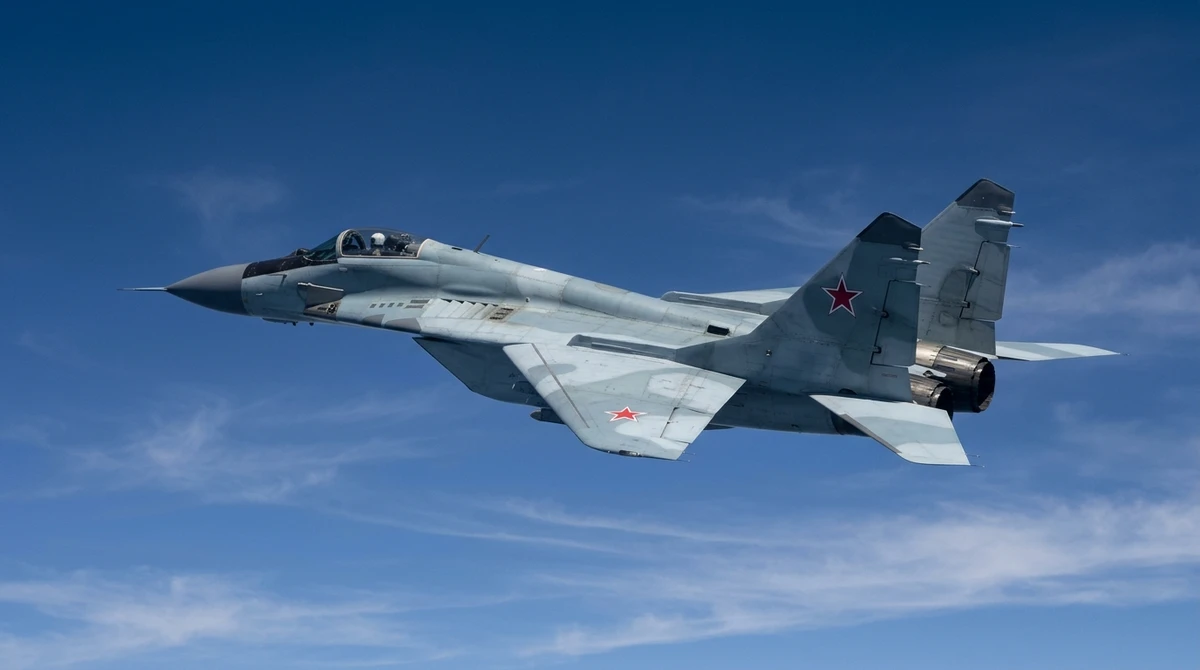
Like the Su-30, the Mikoyan MiG-29 has no blocks or tranches. It carries three labels at once: Mikoyan's izdeliye (product) number, which names the airframe build standard (9.12 for the original, 9.13 for the "fatback" with the dorsal hump, 9.51 for the two-seat MiG-29UB, 9.41 for today's naval MiG-29K); the suffix string, whose letters record a factory modernization (S, SM, SMT), an export fit (SD, SE) or a national upgrade (UPG, AS, G, SMP, N, MU1); and the NATO reporting name, Fulcrum-A to Fulcrum-F, which follows the airframe, not the avionics. An Indian MiG-29UPG, a Polish MiG-29A and a Ukrainian MiG-29MU1 are all 9.12 airframes; an Egyptian MiG-29M and a Russian MiG-35S share the 9.41 airframe of the MiG-29K.
Since the mid-2000s the family has split in two: a first generation of 9.12 and 9.13 airframes kept flying by national upgrade programs, and a second, "unified" generation, the MiG-29K/KUB, MiG-29M/M2 and MiG-35, built new at Lukhovitsy with a redesigned airframe, RD-33MK engines, fly-by-wire and the Zhuk-ME radar. Both moved in 2025–2026: Poland and Slovakia's Fulcrums went to Ukraine in 2023 and Poland's last 14 were struck off its books in 2026; India's Navy signed for 26 Rafale M on 28 April 2025 to fly beside, not replace, its MiG-29K; and Russia's MiG-35 line had produced fewer than ten aircraft by one estimate reported in March 2025. This guide reads the family as of October 2026.
- Izdeliye first, suffix second: the product number says which airframe you are looking at, the suffix what was done to it. 9.12 and 9.13 are first-generation Fulcrums; 9.41 and 9.47 are the single- and two-seat airframes of the unified family, whatever name is painted on them.
- Russian factory letters: S is a modernized first-generation jet, SD and SE its export fits, SM adds air-to-ground weapons, SMT is the deep rebuild with the enlarged spine, UB the two-seater. K is korabelny, shipborne, and the R of KR/KUBR marks the Russian Navy's own fit.
- National labels keep the airframe: India's UPG, Slovakia's AS/UBS, Germany's G/GT, Peru's SMP, Malaysia's N and Ukraine's MU1/MU2 are 9.12 or 9.13 jets with new systems; none moved an aircraft into the unified family.
- NATO letters stop being firm at D: Fulcrum-A (9.12), -B (MiG-29UB), -C (9.13) and -D (MiG-29K) are consistent across references; -E for the MiG-29M and -F for the MiG-35 circulate in secondary sources without a primary source GMN could find.
Reading a MiG-29 designation
Mikoyan's lightweight fighter project was izdeliye 9; the number after the point identifies the airframe configuration. The prototype flew on 6 October 1977 and the production 9.12 entered Soviet service in 1983. Two export downgrades followed: 9.12A for the Warsaw Pact, with the RPLK-29E radar and no nuclear wiring, and 9.12B for everyone else. The A and B of "MiG-29A" and "MiG-29B" are the customers' shorthand, not Soviet suffixes, used by Poland, Romania, Bulgaria and the Yugoslav air arms for the 9.12A and by India for the 9.12B.
The 9.13, in service from 1986, is the first visibly different airframe: an enlarged dorsal spine holds a bigger No. 1 fuel tank and the L-203BE Gardeniya jammer the 9.12 lacked, hence NATO's new letter, Fulcrum-C, and the "fatback" nickname. The 9.13S, the MiG-29S, was the last Soviet version, with the N019M radar, a 4,000 kg weapons load and the R-77; only limited numbers were built before 1991.
| Service name | NATO name | What it is | Key date | |
|---|---|---|---|---|
| 9.12 | MiG-29 | Fulcrum-A | Original production fighter, N019 radar | Prototype flew 6 Oct 1977; service 1983 |
| 9.12A, 9.12B | MiG-29 ("MiG-29A", "MiG-29B") | Fulcrum-A | Export downgrades: A for the Warsaw Pact, B for other customers | East Germany, Poland, Romania (A); India, Iraq, Syria, Yugoslavia (B) |
| 9.51 | MiG-29UB | Fulcrum-B | Tandem two-seat trainer, no radar | Built with every first-generation batch |
| 9.13 | MiG-29 | Fulcrum-C | Dorsal hump: larger No. 1 tank, Gardeniya jammer | Service 1986; North Korea assembled kits (9.13B) in 1991–92 |
| 9.13S | MiG-29S | Fulcrum-C | N019M radar, 4,000 kg load, R-77; last Soviet version | Limited production before 1991 |
| 9.17, 9.19 | MiG-29SMT | Not assigned | Rebuild of 9.12/9.13: enlarged spine, Zhuk-ME, RD-33 ser. 39.51T is the MiG-29UBT twin | Prototype flew Apr 1998 |
| 9.15 | MiG-29M (1986), "MiG-33" | Fulcrum-E (unsourced) | Redesigned multirole airframe, fly-by-wire; six built, one became the MiG-29OVT | Shown as MiG-33 at Farnborough 1994 |
| 9.31 | MiG-29K (1988) | Fulcrum-D | Naval 9.15: folding wings, hook; two prototypes | First flight 23 Jul 1988; carrier landing 1 Nov 1989 |
| 9.41, 9.47 | MiG-29K, MiG-29KUB | Fulcrum-D | Production naval fighter for India, revived 1999 | KUB flew Jan 2007, K 25 Jun 2007 |
| 9.41R, 9.47R | MiG-29KR, MiG-29KUBR | Fulcrum-D | Russian Navy fit, Russian systems in place of Indian and Ukrainian ones | 24 ordered 29 Feb 2012 |
| 9.41SM, 9.47SM | MiG-29M, MiG-29M2 | Fulcrum-E (unsourced) | Land-based 9.41 for Egypt and Algeria; M2 is the two-seater | Egypt contract Apr 2015 |
| 9.41SR, 9.47SR | MiG-35S, MiG-35UB | Fulcrum-F (unsourced) | Russian serial version of the unified family | First two delivered 17 Jun 2019 |
| 9.61, 9.67 | MiG-35, MiG-35D demonstrators | Fulcrum-F (unsourced) | MiG-29K/M conversions flown for India's MMRCA trials, 2009 | Ousted from MMRCA Apr 2011 |
Two numbers mislead. 9.15 and 9.41 are both "MiG-29M": the 1986 redesign, six built and never produced, and the land-based MiG-29K that Egypt flies. And 9.61 is not the serial MiG-35: it was the demonstrator flown for India in 2009; the aircraft Russia received in 2019 is the MiG-35S, 9.41SR.
The suffix decoder
The readings below are the commonly published ones; RAC MiG never published a decoder. A Russian factory letter changes the systems; a national label, added after it or in its place, changes them again without touching the airframe.
| Reading | Airframe | Who uses it | |
|---|---|---|---|
| A, B | Customer shorthand for the 9.12A and 9.12B exports, not a Soviet suffix | 9.12 | Poland, Romania, Bulgaria, Serbia (A); India, Yugoslavia, Bangladesh (B) |
| UB | Uchebno-boyevoy, combat trainer | 9.51 | Every first-generation operator |
| S | Modernized first-generation fighter (N019M radar, R-77) | 9.13S new-build, 9.12S upgrade | Russia, Algeria, Serbia, Moldova |
| SD, SE | Export fits of the S: SD on the 9.12, SE on the 9.13, N019ME radar | 9.12SD, 9.13SE | Malaysia (SD, as "N"); Peru, Bangladesh, Myanmar, Sudan (SE) |
| SM | Adds guided air-to-surface weapons to the S | 9.13M; 9.12 for Syria | Syria, Myanmar; Serbia's upgrade is reported as "SM" or "SM+" |
| SMT | Deep rebuild: enlarged spine, Zhuk-ME radar, RD-33 ser. 3, glass cockpit, probe | 9.17, 9.19 | Russia, Yemen, Syria; Algeria's batch returned |
| UBT, UBP, UBS, GT, NUB, KUB, M2 | The two-seater of the standard named by the other letters | 9.51; 9.47 for KUB and M2 | Russia, Peru, Slovakia, Germany, Malaysia, India, Egypt |
| M | Modernizirovanny: the redesigned airframe | 9.15 (1986); 9.41SM (2010s) | Egypt, Algeria |
| K, KUB | Korabelny, shipborne: folding wings, hook, reinforced gear | 9.31 (1988); 9.41, 9.47 | India |
| KR, KUBR | R for the Russian Navy's own systems fit | 9.41R, 9.47R | Russia |
| BM | Belarusian modernization at the 558th plant, Baranovichi: strike fit, fixed probe | 9.13 | Belarus, from 2003 |
| UPG | Indian upgrade to a near-SMT standard with an Indian and Western avionics suite | 9.12B | India (air force) |
| SMP, UBP | Peruvian SM-based upgrade: N019M1 radar, probe, life extension | 9.13, 9.13SE, 9.51 | Peru |
| N, NUB | Malaysia's name for its 16 MiG-29SD and 2 UB | 9.12SD, 9.51 | Malaysia (retired) |
| AS, UBS | Slovak NATO-compatibility upgrade, 2005–08 | 9.12A, 9.51 | Slovakia, now Ukraine |
| G, GT | Ex-East German jets after Luftwaffe NATO modifications, 1991–95; unofficial | 9.12A, 9.51 | Germany, then Poland |
| MU1, MU2 | Ukrainian modernizations at the Lviv plant: MU1 radar and navigation, MU2 air-to-ground | 9.12, 9.13 | Ukraine |
| Sniper | Romanian-German-Israeli Western avionics upgrade; one prototype, canceled | 9.12A | Romania, 2000–01 |
The versions in service
First generation: 9.12, 9.13 and the Russian rebuilds
MiG-29, MiG-29UB, S, SD, SE and SM. The bulk of the roughly 1,600 Fulcrums built are 9.12, 9.13 and 9.51 airframes, and most of the air forces in the table below fly them with little more than overhauls. The S standard brought the N019M radar and R-77; its export fits were the SD (9.12 airframe) and SE (9.13), and the SM added guided air-to-surface weapons. Myanmar's 20 aircraft, delivered from March 2011 under a deal valued at about €400 million, are typical of where these versions went.
MiG-29SMT. The SMT is the only factory upgrade that renames the aircraft and the only one also built new: a 9.12 or 9.13 rebuilt with a further enlarged spine for fuel, the Zhuk-ME radar, RD-33 series 3 engines, a glass cockpit and a refueling probe. The prototype flew in April 1998, Yemen was the first export customer from October 2004 and ordered 32 in September 2006. Algeria ordered 28 in March 2006 but refused them: in February 2008 it was returning the SMTs and UBTs already delivered amid allegations of poor quality, and by January 2009 the Russian air force was to take about ten of the 28 (Wikipedia counts 35 SMT/UBTs in the end). Russia ordered 16 new-build SMTs on 15 April 2014, the first arriving in January 2016, and Syria received 12 at Khmeimim in May 2020.
Second generation: MiG-29M/M2 and MiG-35
MiG-29M and M2 (9.41SM, 9.47SM). The unified family's land-based member is a MiG-29K without the naval gear: the same aluminum-lithium airframe, RD-33MK engines, fly-by-wire and Zhuk-ME radar, with nine hardpoints. Egypt was the launch customer with a contract of April 2015 for 46 aircraft (DefenceWeb gives 50), reported at $2 billion; the first batch arrived in April 2017 and deliveries concluded by mid-2021, two aircraft having been delivered in 2020 to replace jets lost in training accidents in November 2018 and December 2019. Algeria contracted 14 at MAKS 2019 and took its first, disassembled, in late October 2020. The two-seat M2 is a combat aircraft, not only a trainer.
MiG-35S and UB (9.41SR, 9.47SR). The defense ministry agreed at MAKS 2017 to buy 24 under the 2018–2027 armament program; what was signed, on 22 August 2018, was a first contract for six, four MiG-35S and two MiG-35UB, with the first two delivered on 17 June 2019. Serial aircraft carry a mechanically scanned Zhuk radar and no thrust vectoring. In March 2025 Breaking Defense reported that only a handful had been built, "with one estimate putting the number under 10", that no export customer had shown serious interest, and that UAC had promised large-scale production from 2025. RAC MiG itself no longer exists as a company: on 1 June 2022 it and Sukhoi were merged into United Aircraft Corporation, which said the brands would stay on the aircraft.
The naval line: 9.31 to the MiG-29K
The original MiG-29K (9.31) was the naval 9.15. It flew on 23 July 1988 and made its first arrested landing on the carrier then named Tbilisi, today Admiral Kuznetsov, on 1 November 1989, the same day as the Su-27K, but the Russian Navy chose the Sukhoi and only two prototypes were built. India revived the program when it bought the carrier Admiral Gorshkov: a contract of 20 January 2004 covered 12 MiG-29K and four MiG-29KUB for what became INS Vikramaditya, and an option for 29 more was taken in January 2010 at $1.2 billion, 45 aircraft in all, 37 K and eight KUB, inducted from February 2010. The production 9.41, with the Zhuk-ME, RD-33MK engines and 13 weapon stations, is a different aircraft from the 9.31.
The fleet has had a hard service life. A CAG audit reported in August 2016 found that 40 engines, 62 percent of those delivered, had been withdrawn or rejected for design defects since 2010, with serviceability between 21 and 47 percent. At least five aircraft have been lost in accidents, including the crash of 26 November 2020 in which one pilot was killed. The fleet stood at 42 in February 2023, when a MiG-29K first landed on INS Vikrant, which embarks 12. Russia followed, ordering 20 MiG-29KR and four MiG-29KUBR on 29 February 2012 to replace its Su-33s; the 100th Shipborne Fighter Aviation Regiment took four to the Mediterranean aboard Kuznetsov in October 2016. One MiG-29KR crashed on approach to the carrier on 13 November 2016 after a technical fault, its pilot recovered by helicopter. With the carrier's repair halted and its scrapping under consideration, according to Izvestia in July 2025, the regiment flies from shore.
| Airframe | What sets it apart | Customers | Key date | |
|---|---|---|---|---|
| MiG-29 (9.12, 9.12A, 9.12B) | First generation | Original fighter, N019 radar, no probe | Soviet successor states and 1980s export customers | Service 1983 |
| MiG-29UB (9.51) | First generation | Two seats, no radar | All first-generation operators | Built with each batch |
| MiG-29 (9.13), MiG-29S | First generation | Dorsal hump, jammer; S adds N019M and R-77 | Russia, Belarus, Ukraine, Peru, North Korea (kits), Algeria | Service 1986 |
| MiG-29SE, SD, SM | First generation | Export fits of the S; SM adds guided air-to-ground | Peru, Malaysia, Bangladesh, Myanmar, Sudan, Syria | Myanmar's 20 from Mar 2011 |
| MiG-29SMT, UBT | First generation, rebuilt (9.17, 9.19) | Enlarged spine, Zhuk-ME, RD-33 ser. 3, probe | Russia, Yemen, Syria | Russia's 16 new-build from Jan 2016 |
| MiG-29K, KUB | Unified (9.41, 9.47) | Carrier fighter: folding wings, hook, RD-33MK, fly-by-wire | India (45) | Inducted Feb 2010 |
| MiG-29KR, KUBR | Unified (9.41R, 9.47R) | Russian Navy systems | Russia (24) | Ordered 29 Feb 2012 |
| MiG-29M, M2 | Unified (9.41SM, 9.47SM) | Land-based MiG-29K, no naval gear | Egypt (46), Algeria (14 contracted) | Egypt's first batch Apr 2017 |
| MiG-35S, UB | Unified (9.41SR, 9.47SR) | Russian serial version, OLS-K pod, mechanical radar | Russia (6 contracted) | First two delivered 17 Jun 2019 |
Upgrade programs that keep the designation
India: MiG-29UPG. RAC MiG signed a contract in 2008 to bring the Indian Air Force's 9.12B fleet close to the SMT standard: Zhuk-M radar, new avionics, a refueling probe, the Indian D-29 electronic warfare suite and RD-33 series 3 engines. The first UPG flew on 4 February 2011 and the first three were delivered in December 2012; six were converted in Russia and the rest by HAL from kits (Airforce Technology, which puts the program at 69 aircraft and $900 million; GlobalSecurity gives 62). On 2 July 2020 the Defence Acquisition Council approved buying 21 more MiG-29s from Russian stocks and upgrading 59, at Rs 74.18 billion; no contract for the 21 has appeared in the trade press GMN reviewed. Retirement reporting is inconsistent: WION cited officials in July 2022 planning a phase-out within five years, while IMR Media reported in April 2025 a phased withdrawal from 2030, with the Tejas Mk2 as successor.
Germany and Poland: MiG-29G/GT. The 24 jets East Germany received at Preschen in 1988–89 passed to the Luftwaffe at reunification; after NATO integration modifications in 1991–95 they were known, unofficially, as MiG-29G and GT and flew with JG 73 at Laage. Poland took 22 of them for a symbolic one euro each, delivered between September 2003 and August 2004, on top of ten ex-Czech jets swapped for helicopters in December 1995; at least 16 Polish jets received DASA NATO-compatibility upgrades.
Slovakia: MiG-29AS/UBS. Twelve of Slovakia's 24 inherited and debt-settlement Fulcrums were made NATO-compatible between 2005 and 2008 by RAC MiG with Rockwell Collins navigation and communications and BAE Systems IFF, the armament unchanged (the Slovak ministry dates the work 2004–06). Slovakia stopped flying them in August 2022.
Peru and Malaysia. A $106 million contract of August 2008 covered Peru's SM-based MiG-29SMP/UBP upgrade of eight aircraft, with the N019M1 radar in place of the SMT's Zhuk-ME, a MIL-STD-1553 bus, a probe and a structural life extension; the eight were back in service by August 2012, in a fleet of 19. Malaysia's MiG-29N was the local name for 16 MiG-29SD and two UB, the last ten retired in 2017.
Bulgaria: sustainment, not upgrade. Bulgaria picked RSK MiG in March 2018 to service its 15 MiG-29s for four years, then turned to Poland's WZL-2 for engine overhauls in August 2023 and November 2024. Ten remain, budgeted at 86.4 million leva for 2026; they fly until the 16 F-16 Block 70s, due complete by the end of 2027, are operational.
Ukraine: MiG-29MU1/MU2 and Western weapons. The Lviv plant's MU1, in service from 2009, added a longer-ranged radar, the R-27ER, a NATO-standard radio and GPS, on 18 jets by September 2021; the MU2 adds air-to-ground weapons and new displays, one finished before the February 2022 invasion. The wartime integrations were American. A senior US defense official confirmed on 19 August 2022 that the AGM-88 HARM had been "successfully integrated" on Ukraine's "MiG aircraft", and the commander of US Air Forces in Europe said the next month that a contractor had done it in about two months. US and Ukrainian officials confirmed the JDAM-ER in use in March 2023, and the Ukrainian Air Force showed one on a MiG-29's inner pylon on 4 July 2023. AIM-9M missiles entered the US drawdown package of 29 August 2023 "for air defense"; The War Zone judged a MiG-29 fit feasible, but GMN found no confirmation of one in service.
Serbia and Romania. Serbia's fleet of 14 combines its inherited 9.12Bs and UB with six jets donated by Russia in October 2017 and four or eight by Belarus in 2018–19 (The Defense Post gives eight, Wikipedia four), overhauled and partly modernized at the 558th plant at Serbia's expense. The result is reported as an "SM" or "SM+" standard, but no formal designation has been published; "MiG-29A" in Serbian lists is the usual shorthand for the 9.12. Romania's MiG-29 Sniper, a DASA, Aerostar and Elbit upgrade with Western displays and a MIL-STD-1553B bus, flew on 5 May 2000 and died with the fleet's retirement in 2003.
Who flies which version
The operators split along the two generations. The unified family flies with four air arms: India's Navy and Russia's Naval Aviation (MiG-29K/KUB and KR/KUBR), Egypt and Algeria (MiG-29M/M2) and Russia's Aerospace Forces (MiG-35). Everyone else, Russia included, flies 9.12 and 9.13 airframes under one national label or another; fleet sizes without a cited figure are on each air force page.
Three transfers changed the European picture. Poland sent 14 MiG-29s to Ukraine in 2023, and Slovakia its whole retired fleet of 13, four flown out by Ukrainian pilots in March 2023 and nine delivered by road in April; The War Zone reckons ten of the Slovak jets were upgraded AS/UBS airframes and three spares sources, and Slovakia's defense minister called the batch "retired, unused and unusable". Three Azerbaijani MiG-29s stranded under overhaul at Lviv also passed into Ukrainian service. Oryx's photo-documented count stood at 37 Ukrainian MiG-29s destroyed and three damaged on 3 October 2026, leaving about three dozen in service, according to Euromaidan Press, which reported the latest loss, to a Russian missile on 1 October 2026, with the pilot killed.
| Versions | Fleet | |
|---|---|---|
| Russia, Aerospace Forces | MiG-29 (9.12, 9.13), S, UB, SMT, UBT; MiG-35S/UB | 16 SMT ordered 2014; 6 MiG-35 contracted, under 10 built |
| Russia, Naval Aviation | MiG-29KR, KUBR | 24 ordered, one lost Nov 2016; shore-based |
| India, Air Force | MiG-29UPG, UB | 62 to 69 upgraded; 21 more approved 2020 |
| India, Navy | MiG-29K, KUB | 45 bought (37 K, 8 KUB); 42 in Feb 2023 |
| Ukraine | MiG-29 (9.12, 9.13), MU1, MU2, UB; ex-Polish, ex-Slovak AS/UBS, ex-Azerbaijani | About three dozen; 37 destroyed per Oryx |
| Poland | MiG-29A, UB (ex-Soviet, ex-Czech, ex-German G/GT) | 14 given to Ukraine 2023; last 14 struck off 2026 |
| Bulgaria | MiG-29A, UB | 10 |
| Slovakia | MiG-29AS, UBS (retired Aug 2022) | 13 given to Ukraine 2023 |
| Serbia | MiG-29 (9.12B), UB, ex-Russian and ex-Belarusian jets | 14 |
| Belarus | MiG-29 (9.13), BM, UB | See air force page |
| Egypt | MiG-29M, M2 | 46 ordered 2015, delivered by 2021 |
| Algeria | MiG-29S, UB; MiG-29M, M2 | 14 M/M2 contracted 2019 |
| Peru | MiG-29 (9.13), SE, SMP, UBP | 8 SMP/UBP in a fleet of 19 in 2012 |
| Myanmar | MiG-29 (9.12B), SE, SM, UB | 20 delivered from Mar 2011, more than doubling the fleet |
| Bangladesh | MiG-29 (9.12B), UB | 8, life-extended in Belarus |
| Iran | MiG-29 (9.12B), UB, ex-Iraqi jets | About 18 in Mar 2025 |
| North Korea | MiG-29 (9.12B), UB, 9.13B kits | See air force page |
| Uzbekistan, Turkmenistan, Azerbaijan, Kazakhstan | Soviet-inherited 9.12 and 9.13 with UBs; Azerbaijan's bought from Ukraine from 2007; Kazakhstan's retired 2023 | See air force pages |
| Sudan, Yemen, Syria, Cuba, Mongolia | Sudan SE; Yemen SMT; Syria SM and SMT; Cuba 9.12B; Mongolia UB only | Status uncertain in Sudan, Yemen and Syria |
What comes next
- Ukraine: Poland confirmed in January 2026 that its last 14 MiG-29s would go to Ukraine for drone and missile know-how, halted the deal in late June when the exchange stalled, then struck the jets off and moved them to its Armament Agency, four earmarked for Ukraine according to Ukraine's ambassador in Warsaw.
- India: the Navy's 26 Rafale M (22 single-seat, four two-seat), signed on 28 April 2025 at about Rs 60,000 crore, are for Vikrant; the MiG-29K stays aboard Vikramaditya, and Meta-Defense reported in August 2026 a retirement date moved from 2035 to 2040.
- Russia: the MiG-35 is the open question: the large-scale production promised for 2025 has not been followed by a confirmed delivery in the trade press GMN reviewed. The MiG-29KR regiment has no carrier to return to while Kuznetsov's fate is decided.
- Egypt and Algeria: Egypt's 46 MiG-29M/M2 fly beside Su-35s delivered from 2020; Algeria's 14 M/M2 replaced the MiG-29S of its 193rd squadron beside the Su-30MKA, Su-35 and Su-57 covered in the Flanker family explainer.
- Bulgaria: the F-16 Block 70 deliveries, due complete by the end of 2027, decide when the last Fulcrum leaves NATO service in southeastern Europe.
In practice, the hump identifies a 9.13, the product number says which generation an aircraft belongs to, and, the SMT apart, an upgrade program changes what the jet carries, never what it is called. The wider lineage is in GMN's guide to Russian fighters.