GlobalMilitary.net Open-source military intelligence Updated daily
Combat Aircraft ยทLockheed Martin

F-35 Lightning II

American multirole stealth fighter, developed in the early 21st century, extensively deployed in global military operations.

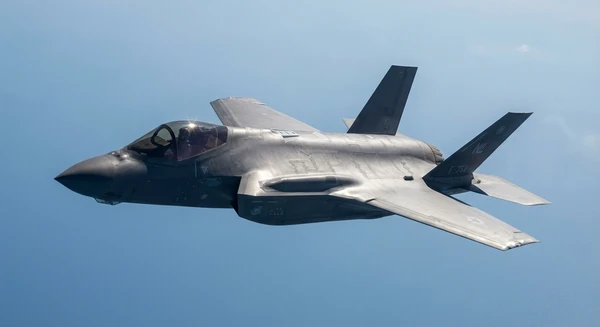
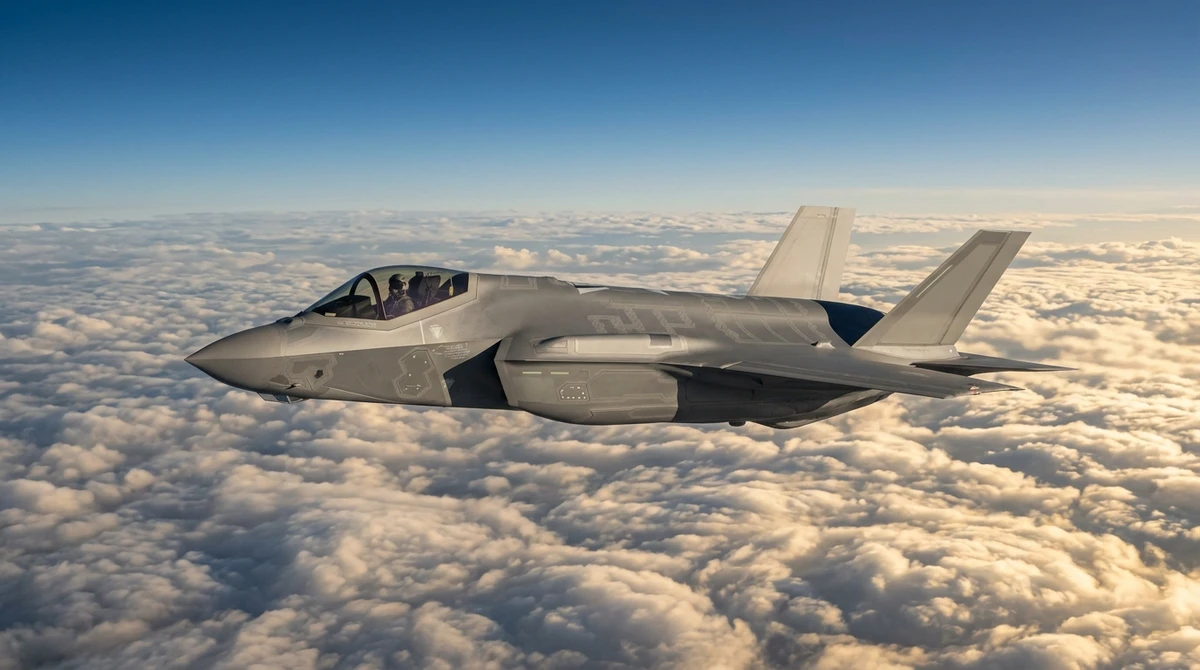
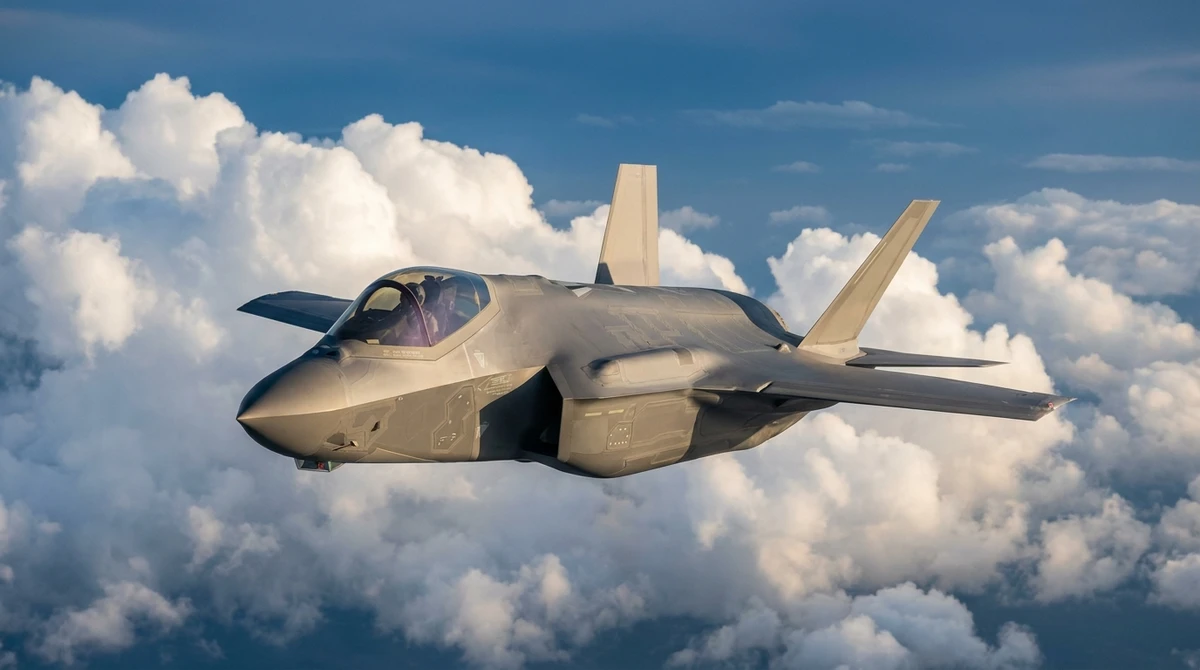
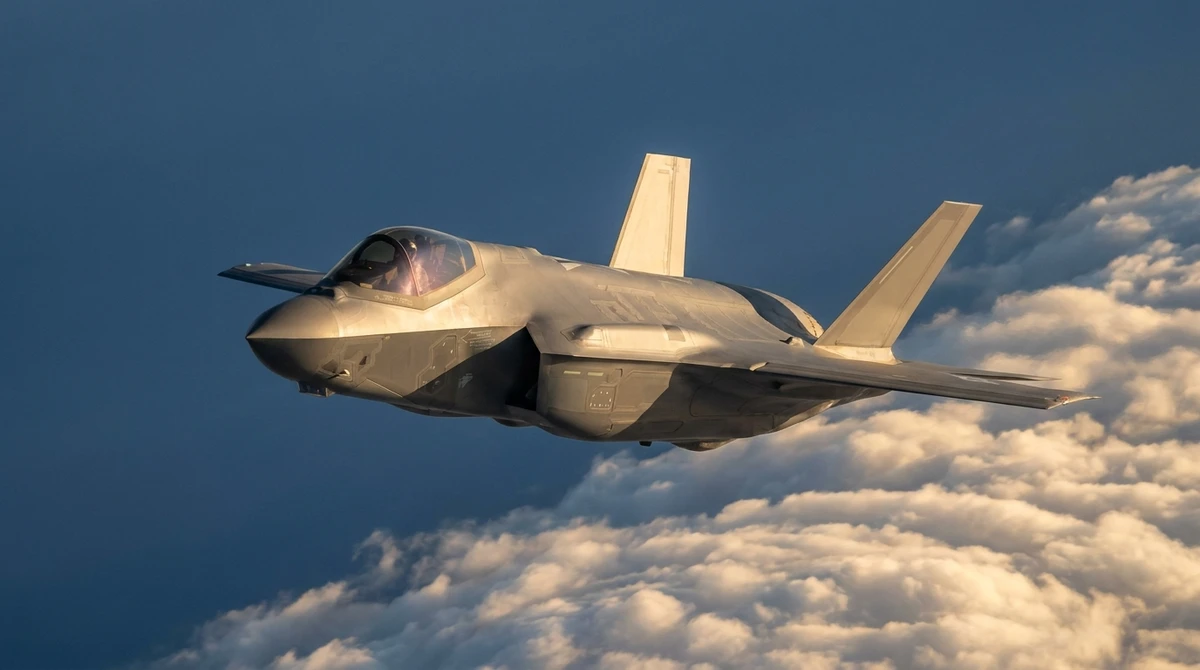
Lockheed Martin F-35 Lightning II combat aircraft in flight
Origin country
๐Ÿ‡บ๐Ÿ‡ธ United States
First flight
2006Dec 15
Introduced
2013
Produced
965units
Avg unit price
$85 million
Active worldwide
1,041+2,402 on order
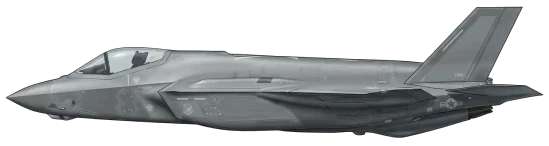
Lockheed Martin F-35 Lightning II combat aircraft side profile drawing
Side profile ยท Lockheed Martin F-35 Lightning II ยท length 15.6 m
Technical SpecificationsVersion: F-35B
Crew1 pilot
Length15.6 m (51.2 ft)
Wingspan11 m (36.1 ft)
Height4.4 m (14.3 ft)
Wing area43 mยฒ (462.8 sqft)
Empty weight14,651 kg (32,300 lbs)
Max. takeoff weight27,216 kg (60,001 lbs)
Powerplant1 ร— turbofan Pratt & Whitney F-135-PW-600 19,500 kgf each
Ejection seatMartin-Baker US16E
PerformanceVersion: F-35B
Maximum speed1960 km/h (Mach 1.96)
Operational range2,800 km (1,740 mi)
Service ceiling15,000 m (49,213 ft)
Operators โ€” 2026
ActiveOn order
Armament
Missiles payload
Bombs payload
Compare This Aircraft
F-35 Lightning II vs
All Operators
๐Ÿ‡ฆ๐Ÿ‡ช United Arab Emiratesยท ๐Ÿ‡ฆ๐Ÿ‡บ Australiaยท ๐Ÿ‡ง๐Ÿ‡ช Belgiumยท ๐Ÿ‡จ๐Ÿ‡ฆ Canadaยท ๐Ÿ‡จ๐Ÿ‡ญ Switzerlandยท ๐Ÿ‡จ๐Ÿ‡ฟ Czechiaยท ๐Ÿ‡ฉ๐Ÿ‡ช Germanyยท ๐Ÿ‡ฉ๐Ÿ‡ฐ Denmarkยท ๐Ÿ‡ซ๐Ÿ‡ฎ Finlandยท ๐Ÿ‡ฌ๐Ÿ‡ง United Kingdomยท ๐Ÿ‡ฌ๐Ÿ‡ท Greeceยท ๐Ÿ‡ฎ๐Ÿ‡ฑ Israelยท ๐Ÿ‡ฎ๐Ÿ‡น Italyยท ๐Ÿ‡ฏ๐Ÿ‡ต Japanยท ๐Ÿ‡ฐ๐Ÿ‡ท South Koreaยท ๐Ÿ‡ณ๐Ÿ‡ฑ Netherlandsยท ๐Ÿ‡ณ๐Ÿ‡ด Norwayยท ๐Ÿ‡ต๐Ÿ‡ฑ Polandยท ๐Ÿ‡ท๐Ÿ‡ด Romaniaยท ๐Ÿ‡ธ๐Ÿ‡ฌ Singaporeยท ๐Ÿ‡บ๐Ÿ‡ธ United States

Description

The F-35 Lightning II is a family of single-seat, single-engine, fifth-generation multirole fighters developed by Lockheed Martin for the United States and allied military forces. The program originated from the Joint Strike Fighter (JSF) initiative, which aimed to replace various aircraft types in the U.S. military with a common platform to achieve cost savings and operational efficiencies. The F-35 has three main variants: the conventional takeoff and landing F-35A, the short takeoff and vertical-landing F-35B, and the carrier-based F-35C.

Development

Development began in the 1990s, and the aircraft was intended to supplement and eventually replace legacy platforms like the F-16, F/A-18, and the AV-8B Harrier. After a competitive phase involving multiple aerospace companies, Lockheed Martin was awarded the contract in 2001. The aircraft flew its first flight in December 2006.

The F-35 has been the subject of criticism for cost overruns and delays, but it has also been praised for its advanced capabilities including stealth, sensor fusion, and multirole versatility. It is being adopted by multiple countries and is projected to be in service for several decades.

Design

The F-35 Lightning II features a design centered on stealth capabilities and advanced multirole functionality. It is constructed primarily from composite materials to reduce its radar cross-section and enhance its low-observable or "stealth" characteristics. The aircraft's external shape is optimized to deflect radar signals away from the emitting source, making it harder to detect. Key components such as the engine intake and the exhaust nozzles are also designed to minimize radar and infrared signatures.

The aircraft incorporates a single Pratt & Whitney F135 afterburning turbofan engine that provides significant thrust, allowing for high-speed operations and a wide range of mission profiles. The cockpit is designed for a single pilot and features a glass cockpit layout with voice-command capability and a single large touchscreen display. This advanced Human-Machine Interface (HMI) is designed to reduce pilot workload and improve situational awareness.

Armament

In terms of armament, the F-35 has an internal weapons bay to maintain its stealth profile, as well as external hardpoints for missions that do not require stealth. It can carry a variety of precision-guided munitions, air-to-air missiles, and even external fuel tanks when needed.

One of the aircraft's most touted features is its sensor fusion capabilities. The F-35 is equipped with an array of advanced sensors including the AN/APG-81 AESA radar, Distributed Aperture System (DAS), and the Electro-Optical Targeting System (EOTS). These systems collectively provide the pilot with a comprehensive view of the battlespace and enable the aircraft to operate in complex and contested environments.

The F-35 is modular in design, meaning that while it has three main variants (F-35A, F-35B, and F-35C), they share a high degree of commonality in parts. This was intentional to streamline logistics and reduce operational costs. Each variant, however, has unique features tailored to its specific operational role: the F-35A is optimized for conventional takeoff and landing, the F-35B for short takeoffs and vertical landings, and the F-35C for catapult launches and arrested recoveries on aircraft carriers.

The F-35 Lightning II is equipped with a diverse array of weapon systems, allowing it to function effectively in multiple combat roles. One of its primary armaments is the internal GAU-22/A 25mm cannon, which is mounted on the F-35A variant and available as a pod-mounted option for the F-35B and F-35C. The internal weapons bays can carry a mix of air-to-air and air-to-ground munitions while maintaining the aircraft's stealth profile. These bays are capable of holding a variety of ordnance, such as AIM-120 AMRAAM and AIM-9X Sidewinder missiles for air-to-air combat, and precision-guided munitions like the GBU-31 JDAM and GBU-39 SDB for ground-attack roles.

For missions that do not require stealth, the F-35 can be equipped with external pylons that expand its weapon-carrying capacity. Depending on the mission, the aircraft can be outfitted with additional air-to-air missiles, air-to-ground munitions, or even anti-ship missiles. This gives the F-35 the flexibility to be configured for specific mission requirements, including suppression of enemy air defenses (SEAD), close air support (CAS), and beyond-visual-range (BVR) engagements.

The aircraft's advanced sensor suite enhances its targeting capabilities. The Electro-Optical Targeting System (EOTS) provides high-resolution imaging, target designation, and tracking. The Distributed Aperture System (DAS) provides spherical situational awareness and can even detect and track advanced threats like incoming missiles. These sensors are integrated into a unified system that facilitates sensor fusion, allowing the pilot to easily manage and deploy weapons in a timely and accurate manner.

Operational History

The F-35 Lightning II's operational history has been a mix of achievements and challenges. The aircraft reached Initial Operational Capability (IOC) with different branches of the U.S. military at various times: the F-35B with the U.S. Marine Corps in July 2015, the F-35A with the U.S. Air Force in August 2016, and the F-35C with the U.S. Navy in February 2019.

Internationally, several countries have declared their F-35 fleets operational, including the United Kingdom, Israel, and Norway, among others. Israel was the first country to use the F-35 operationally, reporting in 2018 that it had conducted air strikes in Syria. Since then, the aircraft has seen combat in various operations, proving its capabilities in real-world scenarios.

The aircraft has participated in numerous exercises and deployments to validate its multirole capabilities. For example, F-35s have been involved in the U.S.-led Red Flag exercises, which are advanced aerial combat training events. These exercises have provided valuable data on the aircraft's performance, as well as opportunities for multinational cooperation.

However, the F-35 program has also faced its share of difficulties. Software bugs, mechanical issues, and other technical challenges have led to operational delays. Furthermore, the aircraft has been the subject of political scrutiny due to its high costs and delays in development.
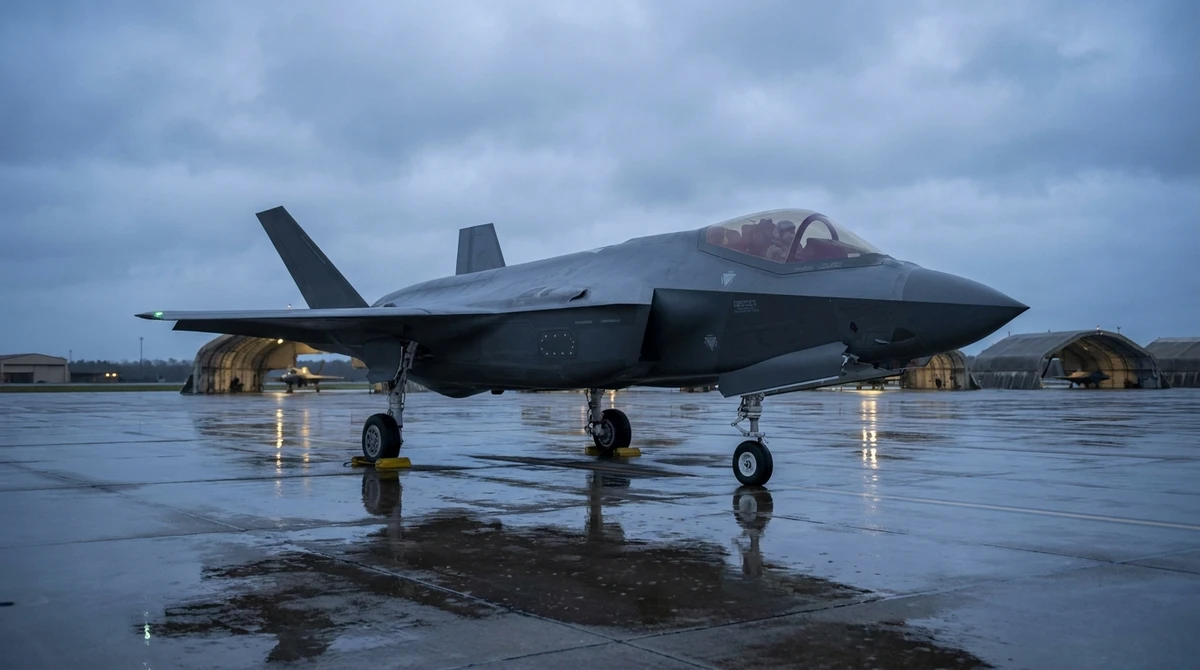
Despite these challenges, the F-35 is gradually becoming a mainstay of modern air forces around the world. It is expected to continue to evolve as further upgrades and improvements are made, both to address its existing issues and to adapt to emerging threats and mission requirements. The aircraft is slated to be a key component of U.S. and allied air power for decades to come, with production currently planned to extend at least into the 2030s.

Variants

  • F-35A: Conventional Takeoff and Landing (CTOL). The F-35A is the U.S. Air Force's variant and the most basic version of the aircraft. It's designed for conventional takeoff and landing (CTOL) and is intended to replace various aircraft in the Air Force inventory, including the F-16 and A-10. It features an internal cannon, the GAU-22/A, and is capable of carrying an internal payload of up to 18,000 pounds. The F-35A is also the least expensive variant and has the largest fuel capacity among the three, giving it the longest range.

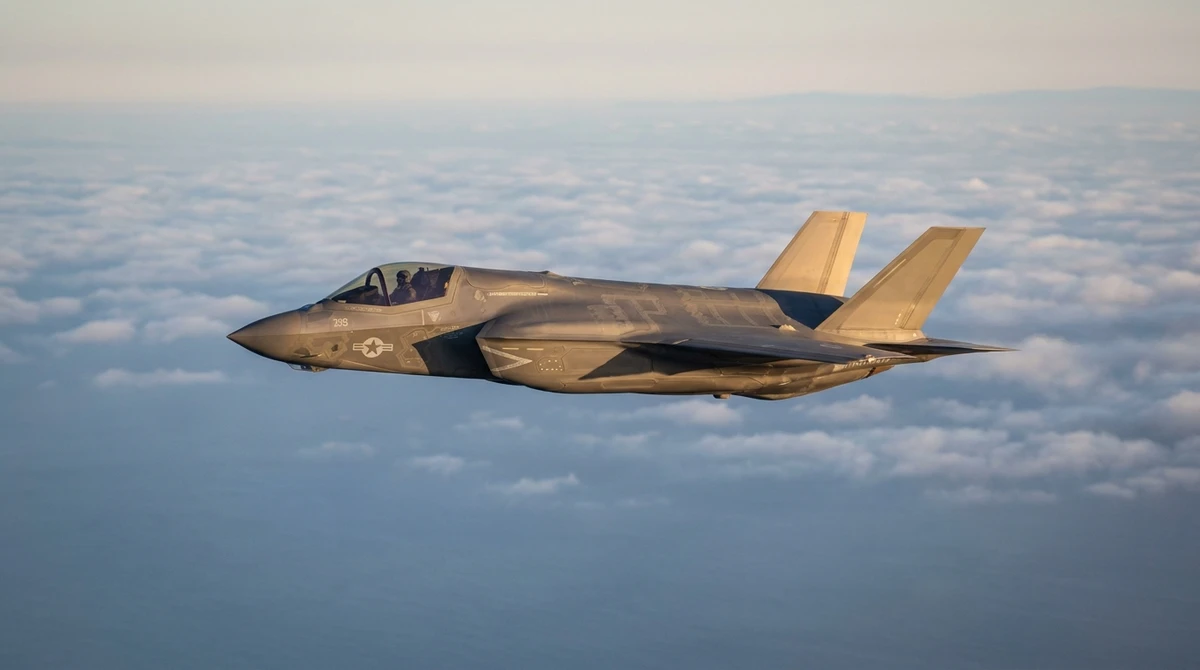
  • F-35B: Short Takeoff and Vertical Landing (STOVL). The F-35B is developed for the U.S. Marine Corps and is capable of short takeoffs and vertical landings (STOVL). This variant is designed to replace the AV-8B Harrier and some older F/A-18 Hornets. It does not have an internal cannon but can be fitted with a gun pod. The capability to take off from shorter runways and land vertically makes it versatile for operations from amphibious assault ships or forward operating bases. However, the lift fan and articulating rear nozzle that facilitate vertical operations make it more complex and somewhat reduce its fuel capacity and internal weapons bay size compared to the F-35A.
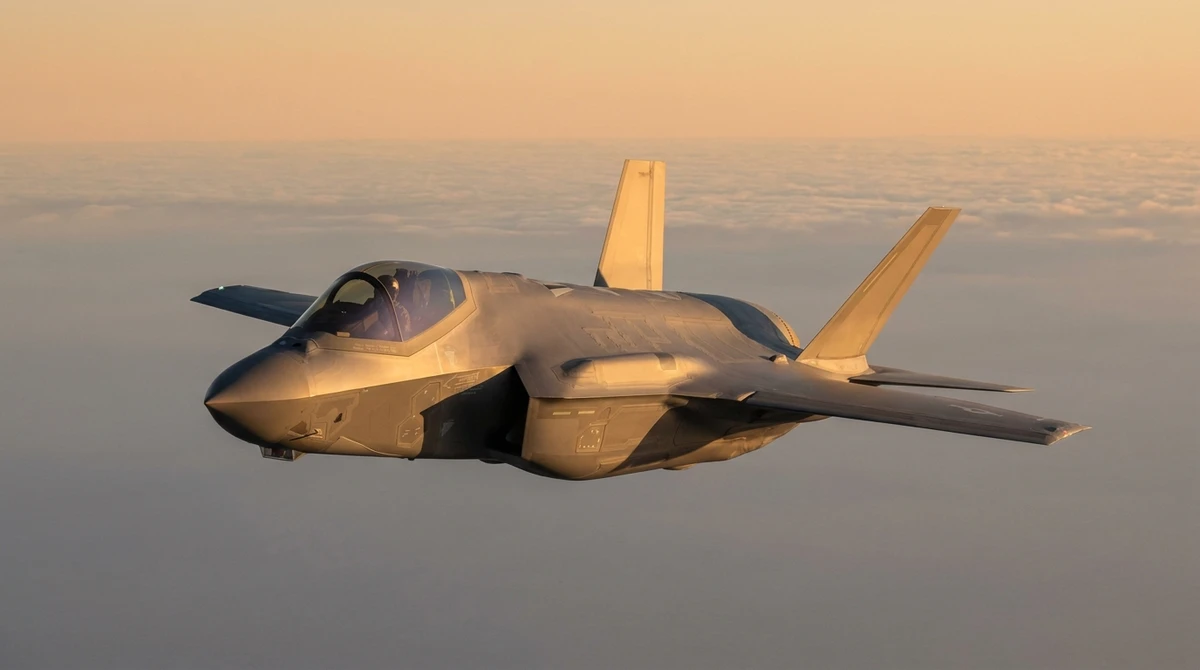
  • F-35C: Carrier-Based. The F-35C is intended for use by the U.S. Navy and is designed for catapult launches and arrested recoveries on aircraft carriers. It features larger wings and more robust landing gear than the other variants, making it well-suited for carrier operations. These larger wings also provide an advantage in terms of increased range and payload capacity. However, like the F-35B, it does not have an internal cannon but can be fitted with an external gun pod.
In the News

All news โ†’
Illustration: F-35A Lightning II multirole fighter in flight
JUL 25, 2026

2,402 F-35s on Order Against 1,041 in Service, GlobalMilitary.net Data Shows

Twenty countries have 2,402 F-35 Lightning IIs on order against 1,041 already delivered to 13 operators, an order book more than ten times the size of the next-largest fighter program.

๐Ÿ‡จ๐Ÿ‡ฆ ๐Ÿ‡จ๐Ÿ‡ญ ๐Ÿ‡จ๐Ÿ‡ฟ ๐Ÿ‡ฉ๐Ÿ‡ช ๐Ÿ‡ซ๐Ÿ‡ฎ ๐Ÿ‡ฎ๐Ÿ‡น ๐Ÿ‡ฏ๐Ÿ‡ต ๐Ÿ‡ท๐Ÿ‡ด ๐Ÿ‡บ๐Ÿ‡ธ
Illustration: F-35A Lightning II stealth fighter in flight
JUL 23, 2026

First Polish F-35A Assembled in Italy Makes Its Maiden Flight

The first Polish Air Force F-35A built at the Cameri final assembly line in northern Italy flew on July 22, 2026, opening the Italian-assembled half of Poland's 32-aircraft Husarz program.

๐Ÿ‡ฎ๐Ÿ‡น ๐Ÿ‡ต๐Ÿ‡ฑ ๐Ÿ‡บ๐Ÿ‡ธ
Illustration: F-35 Lightning II stealth fighter in flight
JUL 12, 2026

Turkey Seeks Russian Consent to Transfer S-400s in Bid to Rejoin F-35 Program

The Kremlin confirmed on July 10, 2026 that Moscow and Ankara are discussing the fate of Turkey's S-400 air defense systems, which Turkish media report could be transferred to a Gulf state to unlock Ankara's return to the F-35 program.

๐Ÿ‡ท๐Ÿ‡บ ๐Ÿ‡น๐Ÿ‡ท ๐Ÿ‡บ๐Ÿ‡ธ

Frequently Asked Questions

What type of aircraft is the F-35 Lightning II?
The Lockheed Martin F-35 Lightning II is a combat aircraft aircraft developed by Lockheed Martin and entered service in 2013.
What is the maximum speed of the F-35 Lightning II?
The Lockheed Martin F-35 Lightning II has a maximum speed of 1,960 km/h (Mach 1.6).
What is the range of the F-35 Lightning II?
The Lockheed Martin F-35 Lightning II has an operational range of 2,800 km (1,739 miles). This range can vary based on payload, altitude, and mission profile.
When did the F-35 Lightning II first fly?
The Lockheed Martin F-35 Lightning II made its first flight on December 15, 2006. It entered operational service in 2013.
How many F-35 Lightning II have been built?
Approximately 965 units of the Lockheed Martin F-35 Lightning II have been produced since it entered service in 2013.
Which countries operate the F-35 Lightning II?
The Lockheed Martin F-35 Lightning II is operated by 21 countries with approximately 1,041 aircraft in active service. The largest operators include United States, Australia, and Norway.
How much does a F-35 Lightning II cost?
The Lockheed Martin F-35 Lightning II has an estimated unit cost of approximately $85.0 million. Actual prices vary based on configuration, quantity ordered, and included support packages.
What is the service ceiling of the F-35 Lightning II?
The Lockheed Martin F-35 Lightning II has a service ceiling of 15,000 meters (49,212 feet). This is the maximum altitude at which the aircraft can maintain controlled flight.
Wikipedia (CC BY-SA) and other open sources. Illustrations generated by AI. Suggest a change