L-39 Albatros
Czech training jet, operational since the Cold War, deployed worldwide for various military aviation roles. Key figures: top speed 750 km/h, range 1,100 km, service ceiling 11,500 m, max takeoff weight 4,700 kg, unit price $1M, built 2,900. In service with 30 air forces as of 2026 — Russia (185), Algeria (54), Ukraine (42) and 27 others.
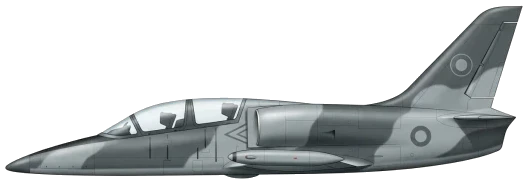
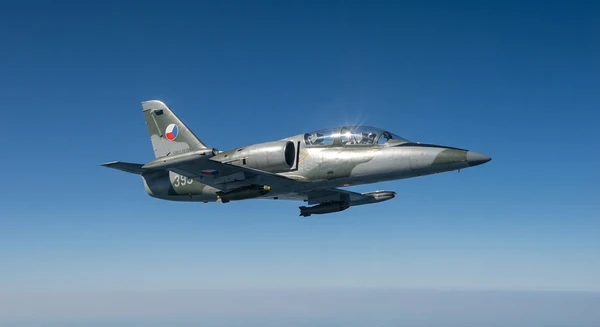
| Crew | 2 |
| Length | 12.1 m (39.8 ft) |
| Wingspan | 9.5 m (31.0 ft) |
| Height | 4.8 m (15.6 ft) |
| Wing area | 18.8 m² (202.4 sqft) |
| Empty weight | 3,459 kg (7,626 lbs) |
| Max. takeoff weight | 4,700 kg (10,362 lbs) |
| Powerplant | 1 × turbofan Ivchenko-Progress AI-25TL 1,720 kgf each |
| Ejection seat | Aero VS-1 |
| Maximum speed | 750 km/h (466 mph) |
| Operational range | 1,100 km (684 mi) |
| Service ceiling | 11,500 m (37,730 ft) |
| Climb rate | 22.0 m/s (72.2 ft/s) |
| Takeoff distance | 480 m (1,575 ft) |
-
 Russia
185
Russia
185
-
 Algeria
54
Algeria
54
-
 Ukraine
42
Ukraine
42
-
 Vietnam
29
Vietnam
29
-
 Yemen
28
Yemen
28
-
 Libya
25
Libya
25
-
 Kazakhstan
19
Kazakhstan
19
-
 Iraq
16
Iraq
16
-
 Azerbaijan
14
Azerbaijan
14
-
 Uzbekistan
14
Uzbekistan
14
-
 Armenia
12
Armenia
12
-
 Mali
12
Mali
12
-
 Uganda
12
Uganda
12
-
 Egypt
11
Egypt
11
-
 Nigeria
11
Nigeria
11
-
 Belarus
10
Belarus
10
-
 Ethiopia
9
Ethiopia
9
-
 Slovakia
9
Slovakia
9
-
 Central African Republic
8
Central African Republic
8
-
 Georgia
8
Georgia
8
-
 Bulgaria
6
Bulgaria
6
-
 Hungary
5 +7
Hungary
5 +7
-
 Angola
4
Angola
4
-
 Tajikistan
4
Tajikistan
4
-
 Cuba
3
Cuba
3
-
 Syria
3
Syria
3
- 🇬🇶 Equatorial Guinea 2
-
 Afghanistan
1
Afghanistan
1
- 🇨🇩 Congo Democratic Republic 1
-
 Mozambique
1
Mozambique
1
Recent Events — L-39 Albatros
13 events →-
AUG 112026
 Ethiopia
Crashed in East Shewa after reportedly coming under Oromo Liberation Army ground fire; both pilots ejected and were rescued.
Crash
Ethiopia
Crashed in East Shewa after reportedly coming under Oromo Liberation Army ground fire; both pilots ejected and were rescued.
Crash
-
JUL 272026
 Russia
Crashed during low-altitude aerobatic manoeuvres near Kushchyovskaya, Krasnodar Krai; both crew killed.
Crash
Russia
Crashed during low-altitude aerobatic manoeuvres near Kushchyovskaya, Krasnodar Krai; both crew killed.
Crash
-
JUN 112026
 Congo Democratic Republic
L-39 lost near Kalemie, Tanganyika; wreckage lifted from a swamp by Russian-speaking personnel, M23 claims a shootdown.
Other
Congo Democratic Republic
L-39 lost near Kalemie, Tanganyika; wreckage lifted from a swamp by Russian-speaking personnel, M23 claims a shootdown.
Other
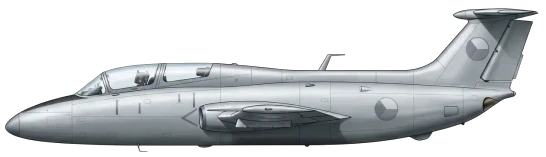
Description
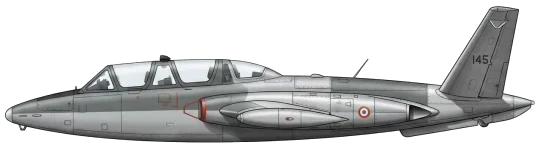
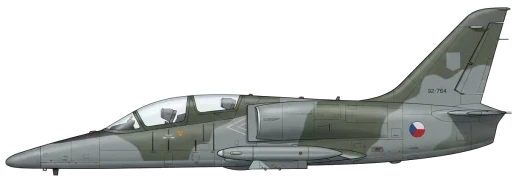
The Aero L-39 Albatros is a two-seat jet trainer and light attack aircraft designed and built by Aero Vodochody in Czechoslovakia. Developed in the 1960s to succeed the Aero L-29 Delfín, it first flew on 4 November 1968 and was one of the first jet trainers powered by a turbofan engine. Production ran from 1971 to 1996; it entered Czechoslovak Air Force service in 1974, became the preferred primary trainer of most Warsaw Pact countries, and more than 2,800 had served with over 30 air forces by the end of the century. It is known for its low cost and simple systems and for combat use in regional wars from Chad to Syria and Ukraine. Its combat development with Western avionics, the L-159 ALCA, has its own page.
Development
In 1964 Aero Vodochody set up a design team for the "C-39" requirement (C for cvičný, trainer), a single-engined tandem two-seater meant to replace the L-29 as the primary trainer across the Warsaw Pact. The second airframe, prototype X-02, made the first flight on 4 November 1968. Serial production of the initial L-39C began in 1971, and in 1972 most Warsaw Pact countries formally adopted the type as their preferred primary trainer, bringing large orders, many from the Soviet Air Forces; the first aircraft entered Czechoslovak Air Force service in 1974.
Specialised versions followed quickly: the single-seat L-39V target tug flew in 1972, the L-39ZO weapons trainer with a strengthened wing, modified landing gear and four underwing hardpoints on 25 June 1975, and the L-39ZA light attack version with a ventral GSh-23 cannon on 29 September 1976. In the 1980s Aero developed the enlarged L-59 Super Albatros with a Lotarev DV-2 engine (first flight 30 September 1986); after the Cold War it developed the L-159 and partnered with Elbit Systems of Israel, which refitted L-39s with new avionics for re-export to customers such as the Royal Thai Air Force. With the captive Warsaw Pact market gone, production ended in 1996. At Farnborough in July 2014 Aero launched the L-39NG, re-engined with a Williams FJ44 and without wingtip tanks; it first flew in December 2018, received military type certification from the Czech Military Aviation Authority in 2022 and entered production in 2023 under the name Skyfox, with 34 aircraft on order.
Design
The L-39 was designed as a low-cost trainer able to fly ground-attack missions, with most systems simplified to limit maintenance and the damage inexperienced crews could do; rugged landing gear and low landing speeds allow operation from grass strips and even frozen lakes. The low-set straight wing has a double-taper planform, 2.5° of dihedral, double-slotted trailing-edge flaps inboard of mass-balanced ailerons, and 100 L (26 US gal) fuel tanks fixed to the wingtips. An automatic trimming system linked to the flaps counters pitch changes on deployment, and the controls are pushrod-actuated. Operational limits are +8/−4 g at 4,200 kg (9,260 lb).
The L-39C is 12.13 m (39 ft 10 in) long with a span of 9.46 m (31 ft) and a wing area of 18.8 m² (202 sq ft); it weighs 3,455 kg (7,617 lb) empty and 4,700 kg (10,360 lb) at maximum take-off. Its Ivchenko AI-25TL turbofan of 16.87 kN (3,790 lbf), fed by shoulder-mounted semi-circular intakes behind the cockpit, has a 1,000-hour time between overhauls and gives a maximum speed of 750 km/h (470 mph) at 5,000 m (16,400 ft), a service ceiling of 11,000 m (36,000 ft), a range of 1,100 km (680 mi) on internal fuel and 1,750 km (1,090 mi) with external tanks. Student and instructor sit in tandem on Czech-built VS-1 ejection seats under individual right-hinged canopies, the rear seat raised for the instructor's view; the cockpit is only partially pressurised, so crews wear oxygen masks above 7,000 m (23,000 ft).
Armament
The basic L-39C has provision for two underwing pylons carrying up to 284 kg (626 lb) of drop tanks or practice weapons, rarely fitted, and can carry a pair of K-13 air-to-air missiles. The L-39ZO's four pylons are stressed for 500 kg (1,100 lb) inboard and 250 kg (550 lb) outboard, for a total external load of 1,150 kg (2,540 lb). The L-39ZA raises the payload to 1,290 kg (2,844 lb), wires the outer pylons for K-13 or R-60 missiles, and adds a 23 mm GSh-23L twin-barrelled cannon in a conformal pod under the cockpit, fed from a 150-round magazine inside the airframe.
Operational History
Iraq became the first export customer, with L-39ZO deliveries beginning in 1977, and Libya acquired some 180 L-39ZOs around 1978 for its flying schools at Sabha and Okba Ben Nafi. Libyan L-39s flew in the Chadian–Libyan conflict from Ouadi Doum, where, according to a Chadian report to the UN, the offensive of March 1987 captured 11 of them and destroyed or downed at least four. The type then fought in the post-Soviet wars: Abkhaz separatists used L-39s supplied from Russia and Chechnya against Georgia in 1992–93, losing one to a Russian SA-11 Buk in a friendly-fire incident on 10 January 1993; Azerbaijani L-39s flew ground-attack sorties in the First Nagorno-Karabakh War; and Chechen forces flew aircraft left behind by the Soviet Air Force in 1992; one was reportedly shot down by a Strela-2 near Goragorsk on 4 October 1994 before Russian Su-25s destroyed the rest on the ground.
Syrian Arab Air Force L-39ZAs flew counter-insurgency strikes from the early stages of the civil war, first in the Battle of Aleppo. Rebels captured intact aircraft at Al-Jarrah air base in February 2013; one L-39 was shot down near Hama airport on 26 December 2017, another by a Turkish F-16 over Idlib province on 3 March 2020, and more were captured by opposition forces at Aleppo in 2024. In Ukraine an L-39 of the 39th Tactical Aviation Brigade was shot down over Khmelnytskyi by a Russian aircraft on 24 February 2022, the opening day of the Russian invasion, and two L-39M1s collided during dogfight training in Zhytomyr Oblast on 25 August 2023, killing three pilots; Lithuania transferred its last L-39ZAs to Ukraine in 2024. On the civil side, 255 L-39s were on the US register in September 2012, selling for $200,000–300,000.
Variants
- L-39C: Standard basic trainer for the Soviet Union, Czechoslovakia and export, with two underwing pylons; approximately 2,260 built.
- L-39ZO: Export weapons trainer with a strengthened wing and four pylons, first delivered to Iraq in 1977; 337 built.
- L-39ZA: Light attack and armed training version with sturdier landing gear, a 1,290 kg (2,844 lb) payload and a GSh-23L cannon pod; 208 delivered, plus 40 Elbit-equipped L-39ZA/ARTs for Thailand.
- L-59 (L-39MS): Second-generation trainer with a strengthened fuselage, longer nose, new cockpit and a 21.6 kN (4,850 lbf) Lotarev DV-2 giving 872 km/h (542 mph).
- L-39NG Skyfox: New-build and rebuilt version with a Williams FJ44 engine, new avionics and no tip tanks, certified in 2022 and in production since 2023.
Frequently Asked Questions
What type of aircraft is the L-39 Albatros?
What is the maximum speed of the L-39 Albatros?
What is the range of the L-39 Albatros?
When did the L-39 Albatros first fly?
How many L-39 Albatros have been built?
Which countries operate the L-39 Albatros?
How much does a L-39 Albatros cost?
What is the service ceiling of the L-39 Albatros?
- OCT 32026 Updated Description expanded with Warsaw Pact production, L-39ZA and L-39NG variants and combat use to the war in Ukraine
- AUG 62026 Updated Description updated
- AUG 52026 Updated Powerplant updated in a site-wide editorial pass
- JUL 232026 Updated Sources and cross-references refreshed
- APR 72026 Updated Sources and cross-references refreshed